
Pallet and Carton Management for 3PL Warehouses
Manage pallet configuration, carton dimensions, SKU-to-carton mapping, and barcode-based tracking within a centralized warehouse management system. Control space utilization, dimensional weight calculations, and packaging workflows across multi-client operations.
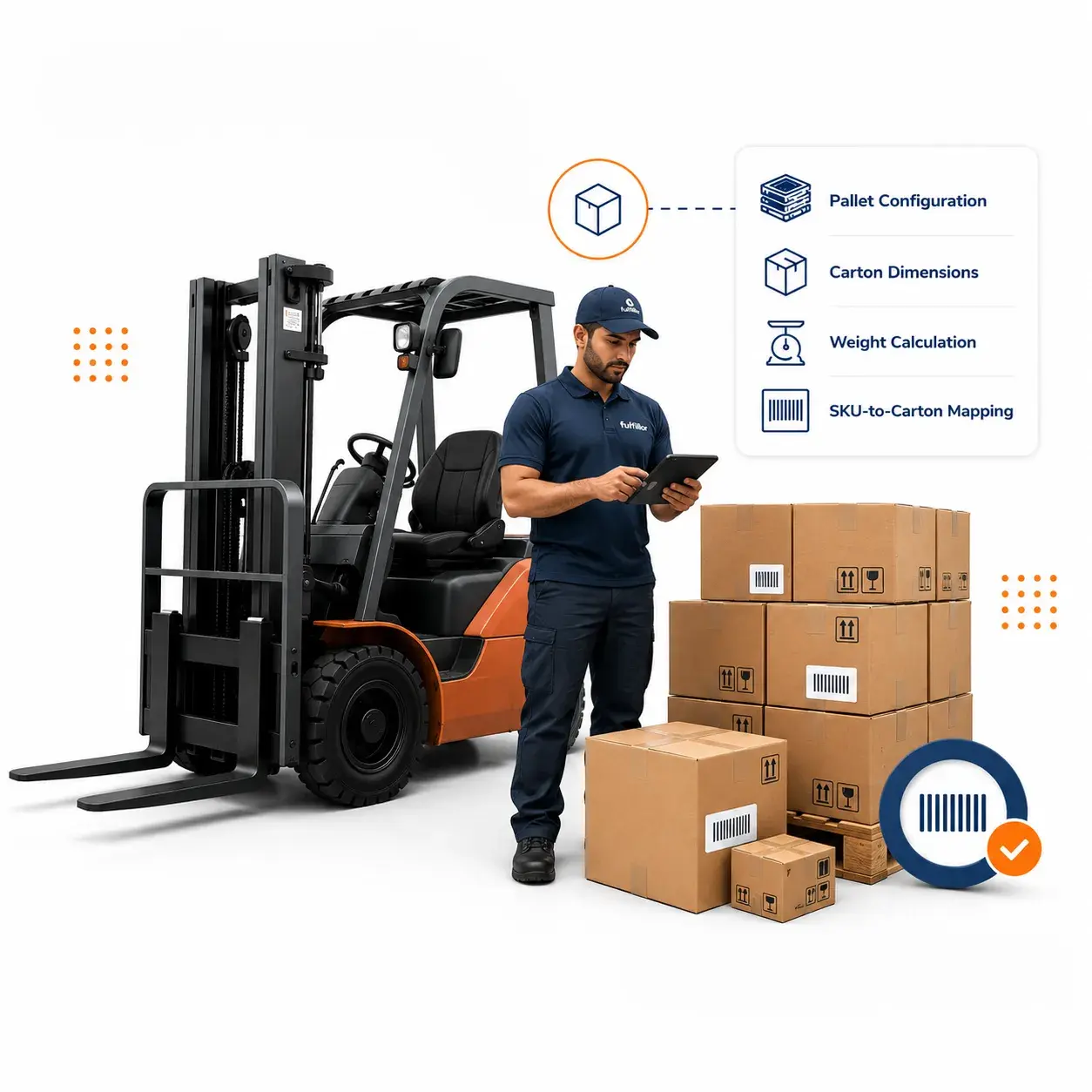 SKU-to-carton mappingBarcode-based pallet tracking
Pallet Tracking and Carton Control in the Warehouse
Pallet Configuration and ID Tracking: Define pallet types with set dimensions, weight limits, and stacking rules.
Assign unique pallet IDs to track storage location, zone movement, and outbound allocation within the WMS.
Carton Dimension and SKU Mapping: Configure carton sizes and map SKUs to predefined packaging rules.
Record carton dimensions and weight to support dimensional weight calculations and carrier alignment.
Real-Time Barcode Tracking: Use barcode scanning to track pallet and carton movement across receiving, storage, picking, staging, and dispatch.
Each scan updates inventory location and maintains traceability in multi-client 3PL environments.
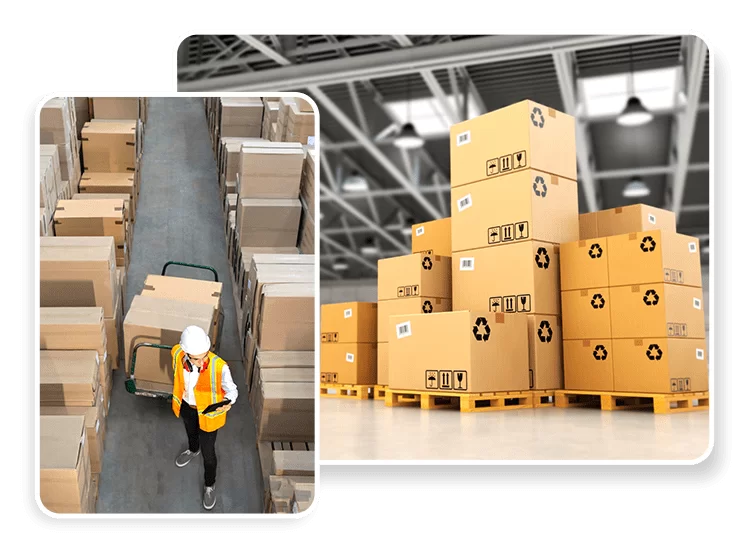
Configurable Pallet and Carton Rules
Define pallet dimensions, stacking limits, and weight thresholds based on operational requirements. Configure carton sizes and assign SKU-specific packaging rules to maintain consistency across inbound and outbound workflows.
Adjust rules per warehouse location or per client in multi-client 3PL environments. The system supports controlled packaging logic without manual overrides, reducing configuration errors and maintaining structured execution.


Packaging Optimization and Material Efficiency Controls
Configure carton sizes and packaging rules to reduce excess material usage and improve load efficiency. The system supports dimensional accuracy and optimized carton selection to minimize unused space during shipment.
Track packaging usage patterns across warehouse locations or client accounts to monitor material consumption and cost impact. Structured packaging control helps reduce waste while maintaining operational consistency.
Manage Pallet and Carton Operations with Better Control
Warehouse System Integrations and Workflow Synchronization
Integrate pallet and carton management workflows with inventory, order processing, shipping carriers, and 3PL billing modules within the warehouse management system.
Real-time data synchronization ensures pallet IDs, carton dimensions, shipment status, and client-level packaging rules remain consistent across connected systems. API-based integrations support ERP platforms, ecommerce channels, and carrier services without manual data entry.

Experience Fulfillor WMS: Schedule Your Free Demo
Pallet and Carton Management – Frequently Asked Questions
Cartonization in a WMS is the process of selecting the right carton size for each order based on item dimensions, weight, quantity, and packing rules. It helps warehouses reduce packaging waste, control shipping costs, and improve packing efficiency.
Pallet tracking helps reduce shipping errors by linking inventory, orders, labels, locations, and shipment details to each pallet. This gives warehouse teams better visibility into what is packed, where it is stored, and when it is ready to ship.
Yes. A 3PL WMS can support different pallet types, carton sizes, storage rules, and billing methods for each client. This helps multi-client warehouses manage customized fulfillment requirements without mixing inventory or packaging workflows.
Dimensional weight calculation uses package size, not just actual weight, to estimate shipping charges. A WMS can capture carton dimensions, calculate dimensional weight, compare it with actual weight, and help teams choose the most cost-effective packing and shipping option.
Pallet management focuses on tracking bulk inventory, storage movement, pallet IDs, and shipment handling. Carton management focuses on individual boxes, packaging selection, order packing, labels, and parcel-level shipping accuracy.