Inventory Confusion
Stock gets mixed across clients when bins, locations, and workflows are not clearly separated.

Most 3PL operations start breaking when client requirements, billing rules, and warehouse workflows stop aligning. Inventory overlaps, billing errors, and manual workarounds begin to slow everything down.Connect inventory, order processing, and client-specific billing with 3PL software built to keep operations consistent as you scale.
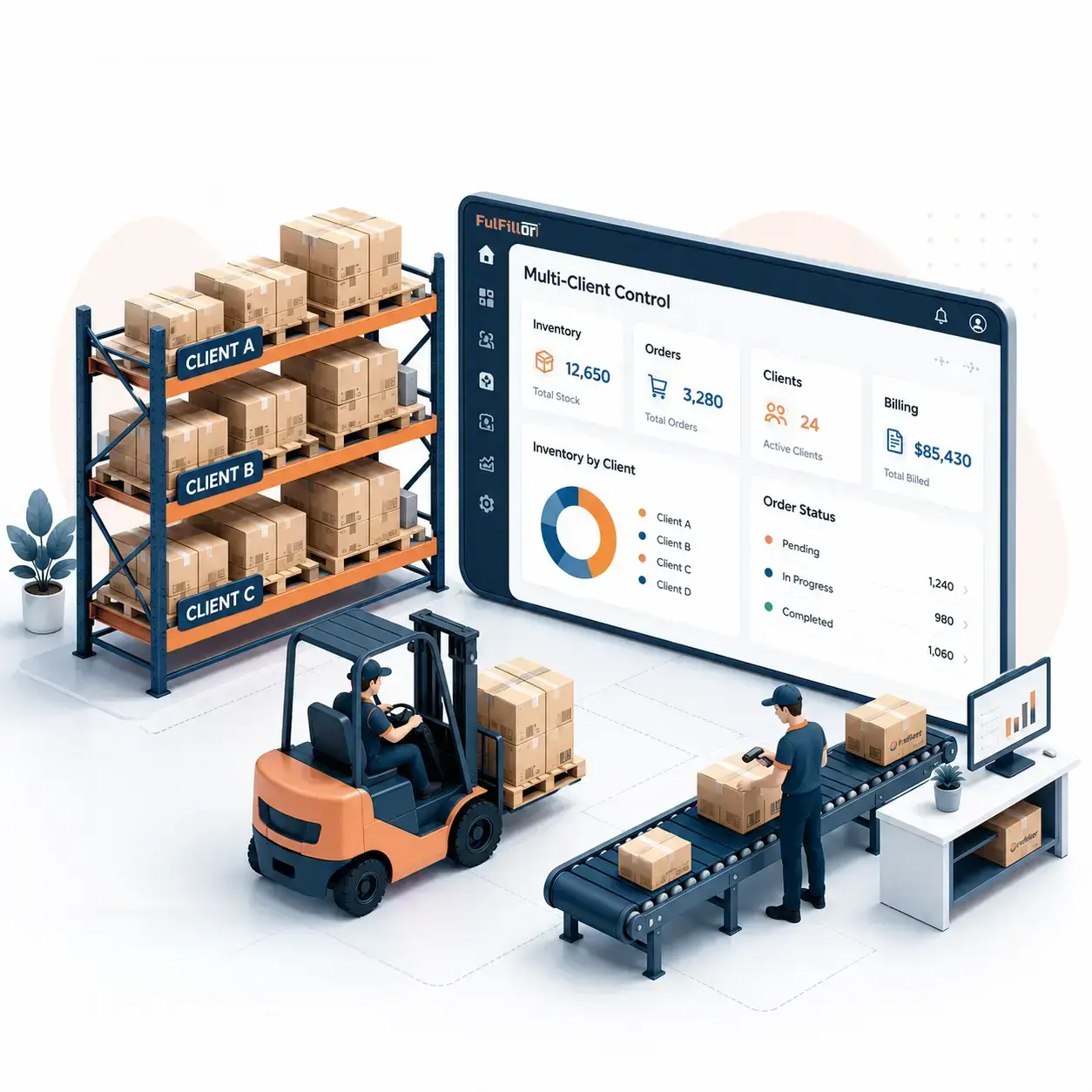 Multi-client inventory controlAutomated 3PL billing






Traditional WMS platforms are often designed for single-client warehouses. In multi-client 3PL operations, limited 3PL software can create inventory overlap, workflow inefficiencies, and billing challenges as operations scale.
Fulfillor provides the operational tools 3PLs need to manage multiple clients, orders, and inventory from a single cloud-based warehouse system.
Multi-Client Inventory Management: Keep each client's stock, SKUs, locations, and inventory activity separated in one 3PL warehouse management system.
Client-Specific Order Tracking: Track orders, exceptions, fulfillment status, and shipping updates across multiple clients from one 3PL order management workflow.
Client Portal Visibility: Clients can view inventory, order status, fulfillment activity, and billing details without asking your warehouse team for manual updates.
SLA-Based Pick, Pack, and Ship: Manage client-specific cutoffs, carrier rules, barcode scanning, picking routes, packing steps, and shipping workflows.
Automated Client Billing and Reporting: Automate storage fees, receiving fees, pick fees, pack fees, shipping charges, and client-specific billing rules based on real warehouse activity.

Explore inventory, fulfillment, billing, client access, and integrations based on your operation.
Managing multiple clients in one warehouse creates complexity across inventory, workflows, billing, and order visibility.
Stock gets mixed across clients when bins, locations, and workflows are not clearly separated.
Client-specific picking, packing, and shipping rules become harder to follow when processes stay manual.
Missed activities and incorrect rates lead to revenue leakage and time-consuming reconciliation.
Inventory and order updates fall out of sync across systems, making tracking unreliable.
Returned items are often restocked without proper checks, leading to inventory inaccuracies.
Processes that work for a few clients break down as order volume and operational complexity grow.
A structured 3PL WMS helps teams separate client data, standardize workflows, and keep warehouse operations scalable.
Built for 3PL complexityWhen orders sit in one tool, stock records in another, and client charges in a spreadsheet, your team spends time checking which information is correct. A shipment may be complete while the order status or billing record still needs updating.
Fulfillor brings warehouse execution and client billing into one WMS. Your team can receive stock, process orders, pick and pack, manage shipping, and review recorded billable activity without rebuilding the connections between those tasks manually.
You can still connect the sales channels, carriers, and accounting systems your business needs. The aim is to reduce duplicate warehouse records and repeated data entry while keeping those external systems connected.

Fulfillor gives 3PL teams real-time visibility into inventory, orders, shipping, billing, and warehouse activity across clients and locations. By connecting these workflows in one cloud-based system, teams can reduce manual updates, improve accuracy, and manage daily operations more efficiently.

A centralized warehouse system helps 3PLs manage multiple clients without data overlap or manual workarounds. Each client operates within clearly separated inventory, orders, SLAs, and billing rules, starting with a structured 3PL client onboarding process.

White-label capabilities allow 3PLs to present the platform as their own to clients. Branded portals, custom domains, and client-facing interfaces help maintain a consistent brand experience across all touchpoints.
By giving clients access to a fully branded system for order tracking, inventory visibility, and reporting, 3PLs can strengthen client relationships while operating on a cloud-based WMS.

Fulfillor supports complex kitting workflows while maintaining accurate inventory tracking and reporting across all clients. 3PLs can manage bundled products, track component-level inventory, and generate detailed reports without manual reconciliation.
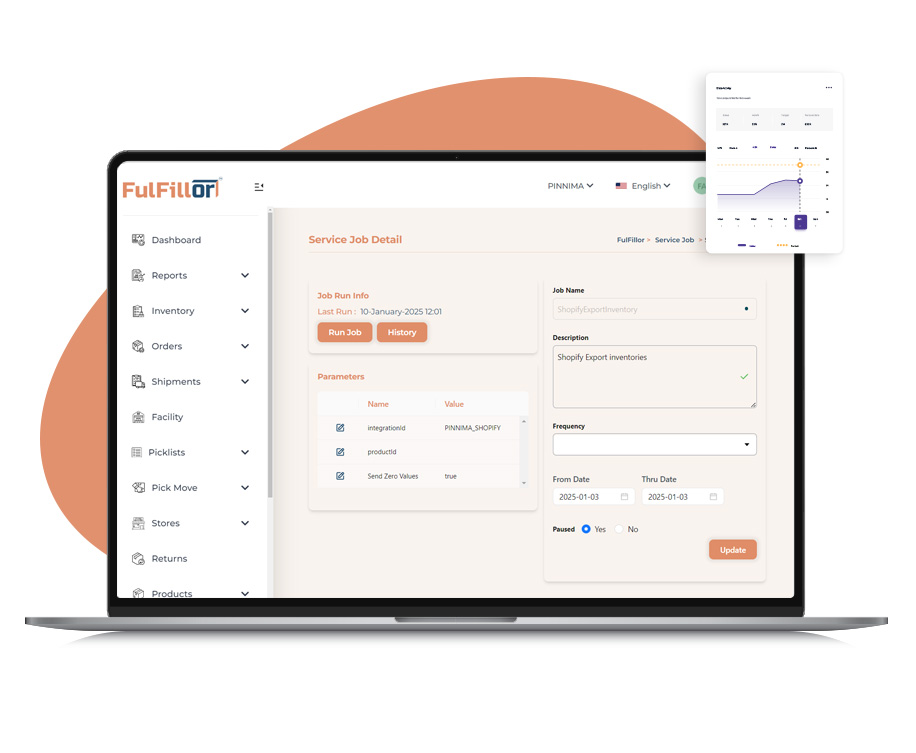
Fulfillor automates 3PL billing by tracking storage, handling, and fulfillment activity for each client. Invoices are generated accurately based on real warehouse operations without spreadsheets or manual calculations.
By centralizing billing data within the WMS, 3PLs can reduce disputes, improve financial accuracy, and scale operations without increasing administrative workload.
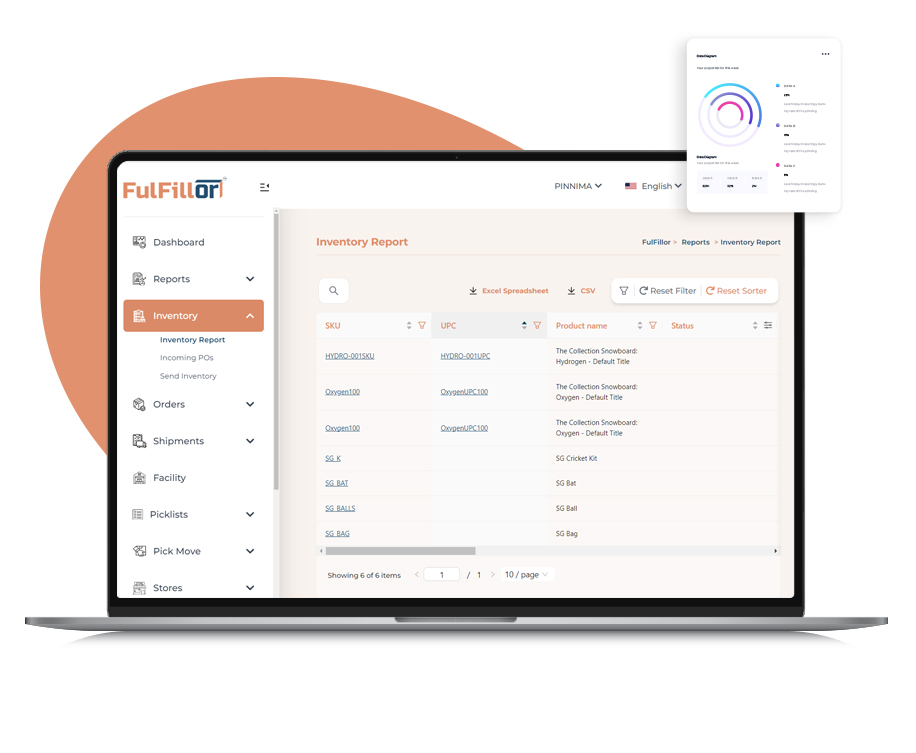
Inventory management, fulfillment workflows, client visibility, and billing together in one cloud-based 3PL WMS. This allows 3PLs to operate more efficiently while maintaining accuracy and control across all clients. Explore 3PL pricing plans to see what fits your operation.

General-purpose warehouse systems manage inventory and fulfillment, but their support for multi-client operations varies. A 3PL-focused WMS also needs to connect inventory ownership, orders, user permissions, service rates, and reporting to each client account. Fulfillor brings these capabilities into one platform so warehouse teams can manage shared operations while maintaining client-specific records and workflows.
Get a personalized demo of Fulfillor's multi-client WMS for your warehouse and client setup.
A 3PL WMS is warehouse management software built for logistics providers managing inventory, orders, fulfillment, billing, and reporting for multiple clients. It helps 3PLs keep each client's operations separate while managing warehouse activity from one system.
Both manage warehouse inventory and fulfillment. A 3PL WMS also connects stock ownership, orders, billing rules, permissions, and reporting to individual client accounts. General-purpose systems may support these requirements through built-in features, additional modules, or customization, so buyers should verify the complete multi-client workflow.
A 3PL WMS separates inventory, orders, storage locations, user permissions, billing rules, reports, integrations, and operational workflows for each client account. This allows a logistics provider to manage several customers within the same warehouse while maintaining accurate ownership records and client-specific visibility.
Yes. Fulfillor supports client-specific workflows and billing rules within one WMS. Depending on the supported configuration, clients can have different picking and packing requirements, carrier rules, dispatch cutoffs, and service rates. Confirm each client's requirements during onboarding so your team knows which rules are configured and which exceptions need a separate handling process.
3PL software reduces billing errors by tracking billable warehouse activities such as receiving, storage, picking, packing, shipping, returns, and value-added services. When charges are connected to completed warehouse tasks and client-specific rate cards, teams can generate more accurate invoices with less manual work.
3PL warehouse software should support ecommerce platforms, marketplaces, shipping carriers, accounting tools, shopping carts, EDI workflows, and client-facing systems. These integrations help 3PLs keep orders, inventory, shipments, billing, and reporting connected across daily operations.
A 3PL WMS tracks inventory by client, facility, storage location, status, lot, and order allocation. Logistics providers can define facility-specific workflows while maintaining centralized account visibility, helping them route orders, transfer stock, and report inventory without mixing client ownership.
No. A WMS manages what happens inside the warehouse, including inventory, orders, and fulfillment, while a TMS manages the movement of goods between locations, including carrier selection and route planning. See our guide on what a transportation management system (TMS) does for how the two work together.
Guides on multi-client management, billing, and scaling 3PL workflows.