
Product Catalog Management for 3PL and Warehouse Operations
Centralize SKU data, client-specific product information, barcodes, pricing rules, and inventory attributes inside a structured warehouse management system built for multi-client environments.
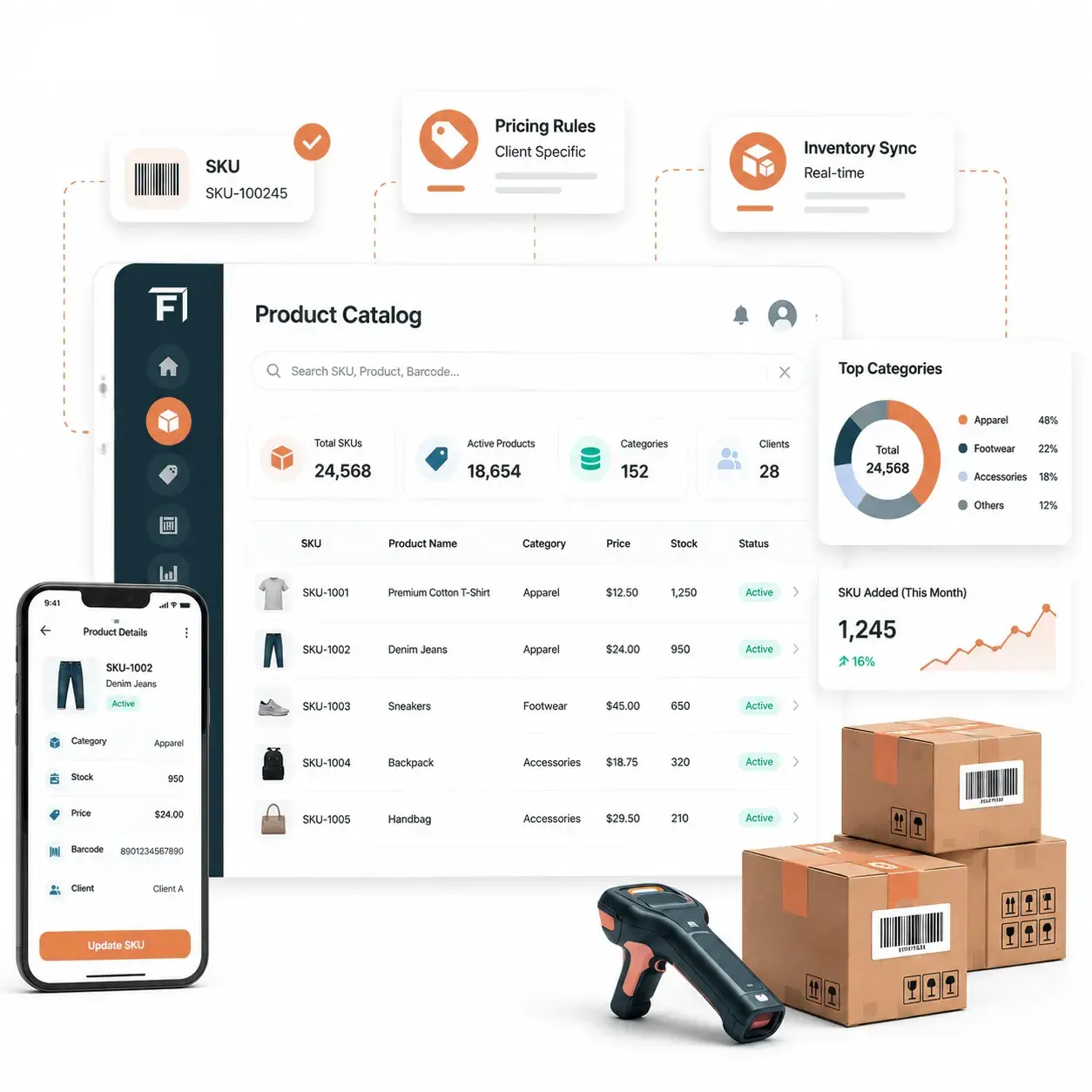 Centralized SKU dataReal-time SKU visibility
Structured SKU & Product Master Management
Client-Based Product Configuration: Create and manage client-specific SKUs within a multi-client 3PL warehouse. Assign ownership, handling rules, and product attributes while maintaining strict data separation.
Barcode & Identification Control: Generate and map barcodes, SKU codes, batch numbers, and serial tracking rules to ensure accurate receiving, picking, and dispatch operations.
Dimensions, Weight & Storage Rules: Define carton dimensions, pallet configuration, weight limits, and storage allocation rules to optimize warehouse space and billing calculations.
Bulk Import & Data Synchronization: Import product data in bulk and maintain synchronized SKU information across integrated marketplaces, ERP systems, and inventory modules.
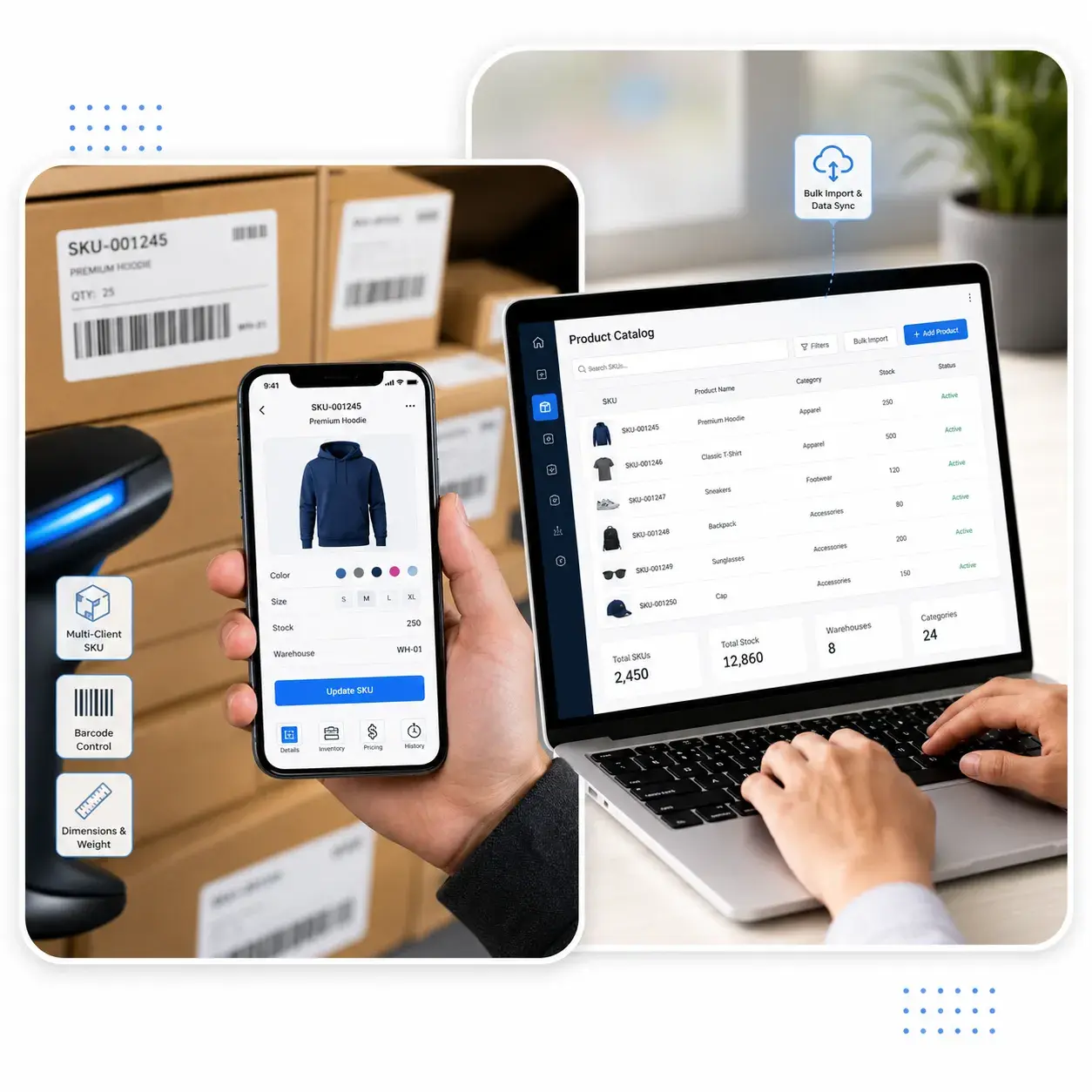
Centralized SKU and Product Data Control
Manage client-specific SKUs, barcodes, dimensions, and product rules inside a structured 3PL warehouse management system.
Real-Time SKU Visibility Across 3PL Warehouse Operations
Track SKU-level inventory across warehouses, client accounts, bins, and storage zones in real time. Maintain accurate stock allocation, inventory movement, and product availability from receiving to dispatch.
For multi-client 3PL operations, real-time SKU visibility helps reduce inventory discrepancies, improve picking accuracy, and support accurate storage and fulfillment billing.


Warehouse Reporting and 3PL Performance Analytics
Get real-time visibility into warehouse activity with structured reports across SKUs, clients, locations, orders, and time periods. Track inventory movement, storage usage, picking accuracy, inbound activity, outbound performance, and fulfillment trends from one reporting dashboard.
Create client-level reports for stock on hand, receipts, shipments, aging inventory, SKU velocity, storage utilization, and billing calculations. Instead of reconciling data across spreadsheets, your team can monitor warehouse KPIs, identify bottlenecks, and share accurate performance reports with clients faster.
Explore Fulfillor's warehouse reporting and analytics features for 3PL and warehouse operations.
Role-Based Access and Client Data Segregation
Control user permissions across warehouses, client accounts, and operational roles. Set access for inventory, SKU setup, billing, reports, and order workflows so each user only sees the data they are allowed to manage.
Built for multi-client 3PL operations, role-based access helps protect client data, prevent unauthorized changes, and keep warehouse workflows secure, accountable, and audit-ready.
See how Fulfillor handles multi-client 3PL warehouse management with structured access control across roles and client accounts.
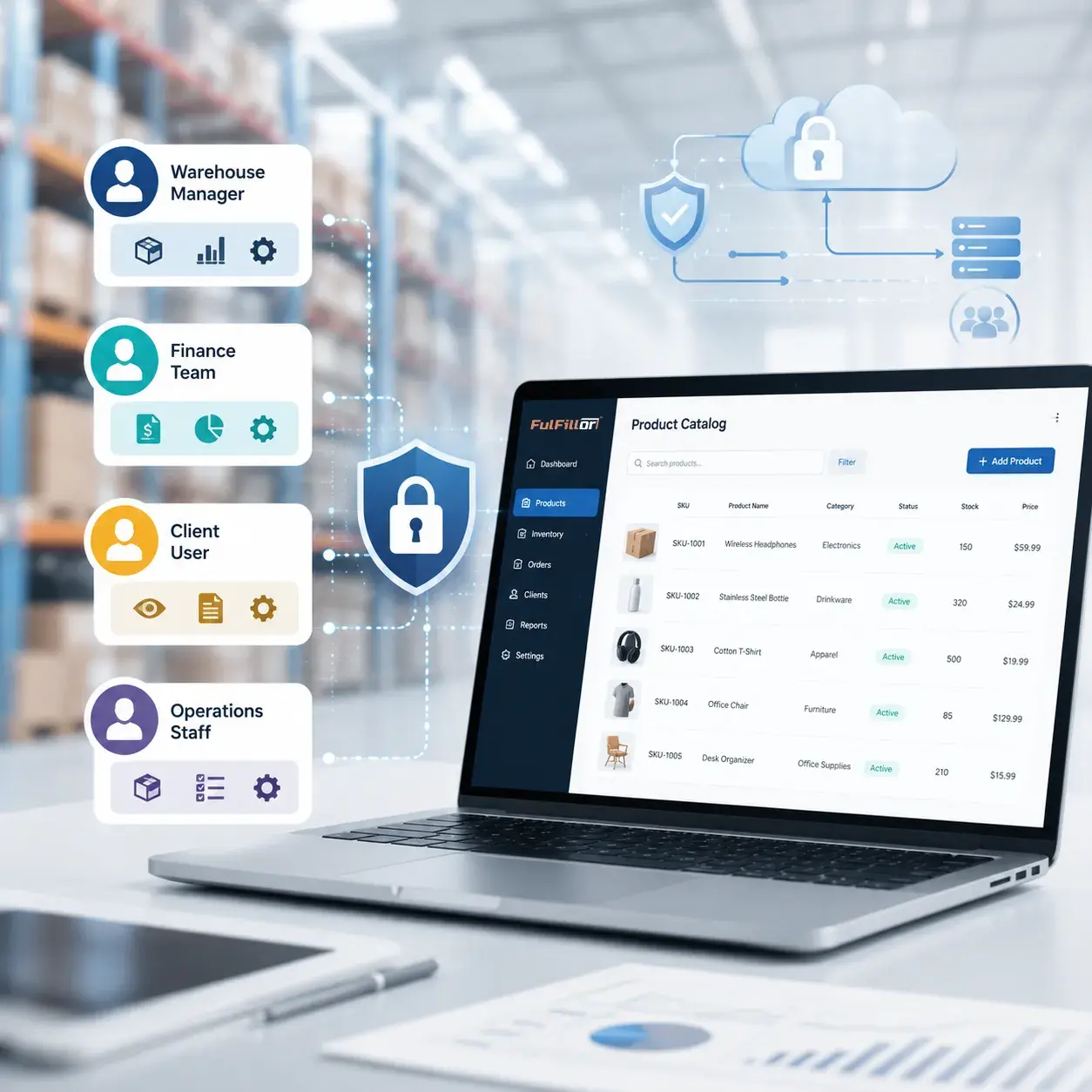
See Product Master Control in Action
Product Catalog & SKU Management FAQs
Product catalog management in a 3PL WMS refers to the structured configuration of SKU data, barcodes, dimensions, client ownership, and operational attributes that control receiving, storage, picking, and billing workflows within multi-client warehouse environments.
Accurate SKU management ensures correct inventory allocation, barcode validation during picking, storage space optimization, and precise client-level billing. In multi-client warehouses, structured product data prevents discrepancies and operational errors.
Yes. A 3PL warehouse management system allows client-based product segmentation, ensuring strict data separation, controlled access, and independent reporting for each client account within the same facility.
Product attributes such as dimensions, weight, storage type, and handling rules directly influence storage calculations, handling charges, and volume-based billing models in 3PL operations.
Yes. SKU configuration is directly linked to barcode validation, enabling accurate receiving, picking confirmation, and inventory movement tracking across warehouse zones.