Returns Management Software for 3PL and Warehouses
Manage return intake, inspection, processing status, and inventory updates across multiple clients in Fulfillor. Keep each return connected to the relevant order and client while reducing separate spreadsheets and repeated data entry.
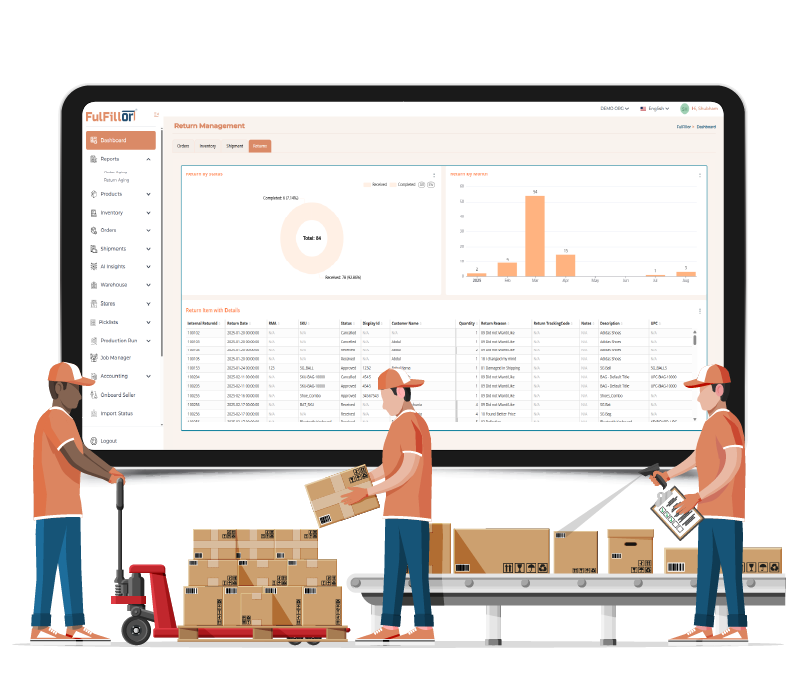 Automated return workflowsReal-time restock updates
How 3PL Warehouses Manage Returns Using Fulfillor
Return Intake & Identification
Scan returned items using barcode or order ID to instantly match them with the correct order and client.
Return Status Tracking
Track each return from arrival through inspection to its final status, such as restocked, damaged, or rejected, with a clear audit trail.
Multi-Client Return Handling
Each return is matched to its original order and client record, so client-specific return rules and workflows are applied consistently throughout processing.
Inventory Updates After Return Processing
Update inventory according to the recorded return decision. Items approved for restocking can become available for fulfillment, while damaged or pending-review items remain unavailable for sale.
Return-Based Billing
Record return handling activities against the relevant client to support billing using configured charges.
Built for Multi-Client Fulfillment Operations
100+
3PL & Fulfillment Clients
Support complex warehouse operations across multiple clients.
80+
Retail Brands Supported
Help retail businesses move from order intake to fulfillment.
150+
Ecommerce, Shipping & Warehouse Integrations
Connect ecommerce, shipping, and warehouse operations without manual work.
Returns Processing in a 3PL Warehouse
Fulfillor's returns management system helps warehouses handle reverse logistics in a structured and consistent way, even across high-volume and multi-location operations.
When a return arrives, items can be scanned and matched to the original order management record and client. After inspection, returned items can be restocked or held for further review, depending on their condition and your return rules.
Inventory is updated in real time after processing, ensuring accurate stock levels and reducing discrepancies. Restocked items re-enter the fulfillment cycle directly, keeping pick, pack, and ship workflows running without gaps or stock mismatches.
This allows retailers and 3PL providers to manage returns without manual tracking, delays, or confusion, turning returns into a controlled and measurable part of warehouse operations.

Returns Management Across Inspection, Grading, and Restocking
3PL Returns Management FAQs
When a return arrives, the item is scanned and matched to the original order and client. Based on predefined rules, it is inspected and assigned a status, such as restocked, damaged, or rejected, and inventory is updated based on that decision. Each step is recorded for tracking and reporting.
Each return is tagged to a specific client and processed using client-specific workflows. This ensures returns are separated correctly and handled according to each client's requirements without manual tracking.
Yes. Each return is assigned a status, such as restocked, damaged, or pending review. Only items approved for restocking are marked available for fulfillment, while damaged or pending-review items remain outside sellable inventory until their status is updated.
Using predefined workflows and rules, returns can be processed consistently across locations. This ensures that every return follows the same steps regardless of warehouse or operator.