
3PL WMS for Australian Warehouses
Warehouse Management Software for Australian 3PLs
Fulfillor helps Australian 3PLs manage multi-client inventory, interstate fulfillment, warehouse operations, GST billing, and carrier workflows from one WMS.
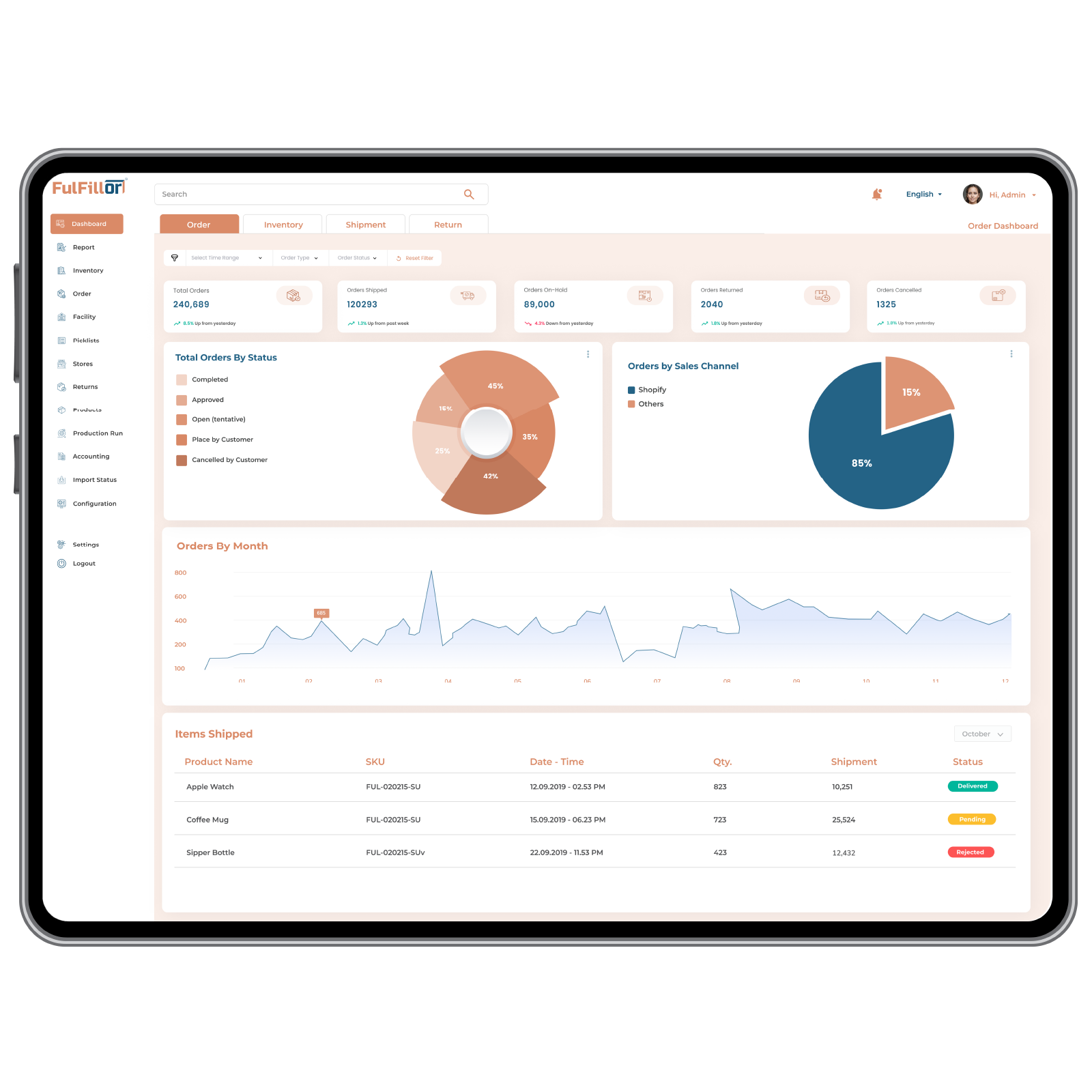
3PL WMS Capabilities for Australian Operations

Multi-Client Warehouse Control
- Keep inventory, workflows, and billing separated for each client to avoid stock conflicts and invoicing errors.

Multi-State Inventory Visibility
- Track stock by warehouse, client, SKU, batch, and location across Australian operations.

Faster Order Processing
- Automatically route and process orders to reduce delays and handle high-volume fulfillment without bottlenecks.

Picking, Packing & Dispatch
- Standardize barcode-based picking, packing, and dispatch workflows across client and order types.

Multi-State Fulfillment Coordination
- Manage fulfillment across Sydney, Melbourne, Brisbane, Perth, and other Australian warehouse locations.

3PL Billing & GST Workflows
- Apply client-specific billing rules and support configured GST details within warehouse billing workflows.
GST-Aware 3PL Billing Software for Australian Warehouses
Fulfillor can capture client billing data for storage, handling, picking, packing, returns, and other warehouse services while supporting configured GST details within billing workflows.
GST treatment, reporting, and compliance remain subject to the business’s accounting setup and applicable Australian requirements.
Connect with Carriers, Accounting Tools, and Sales Channels for 3PL Operations
Connect ecommerce platforms, carriers, accounting tools, and business systems used across Australian fulfillment operations.
Supported integrations can connect Australia Post, StarTrack, ecommerce channels, and other carrier workflows with warehouse orders, inventory, shipping, and billing data.








Australia and New Zealand Fulfillment Workflows
Manage inventory and fulfillment across Australian warehouse locations while supporting connected Trans-Tasman order and shipping workflows with New Zealand.
Fulfillor keeps warehouse inventory, order allocation, transfers, and shipment data visible across connected locations and client accounts.
See How Fulfillor Fits Your Australian 3PL Operation
See how Fulfillor helps Australian 3PL teams manage inventory, orders, GST billing, and fulfilment workflows without manual workarounds.
Frequently Asked Questions About 3PL WMS in Australia
Yes. Fulfillor separates client inventory, orders, billing rules, and reporting so multiple 3PL clients can be managed within one Australian WMS.
Yes. Teams can track stock by warehouse, client, SKU, batch, and location across cities such as Sydney, Melbourne, Brisbane, Perth, and other Australian locations.
Yes. Fulfillor can support order allocation, warehouse transfers, picking, packing, shipping, and inventory visibility across multi-state fulfillment operations.
Fulfillor can support configured GST details and client billing data for warehouse services. GST treatment, reporting, and compliance remain subject to the business's accounting setup and applicable Australian requirements.
Fulfillor supports carrier integrations for Australian fulfillment operations, depending on account configuration, API availability, and the required shipping workflow.
Yes. Fulfillor can help manage inventory, order allocation, warehouse transfers, and shipping data across connected Australia and New Zealand fulfillment operations.