
3PL WMS for the Netherlands
Multi-Client Warehouse Management
As 3PL operations grow, inventory overlaps, picking slows down, and manual checks start creeping in.
Fulfillor helps Netherlands 3PL teams run multi-client warehouses for EU ecommerce orders, keeping picking, shipping, and returns connected in one system.
✓Built for Netherlands 3PLs managing EU orders, client inventory, and cross-border shipping.
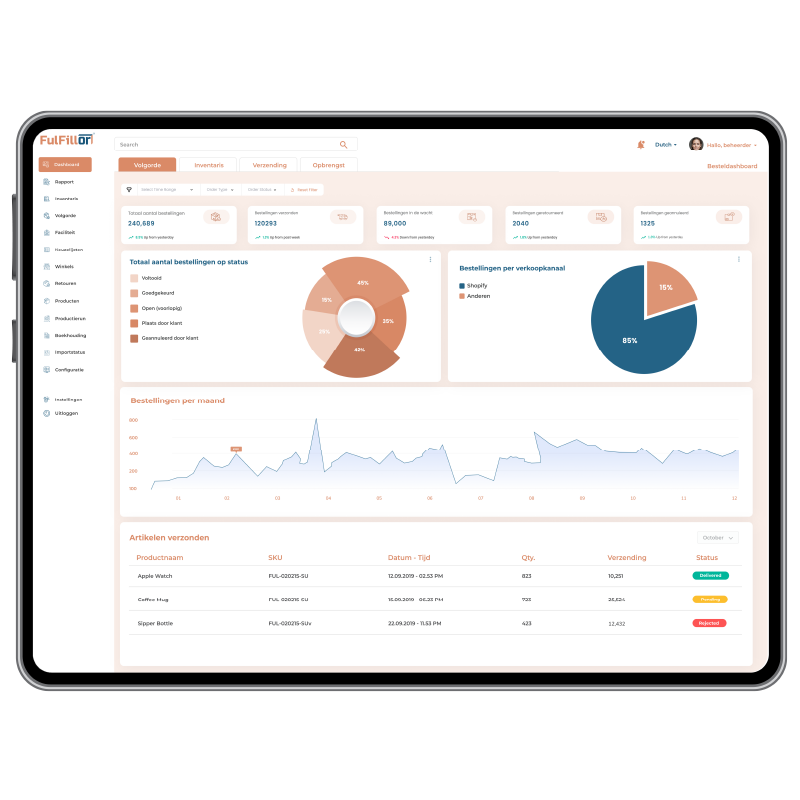
Fix Inventory Overlap, Picking Errors, and EU Shipping Delays in Netherlands 3PL Warehouses
When Netherlands 3PL teams manage multiple clients, EU orders, carrier rules, and returns in the same warehouse, manual workflows quickly create stock errors, picking delays, and fulfillment bottlenecks. Fulfillor keeps inventory, orders, shipping, and returns connected.

Separate Inventory Across Clients and Locations
Keep stock separated by client, warehouse, SKU, and order channel. Reduce inventory overlap, manual checks, and last-minute stock corrections across Netherlands 3PL operations.
Reduce Picking Errors as EU Order Volume Grows
Use barcode-driven picking, structured order queues, and clear warehouse workflows to keep Netherlands 3PL orders accurate as volume increases across clients and channels.

Manage EU Shipping and Carrier Workflows
Connect packing, shipping, and carrier selection in one flow for Netherlands and EU orders. Reduce manual coordination across carriers, regions, and cross-border fulfillment workflows.

Keep EU Returns Connected to Inventory
Manage ecommerce and marketplace returns without losing inventory accuracy. Keep returned stock, order status, and warehouse updates synced across clients and warehouse locations.
Built for Netherlands 3PL Warehouses Managing Multiple Clients
As Netherlands 3PL warehouses add more clients, ecommerce channels, EU orders, and carrier workflows, operations can quickly overlap. Inventory, billing rules, picking flows, and returns need to stay separate without relying on spreadsheets or manual checks.
Fulfillor helps 3PL teams keep client data, inventory, orders, billing workflows, and warehouse tasks separated while scaling multi-client operations.
- ?Separate inventory by client, SKU, and warehouse location
- ?Set client-specific picking, packing, and billing rules
- ?Track SLA performance across client accounts
- ?Add new clients without rebuilding workflows

Multi-Client Warehouse Management
Keep each client’s inventory, orders, workflows, and reporting separated inside one WMS. Fulfillor helps Netherlands 3PL teams avoid stock overlap and operational confusion as client volume grows.
Client-Specific Workflows and Billing Rules
Set unique picking, packing, shipping, storage, and billing rules for each client. Reduce manual workarounds while keeping multi-client warehouse operations consistent.
SLA Tracking and Client Visibility
Track order accuracy, turnaround times, fulfillment status, and SLA performance across client accounts. Give teams clearer visibility without manual reporting.
Add New Clients Without Reworking Operations
Onboard new clients, SKUs, locations, and ecommerce channels without rebuilding your warehouse process. Keep existing workflows stable while your 3PL operation scales.Manage Netherlands Ecommerce Fulfillment and EU Shipping
Manage ecommerce orders, client inventory, carrier workflows, cross-border shipping, and returns from one connected WMS built for Netherlands 3PL teams. For operations serving multiple European markets, see our guide to EU cross-border fulfillment for 3PLs.
- ?Centralize inventory for EU orders
- ?Sync marketplace and store orders
- ?Coordinate Germany, Belgium, and France shipments
- ?Keep returns connected to inventory
Built for Netherlands 3PL Integrations
Connect your ecommerce channels, carriers, and accounting systems to keep orders, inventory, shipment updates, and billing data aligned across Netherlands fulfillment operations.













Scale Netherlands 3PL Operations With Multi-Client Inventory and EU Fulfillment Workflows
Schedule a quick demo to see how Fulfillor supports Netherlands 3PL teams managing client inventory, ecommerce orders, EU shipping workflows, returns, and warehouse operations.
Built for growing fulfillment teams, the platform reduces manual work, keeps client operations separated, and improves visibility across picking, packing, shipping, billing, and returns.
What You'll See in the Demo:
- Multi-client inventory separated by client, SKU, and location
- EU order workflows for ecommerce and marketplace fulfillment
- Picking, packing, shipping, and returns in one connected flow
- Carrier and sales channel integrations for 3PL operations
- Reporting visibility across clients, orders, and warehouse performance
Request a Netherlands 3PL WMS Demo
Frequently Asked Questions
A 3PL WMS for Netherlands-based operations should support multi-client inventory, local and cross-border orders, carrier workflows, returns, warehouse reporting, and integrations with the ecommerce channels used by each client.
Netherlands 3PL warehouses often manage multiple clients, ecommerce orders, EU shipping, returns, and warehouse workflows from the same operation. A dedicated WMS system helps keep client inventory, picking processes, carrier workflows, billing rules, and reporting organized without relying on spreadsheets or manual checks.
The best WMS for 3PL warehouses in the Netherlands should support multi-client inventory, barcode picking, order management, shipping workflows, returns, reporting, billing rules, and ecommerce integrations. Fulfillor is built for 3PL teams that need to manage multiple clients and fulfillment workflows from one warehouse management system.
A standard warehouse management system is usually designed for one business managing its own stock. A 3PL WMS supports multiple clients in the same warehouse, with separate inventory, client-specific workflows, user permissions, billing rules, reporting, and order processing for each account.
A WMS systeem is the Dutch term often used for a warehouse management system. It is software that helps warehouses manage inventory, orders, picking, packing, shipping, returns, and reporting. For 3PL providers, the WMS systeem should also support multi-client inventory and client-specific warehouse workflows.
The cost of a WMS system in the Netherlands depends on order volume, number of users, warehouse locations, integrations, and workflow complexity. A 3PL warehouse may need pricing based on multi-client inventory, order processing, shipping integrations, reporting, billing workflows, and ecommerce platform connections.
Fulfillor helps Netherlands 3PL teams separate inventory by client, SKU, warehouse location, and order channel. This reduces the risk of stock overlap, picking mistakes, manual corrections, and reporting confusion when multiple clients share the same warehouse operation.
Yes. A WMS for 3PL can support ecommerce fulfillment from the Netherlands by syncing orders from sales channels, organizing picking and packing workflows, updating inventory, managing shipping steps, and keeping returns connected to order records. This helps fulfillment teams serve customers across the Netherlands and the wider EU.
Fulfillor stores WMS data for customers in the Netherlands on dedicated servers within the EU. This includes the inventory, order, and customer records managed through the platform.