
3PL WMS for Canadian Warehouses
Automate multi-client billing, inventory separation, and US cross-border fulfillment without spreadsheets.
Built for 3PL teams managing high SKU volumes and multi-client operations across Canada.
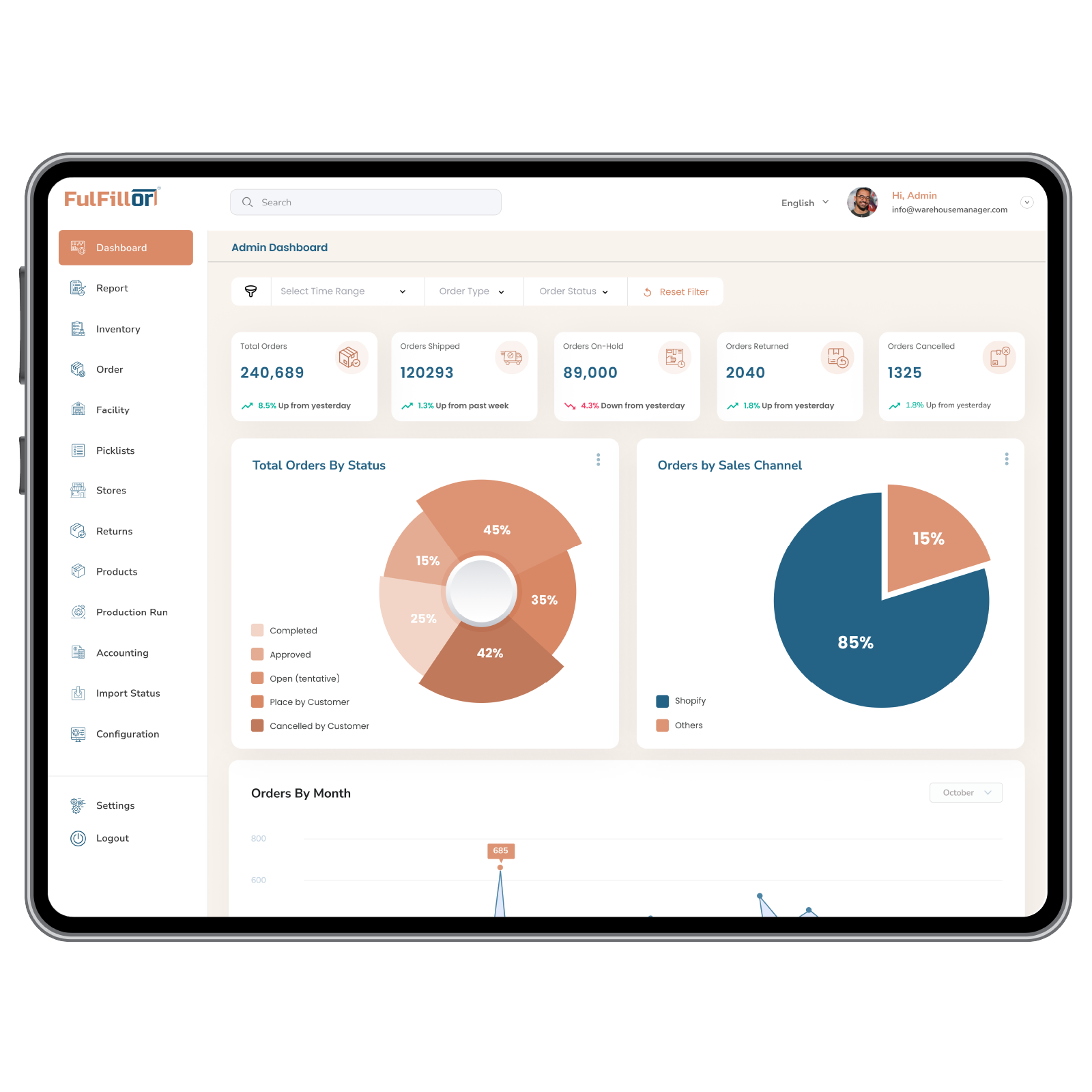 Automated BillingCross-Border Orders
How Canadian 3PLs Manage Multi-Client Warehouse Operations?
Canadian 3PLs struggle with inventory overlap, cross-border delays, and increasing SKU complexity. Most systems break at scale and rely on manual fixes.
Simplify Canadian 3PL Operations from Billing to Cross-Border Shipping

Automate Billing Across Multiple 3PL Clients

Separate Client Inventory Across Warehouses

Streamline US Cross-Border Orders

Reduce Picking Errors at Scale
Built for Canadian 3PL Warehouses Handling Multi-Client and Cross-Border Complexity
Used by 3PL teams that need clear inventory separation, faster order processing, and fewer manual checks.
Keep client inventory, workflows, and billing fully separated automatically.
Automate carrier selection, labels, and cross-border workflows.
Process large order volumes with accurate picking, packing, and tracking.
Eliminate manual tracking and reduce errors across inventory and billing.
Built for Canadian 3PL Integrations
Connect with Canada Post, Purolator, ShipStation, Shopify, and accounting tools used by Canadian fulfillment providers.











Orders, inventory, and shipping data sync automatically across systems, reducing manual updates and errors.
Why Canadian 3PLs Replace Spreadsheets with Fulfillor
Automate Your 3PL Operations and Scale Without Manual Work
Manage inventory, orders, and cross-border fulfillment from one system built for Canadian 3PL warehouses.
Frequently Asked Questions About 3PL WMS in Canada
Canadian 3PLs should look for a WMS that supports multi-client inventory, automated billing, barcode picking, carrier integrations, client portals, and real-time reporting. A good 3PL WMS should help teams manage separate client workflows, reduce manual work, and support both domestic and US cross-border fulfillment.
A 3PL WMS reduces billing errors by tracking storage, receiving, picking, packing, shipping, and value-added services by client. Instead of relying on spreadsheets or manual calculations, 3PL teams can automate billing rules and generate more accurate client invoices.
A 3PL WMS prevents inventory overlap by separating stock by client, SKU, warehouse location, lot, serial number, or order type. This helps teams avoid client-level mix-ups, improve inventory accuracy, and maintain clearer visibility across shared warehouse space.
Yes. A 3PL WMS can support US cross-border fulfillment by helping Canadian warehouses manage order routing, carrier selection, label generation, tracking, and shipping workflows from one system. This helps reduce manual processing and improves visibility for US-bound orders.
The cost of a 3PL WMS in Canada depends on warehouse size, order volume, number of users, integrations, billing needs, and implementation requirements. Most 3PLs should evaluate pricing based on the time saved, billing accuracy, fulfillment speed, and reduction in manual work.
Implementation time depends on the number of clients, integrations, warehouse workflows, billing rules, and data migration needs. A smaller 3PL can often start faster, while larger multi-client operations may need more setup for inventory, billing, users, and carrier workflows.
Yes. Fulfillor helps Canadian 3PLs track storage, receiving, picking, packing, shipping, returns, and value-added service charges by client.
Yes. Fulfillor supports cross-border fulfillment workflows by helping teams manage order routing, labels, carrier selection, and tracking from one system.
Yes. Fulfillor helps Canadian fulfillment teams manage Shopify orders, inventory syncing, picking, packing, shipping, and client visibility.