
3PL WMS for Oman
Warehouse Management Software
3PL warehouses in Oman often manage multi-client inventory while handling shipments across GCC markets. Fulfillor is a 3PL warehouse management system that helps manage inventory, fulfillment, shipping, and client billing from one platform.
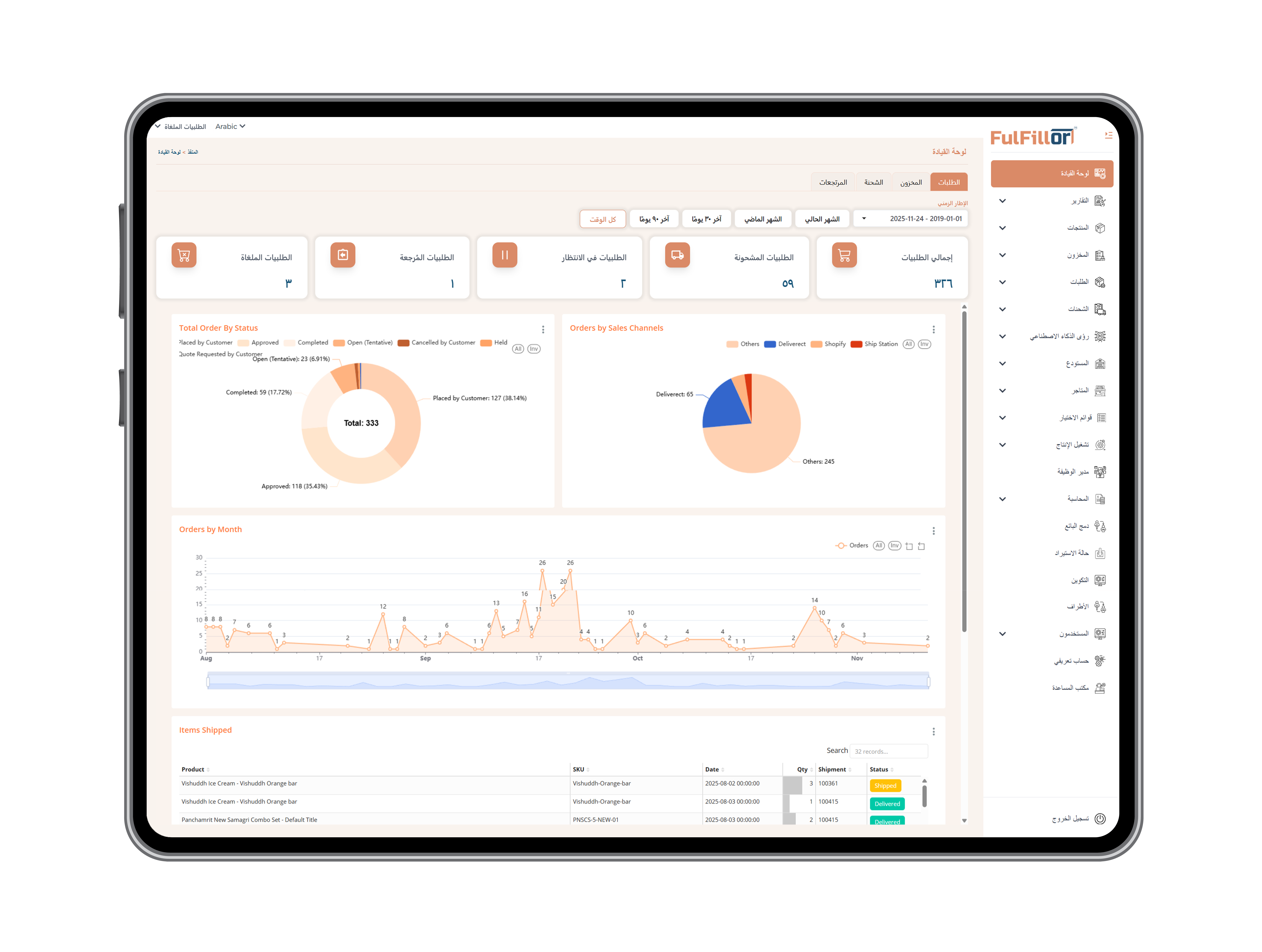
Common 3PL Challenges in Oman
Multi-Client Inventory
→Separate client stock to reduce picking errors and inventory confusion.
GCC Shipment Visibility
→Track shipments moving across Oman and GCC markets.
Client Billing
→Apply client-specific billing rules and service charges.
Connected Warehouse Systems
→Keep warehouse, order, carrier, and business data connected.
VAT & Client Pricing
→Support configured VAT details and client-specific pricing workflows.
Mixing client inventory in the same warehouse can lead to picking errors, incorrect stock allocation, and billing disputes.
3PL WMS Capabilities for Oman Warehouses

Separate Client Inventory

Real-Time Inventory Visibility

GCC Shipping Visibility

Picking & Packing Accuracy
Integrations for Oman 3PL Operations
Connect ecommerce platforms, carriers, and business systems used across Oman and GCC fulfillment workflows.



















Built for 3PL and Fulfillment Teams in Oman
Fulfillor is designed for warehouses, logistics teams, and fulfillment operators that need better control over clients, inventory, billing, and cross-border operations.
Multi-Client 3PL Providers
Manage client inventory, orders, and warehouse activity separately within one WMS.
Cross-Border Logistics Teams
Coordinate shipments moving between Oman and GCC markets with connected carrier workflows.
Import-Focused Warehouses
Manage inbound inventory through Sohar, Salalah, and Duqm before local or regional distribution.
Fulfillment Centers
Standardize receiving, picking, packing, returns, and client-specific fulfillment workflows.
See How Fulfillor Fits Your Oman 3PL Operation
Manage multi-client inventory, GCC shipping, billing, and warehouse workflows with better visibility across your Oman operations.
Frequently Asked Questions
Yes. Fulfillor separates inventory, orders, permissions, billing rules, and reporting by client within one WMS.
Yes. Fulfillor can support warehouse and shipping workflows for orders moving across Oman and GCC markets through supported integrations.
Yes. Teams can track stock by warehouse, client, SKU, batch, and storage location while maintaining centralized visibility.
Fulfillor supports regional and international carrier integrations, depending on the carrier account, API access, and required workflow.
Yes. Fulfillor can manage receiving, putaway, inventory allocation, picking, packing, and dispatch for imported goods moving through Oman warehouse operations.
VAT-related billing requirements should be reviewed during implementation, including the tax fields, invoice details, and accounting integrations your operation needs. Confirm the supported configuration with the Fulfillor team. Your business and tax advisors remain responsible for determining the applicable tax treatment, filing requirements, and compliance.