
3PL WMS for Belgian 3PLs
Warehouse Management Software
Belgian 3PLs operate multi-client warehouses where execution accuracy and EU cross-border fulfillment leave little room for manual processes or disconnected systems.
A 3PL warehouse management system built for Belgium supports inventory control, order execution, and EU-wide fulfillment from a single platform.
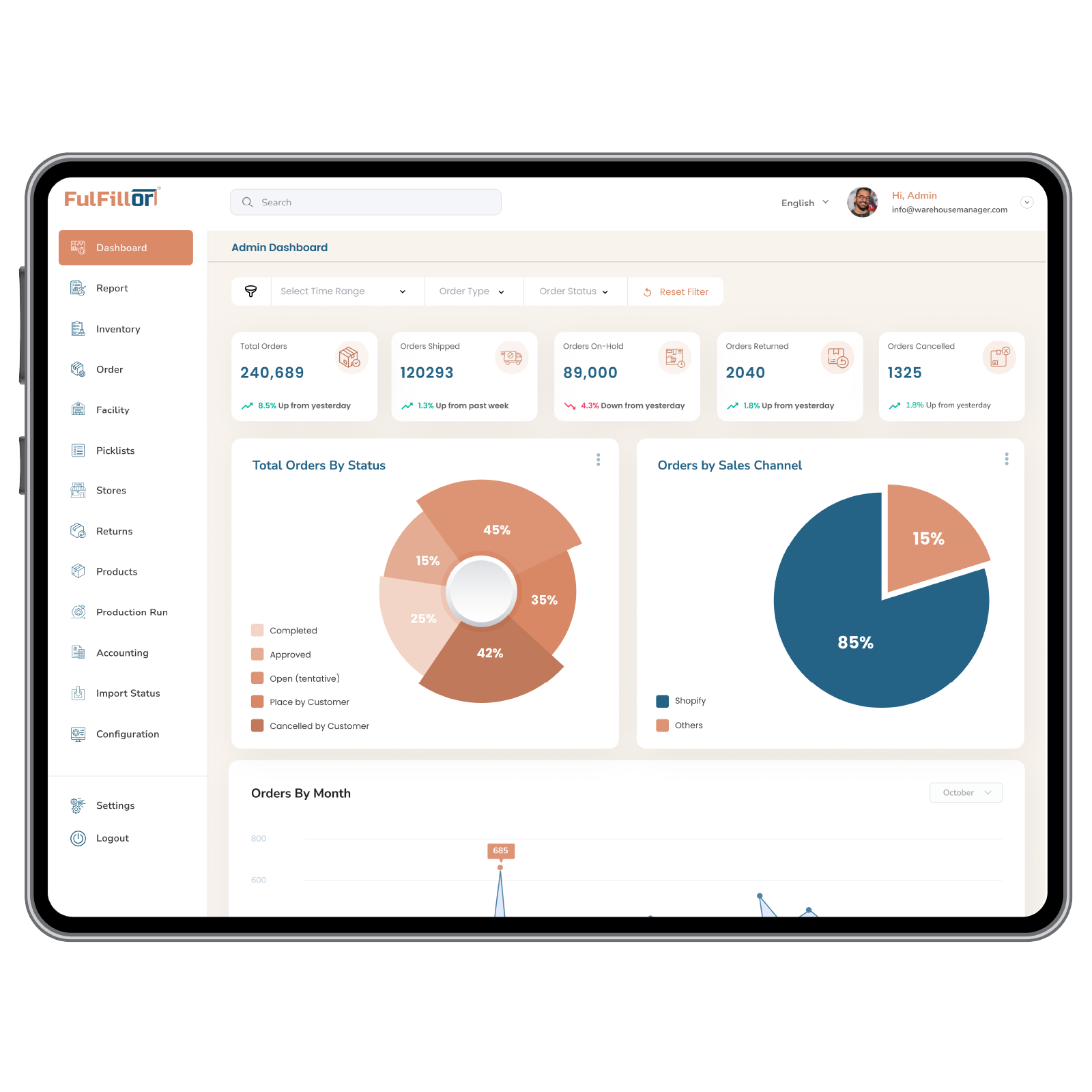
What makes 3PL operations harder in Belgium
Belgian 3PLs often manage inbound stock through major logistics routes like Antwerp while fulfilling orders across the EU. Bpost, DPD, cross-border VAT requirements, and multi-client inventory can quickly create delays, stock errors, and billing issues.
Track inventory accurately across multiple clients
Maintain strict data separation between client accounts
Standardize picking, packing, and shipping workflows
Keep operations consistent during high EU order volumes
Manage Complex Multi-Client Fulfillment Across Belgium
Built to support multi-client warehouse operations where accuracy, separation, and execution consistency are critical.

Multi-Client 3PL Management

Real-Time Inventory Control

EU Cross-Border Fulfillment Support

Warehouse Execution Accuracy
Connect with Ecommerce, Carriers, and Accounting Systems Used by Belgian 3PLs
Sync orders, inventory, shipping, and billing across platforms without manual updates or data mismatches.





























Built for EU Cross-Border Fulfillment
Belgium's role as a European logistics hub means many 3PL providers support inventory and orders moving across multiple EU countries. This creates additional complexity around VAT reporting, OSS/IOSS requirements, and client-specific billing workflows.
A 3PL WMS helps maintain separate inventory, fulfillment records, and billing data for each client, making it easier to track stock movements and support VAT-related reporting across different destination markets.
Multi-Client Inventory
Cross-Border Orders
VAT-Aware Billing
EU Distribution
Who This Is For
- 3PL providers managing multiple clients in a single warehouse
- Fulfillment teams handling orders across EU markets
- Logistics operators dealing with cross-border shipping complexity
- Warehouses scaling operations without losing control over inventory and billing
Take Control of 3PL Fulfillment in Belgium
As multi-client operations grow, maintaining accurate inventory, consistent execution, and billing control becomes harder without a structured system.
Frequently Asked Questions
Belgium gives fulfillment providers access to nearby markets such as the Netherlands, Luxembourg, France, and Germany. A warehouse management system helps coordinate inventory, orders, shipping rules, and client activity across these destinations from one or more Belgian warehouse locations.
A WMS can store product information, addresses, order notes, packing documents, and client instructions in the formats required by different customers and sales channels. Belgian 3PL providers should check whether their ecommerce, carrier, and document workflows support the languages needed for domestic and cross-border orders as part of Fulfillor's multilingual WMS support.
Warehouse and order records may include the customer destination, order value, shipment date, sales channel, tax fields, returns, and related transaction references. This information can support accounting and VAT workflows, but the WMS should not be described as a replacement for tax software or professional VAT reporting.
A Belgium-based warehouse may receive returns from several European markets. A WMS can record return reasons, inspection results, product condition, restocking decisions, damaged goods, refunds, and client-specific return rules while keeping inventory records accurate.
The appropriate shipping service may depend on the destination country, parcel size, delivery speed, client agreement, and order value. A WMS can apply carrier rules and shipping preferences to help warehouse teams select services consistently for Belgian, Benelux, and wider European orders.
Fulfillor hosts WMS data on dedicated servers within the EU. Belgian 3PLs can manage client inventory and orders across Benelux and other EU markets while keeping their operational records in the same system.