
3PL WMS for France
Warehouse Fulfillment Operations
Fulfillor is a cloud-based 3PL WMS built for French fulfillment operators shipping through La Poste and Chronopost, with multi-client inventory, order fulfillment, warehouse billing, and data controls that support CNIL and GDPR requirements.
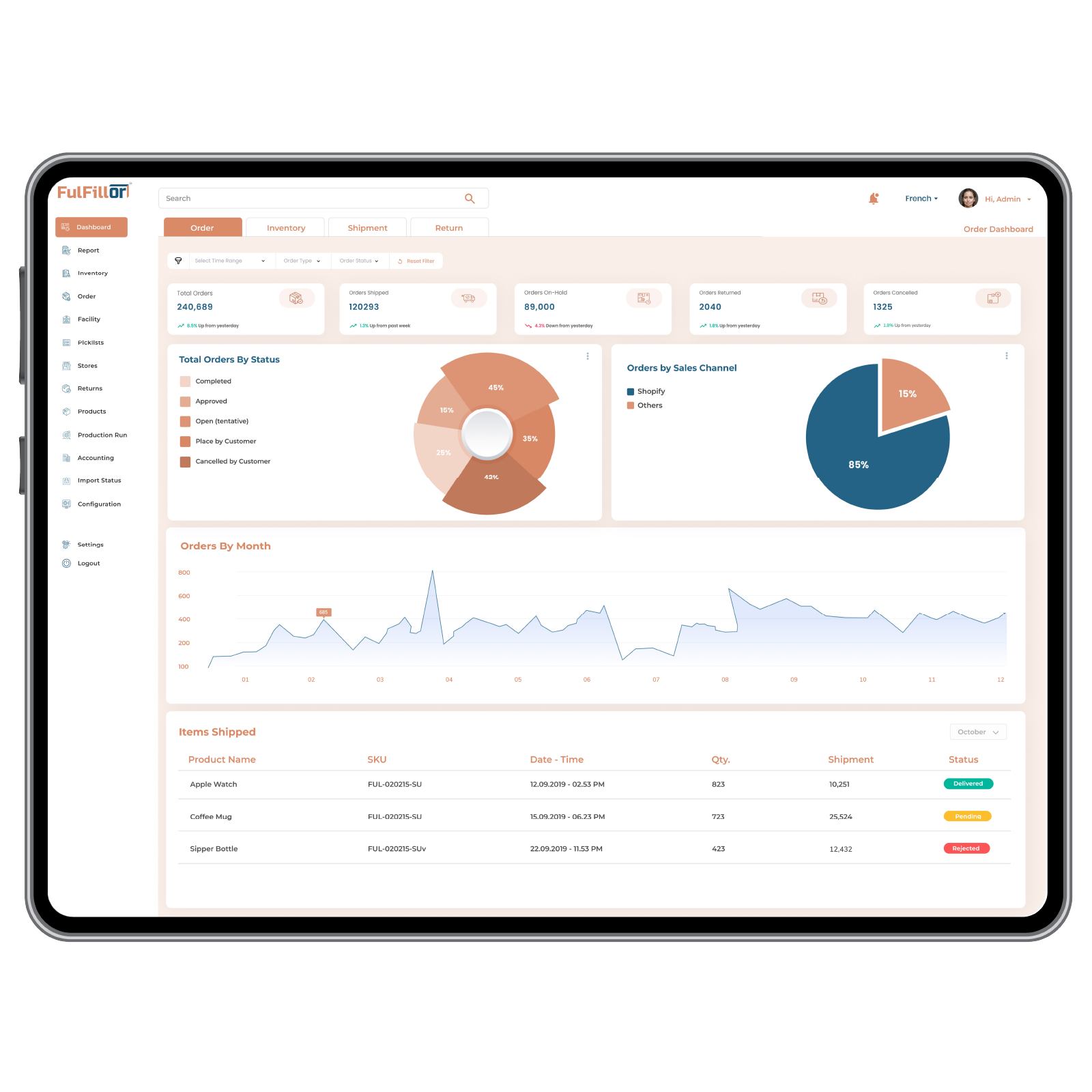
Managing 3PL Fulfillment Across France and the EU
French 3PLs often manage multiple clients, ecommerce channels such as Cdiscount and Fnac, domestic orders, and EU fulfillment from the same warehouse network.
Fulfillor keeps inventory, orders, client activity, billing, and warehouse workflows connected in one WMS while maintaining clear separation between 3PL clients.
3PL WMS Capabilities for France & EU Fulfillment

Multi-Client Warehouse Management

Inventory Across French Warehouses

French Ecommerce Order Fulfillment

Picking, Packing & Dispatch

France and EU Fulfillment

3PL Billing & Client Reporting
Operational Traceability and Data Controls
Fulfillor helps French 3PLs maintain operational records, user permissions, inventory history, and warehouse activity within one WMS.
Access controls and activity records support internal data-handling processes. Fulfillor and its customers each have data protection responsibilities based on their roles and the applicable processing arrangements.
Integrations for French 3PL Operations
Connect ecommerce platforms, carriers, accounting tools, and business systems used across French and EU fulfillment workflows.












Supported integrations can connect French ecommerce and carrier workflows with warehouse orders, inventory, shipping, and billing data.
See How Fulfillor Fits Your French 3PL Operation
Manage multi-client inventory, France-to-EU fulfillment, shipping, billing, and warehouse workflows from one connected WMS.
Common Questions About 3PL Warehouse Software in France
Yes. Fulfillor separates inventory, orders, permissions, billing rules, and reporting by client within one WMS.
Yes. Fulfillor can support domestic French orders and cross-border EU fulfillment, including inventory allocation, picking, packing, returns, and shipping workflows.
Fulfillor supports ecommerce, marketplace, carrier, accounting, and business-system integrations, depending on API access and the required workflow.
Yes. Teams can track inventory and fulfillment by warehouse, client, SKU, batch, and storage location while maintaining centralized visibility.
Yes. Fulfillor provides user permissions, inventory history, and activity records for supported warehouse actions. These features support traceability and access management. Fulfillor and its customers each have data protection responsibilities based on their roles and the applicable processing arrangements.
Yes. Fulfillor can apply client-specific billing rules for warehouse services and keep reporting separated by client account.
Yes. Fulfillor stores WMS data for French customers on dedicated servers within the EU, including inventory, order, and customer records. Role-based permissions help warehouse teams control access to this information.