
3PL WMS for Portugal
Warehouses and Fulfillment Operations
Fulfillor helps 3PL warehouses and fulfillment providers in Portugal run multi-client operations for domestic and wider EU orders, with billing, returns, and warehouse workflows tracked in one connected warehouse management system.
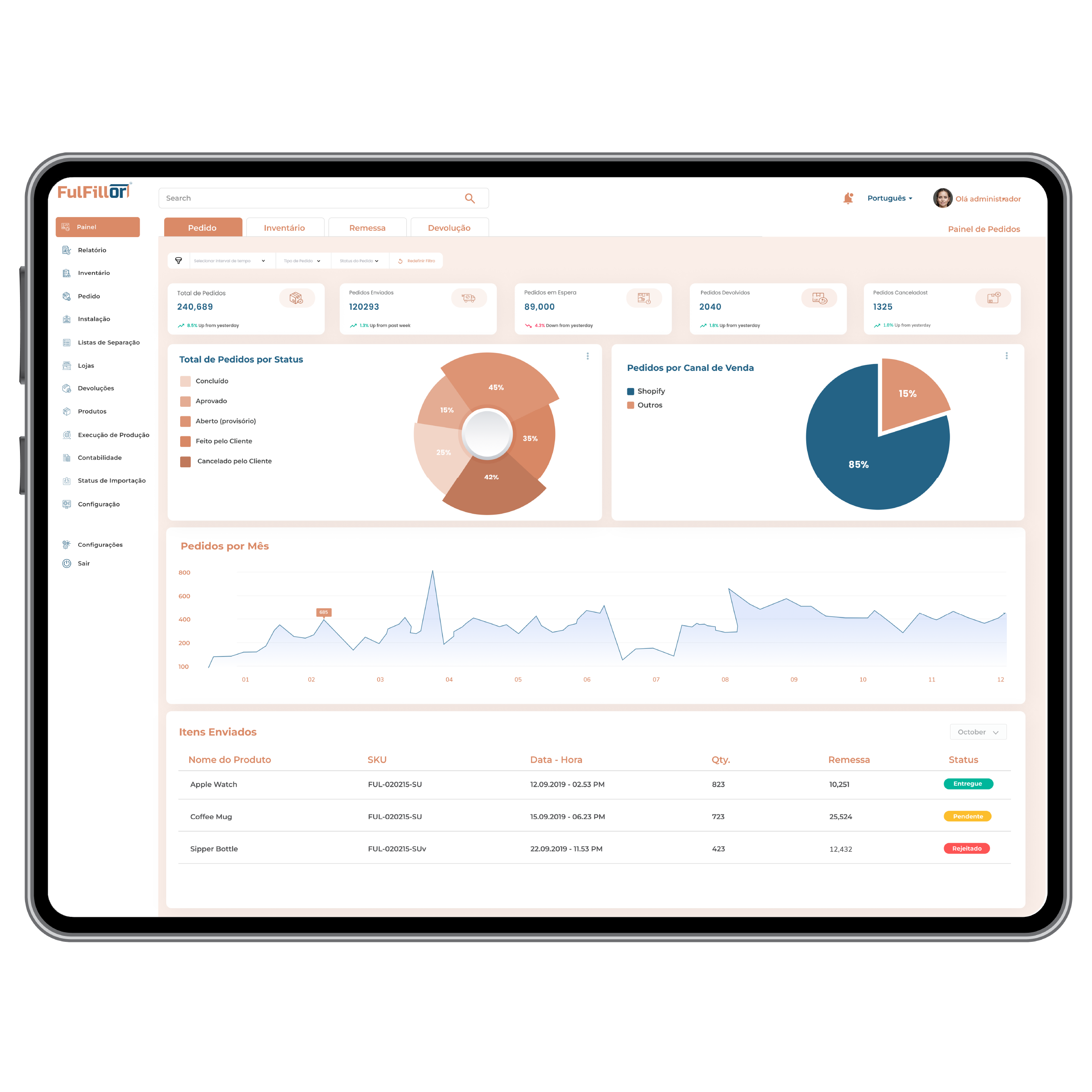
Managing 3PL Operations Across Portugal
Portuguese 3PLs may manage domestic orders, Iberian shipments, EU fulfillment, island deliveries, and multiple client accounts from the same warehouse network.
Fulfillor keeps inventory, orders, billing, and warehouse workflows connected while supporting operations across mainland Portugal, Madeira, and the Azores.
How Fulfillor Supports Portugal 3PL Operations
Integrations for Portugal 3PL Operations
Connect ecommerce platforms, carriers, and business systems used across Portugal, Iberian, and EU fulfillment workflows.







Supported integrations can connect Portuguese carrier and ecommerce workflows with warehouse orders, inventory, shipping, and fulfillment data.
3PL WMS Capabilities for Portugal Operations

Multi-Location Inventory Visibility
Track stock by client, SKU, batch, and warehouse location across Portugal operations.

Portugal & EU Ecommerce Workflows
Connect supported ecommerce channels and marketplaces with domestic and EU fulfillment workflows.

Multi-Client 3PL Management
Keep inventory, orders, billing, permissions, and reporting separated by client within one WMS.

Mainland & Island Warehouse Operations
Manage inventory and fulfillment across mainland Portugal, Madeira, and the Azores from one WMS.

Domestic, Iberian & EU Order Routing
Route orders across Portugal, Iberian, and EU fulfillment workflows based on inventory and operational rules.

Portugal, Iberian & EU Fulfillment
Support domestic orders, Iberian shipments, and EU fulfillment through connected warehouse and carrier workflows.
See How Fulfillor Fits Your Portugal 3PL Operation
See how Fulfillor can support multi-client inventory, Portugal and EU fulfillment, billing, shipping, and warehouse operations.
Trusted by 3PL and Fulfillment Teams






Request a Demo
See Fulfillor in action with a quick system overview.
3PL WMS FAQs for Portugal
Yes. Fulfillor keeps inventory, orders, billing rules, permissions, and reporting separated by client within one WMS.
Yes. Fulfillor can support inventory and fulfillment workflows across mainland and island warehouse operations while maintaining centralized visibility.
Yes. Fulfillor can support domestic orders, Iberian shipments, and EU fulfillment through connected warehouse and carrier workflows.
Fulfillor can support configured billing and invoice data for connected accounting workflows. SAF-T generation, submission, and tax compliance depend on the business's accounting setup and applicable Portuguese requirements.
Fulfillor supports ecommerce, marketplace, carrier, and business-system integrations depending on API access and the required workflow.
Yes. Teams can track inventory and fulfillment by warehouse, client, SKU, batch, and storage location within one WMS.
Fulfillor stores WMS data on dedicated servers within the EU. Records from operations across mainland Portugal, Madeira, and the Azores can be managed through one platform, with access controlled by user permissions.
See How Fulfillor Supports 3PL Operations in Portugal
Get a personalized walkthrough of the platform and see how Fulfillor helps manage multi-client inventory, order fulfillment, shipping, and billing from one WMS.