
3PL WMS Software for New Zealand Warehouses
Built for New Zealand 3PL Operations
Manage multi-client inventory and fulfillment across Auckland, Christchurch, and other North and South Island warehouse locations.
Fulfillor helps New Zealand 3PLs control receiving, inventory, order routing, warehouse transfers, shipping, returns, and client billing from one connected warehouse management system.
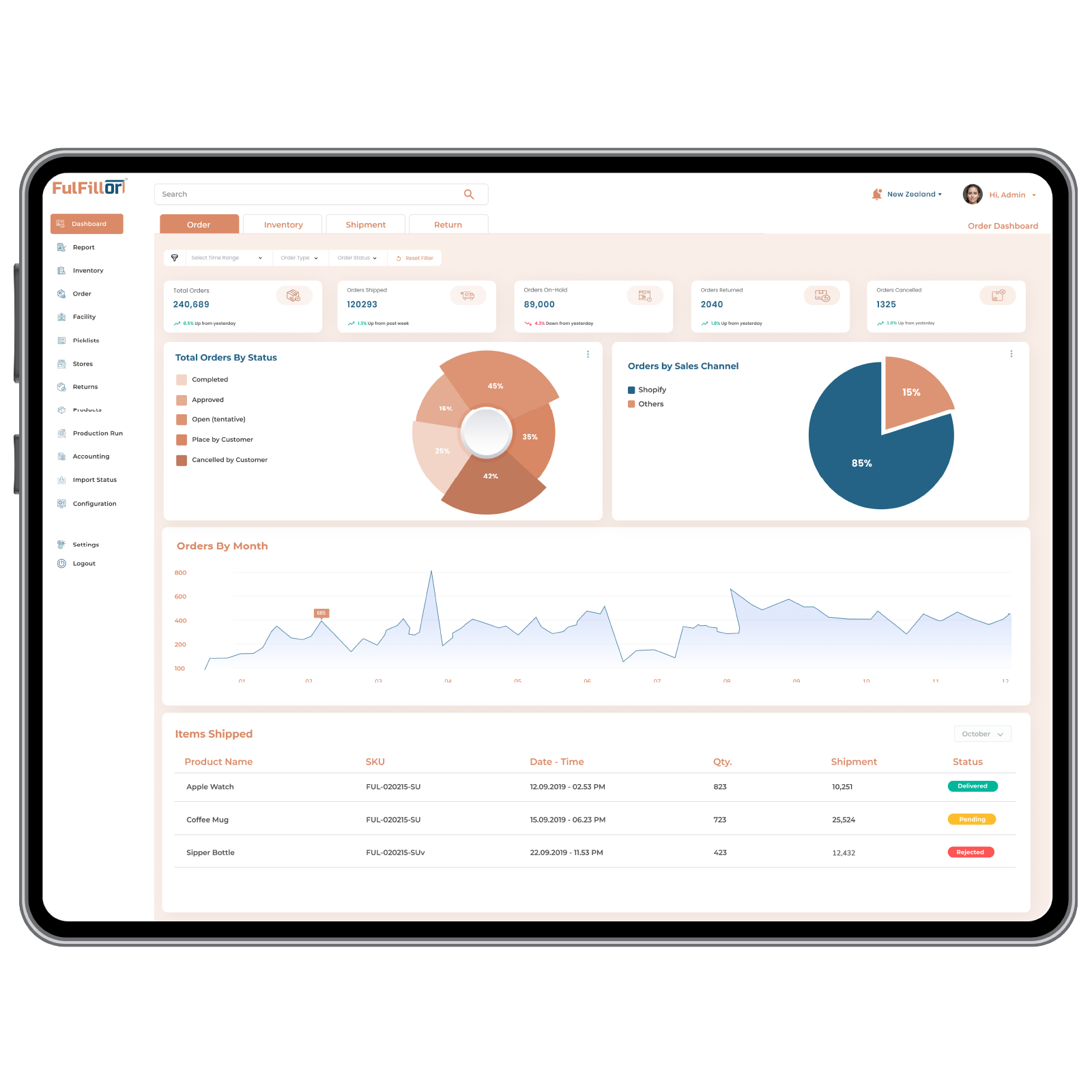
Why Inventory Availability Depends on Location in New Zealand
Inventory may be available somewhere in New Zealand without being ready to ship from the warehouse closest to the customer. Stock held in Auckland cannot always support a South Island order, particularly when it must cross Cook Strait before reaching a Christchurch fulfillment facility.
Fulfillor tracks inventory by warehouse, client, SKU, and status so teams can see what is available locally, what is allocated, and what is still in transit between locations.
National stock is not the same as locally available stock
A SKU may be available across the network but unavailable in the warehouse serving the order. Fulfillor separates available, allocated, held, and in-transit inventory by location so teams can make better fulfillment decisions.
Strait→transit
time
Immediately available for South Island dispatch
Auckland and Christchurch Warehouse Inventory Model
New Zealand 3PLs do not always need identical stock levels on both islands. Fulfillor helps teams balance inventory between Auckland, Christchurch, and other warehouse locations while keeping transfers and local availability visible.
Auckland as the Primary Inventory Hub
Hold core inventory in Auckland for North Island fulfillment while keeping visibility into stock allocated for South Island demand.
Christchurch for South Island Fulfillment
Position fast-moving inventory in Christchurch to support South Island orders and reduce reliance on inter-island transfers.
Track Inter-Island Inventory in Transit
Keep transferred stock visible while separating in-transit inventory from stock that is ready to fulfill customer orders.
Multi-Client Warehouse Management for New Zealand 3PLs
Manage multiple clients across Auckland, Hamilton, Wellington, Christchurch, and other warehouse locations while keeping inventory, orders, billing, and reporting separated by client.
Fulfillor gives each client clear stock ownership while teams retain centralized visibility across the wider warehouse network.
Client Billing and New Zealand GST Workflows
Fulfillor can capture client billing data for storage, handling, picking, packing, returns, and other warehouse services within New Zealand 3PL operations.
Configured GST details can be included in billing workflows, while tax treatment, filing, and compliance remain subject to the business's accounting setup and New Zealand requirements.
Manage Imported Inventory Awaiting MPI Clearance
Keep imported goods separated by status while they move through receiving, inspection, quarantine, or clearance workflows.
Fulfillor can track inventory by client, SKU, batch, warehouse location, and status so stock awaiting MPI clearance is not treated as available for fulfillment.
MPI clearance decisions and biosecurity requirements remain subject to New Zealand authorities and the importer's configured processes.
Connect the Systems Used by New Zealand 3PLs
Connect ecommerce platforms, carriers, accounting tools, and business systems used across New Zealand fulfillment operations.
Supported integrations can connect warehouse orders, inventory, shipping, and billing data across domestic and inter-island workflows.










Integration availability depends on the platform, carrier account, API access, and required warehouse workflow.
Operating Across New Zealand and Australia?
Fulfillor can keep New Zealand and Australian warehouses, inventory, clients, and fulfillment rules separated while providing shared operational visibility. Explore our 3PL WMS for Australia for Australian warehouse requirements.
See How Fulfillor Fits Your New Zealand 3PL Operation
See how Fulfillor can support multi-client inventory, inter-island fulfillment, GST billing, imported stock, and warehouse operations across New Zealand.
Questions New Zealand 3PLs Ask About WMS
Yes. Fulfillor can separate client inventory, orders, permissions, and billing records within one connected WMS for New Zealand operations.
Yes. Teams can track stock by warehouse, client, SKU, batch, and status while maintaining visibility across Auckland, Christchurch, and other New Zealand locations.
Yes. Fulfillor can help teams manage stock transfers, local inventory availability, order allocation, and fulfillment across North and South Island warehouse networks.
Fulfillor can support configured GST details and client billing data within warehouse invoicing workflows. Tax treatment, filing, and compliance remain subject to the business's accounting setup and applicable New Zealand requirements.
Yes. Imported stock can be separated by status so inventory awaiting inspection, quarantine, or clearance is not treated as available for fulfillment. MPI decisions remain subject to New Zealand authorities.
Fulfillor supports ecommerce, carrier, accounting, and business system integrations depending on API availability, account configuration, and the required warehouse workflow.