In 3PL operations, client communication and transparency are not optional. Clients need accurate updates on inventory, orders, shipments, returns, billing, and fulfillment performance. When those updates are delayed or unclear, small issues can quickly turn into costly mistakes, missed expectations, and damaged client relationships.
For 3PL warehouses and fulfillment providers, a seamless supply chain depends on shared visibility between the warehouse team and its clients. A modern third-party logistics software helps centralize order data, inventory movement, shipment updates, reports, and client communication in one place.
Instead of relying on manual emails, spreadsheets, or delayed status updates, 3PL teams can use a structured WMS to give clients real-time access to the information they need. This improves transparency, reduces repetitive follow-ups, and helps build stronger long-term client relationships.
Below are the key ways a modern warehouse system can improve client communication, visibility, and transparency.
Why Transparency Matters in 3PL Client Relationships
Effective client communication in 3PL is not just about responding to emails or answering status requests. Clients need clear, timely access to inventory levels, order progress, shipment updates, returns, billing details, and fulfillment performance. When this information is easy to access, both the 3PL provider and the client can make better decisions with fewer delays and misunderstandings.
Here’s why transparency matters in 3PL client relationships:
-
Builds Trust: Transparency helps clients understand where their inventory is, how orders are moving, and when shipments are expected to arrive. When clients have clear visibility into daily fulfillment activity, there is less confusion, fewer disputes, and stronger long-term trust.
-
Supports Better Decisions: Real-time visibility helps clients plan inventory, manage customer expectations, review fulfillment performance, and respond faster when issues appear. Accurate data also reduces miscommunication and helps both teams make decisions based on facts instead of assumptions.
-
Improves Supply Chain Performance: Transparent reporting helps identify delays, recurring errors, inventory gaps, and fulfillment bottlenecks. With better visibility, 3PL providers and their clients can improve workflows, reduce avoidable issues, and create a more reliable fulfillment operation.
Common Communication Challenges Between 3PLs and Clients

Even with strong warehouse operations, communication gaps can create confusion between 3PL providers and their clients. When clients do not have direct access to order status, inventory movement, shipment updates, and performance reports, they often rely on manual follow-ups. This slows down both teams and increases the risk of missed expectations.
-
Lack of Real-Time Tracking: When clients cannot see where orders or shipments stand, they are forced to ask for manual updates. This creates delays, increases support workload, and makes the 3PL provider look reactive instead of proactive.
-
Slow Response Times: When issues happen, delayed responses can quickly damage trust. Clients need timely updates on order delays, inventory shortages, shipment exceptions, and returns so they can manage their own customers with confidence.
-
Inconsistent Reporting: Without accurate and consistent reports, clients cannot clearly measure fulfillment performance. Regular reporting on order accuracy, delivery status, inventory movement, returns, and service levels helps both teams make better decisions.
-
Complicated Multi-Client Management: 3PL warehouses often manage different clients, service rules, billing models, SKUs, and reporting needs at the same time. Without a structured system, important details can be missed, creating confusion for both warehouse teams and clients.
-
Communication Barriers: Relying only on emails, spreadsheets, and manual updates can create bottlenecks. When information is scattered across different channels, clients may receive delayed, incomplete, or inconsistent updates, which weakens trust over time.
Best Practices for Improving Communication and Transparency with 3PL Clients

Strong 3PL client communication depends on clear systems, consistent updates, and shared access to operational data. Instead of relying only on emails or manual follow-ups, 3PL providers should create structured communication workflows that help clients see what is happening across inventory, orders, shipments, returns, reports, and billing.
1. Use Clear Communication Channels
Define where each type of communication should happen. For example, urgent shipment issues may need direct alerts, while inventory updates, order status, reports, and billing details should be available through a client portal or shared dashboard. This keeps information organized and reduces confusion across teams.
2. Standardize Reports and Update Processes
Clients should receive consistent updates in a format they can understand. Standardized reporting helps clients review order accuracy, fulfillment speed, inventory movement, returns, exceptions, and service-level performance without chasing different teams for answers.
3. Send Proactive Alerts and Exception Updates
Do not wait for clients to ask what went wrong. Automated alerts for low inventory, delayed orders, shipment exceptions, receiving issues, and return updates help clients respond faster and manage their own customers more confidently.
4. Give Clients Self-Service Access to Key Information
A 3PL client portal can reduce repetitive emails by giving clients direct access to the information they need. This may include inventory levels, order status, shipment tracking, invoices, reports, returns, and service activity. Self-service access improves transparency while freeing warehouse teams from constant manual update requests.
How a 3PL WMS Helps Strengthen Client Relationships

A strong 3PL client relationship depends on more than regular communication. Clients need reliable access to the data behind daily warehouse activity, including inventory movement, order progress, shipment status, returns, reports, and billing details. A centralized warehouse system makes that information easier to share, track, and act on.
1. Live Tracking and Automated Updates
Real-time tracking gives clients better visibility into inventory, orders, and shipments. Instead of waiting for manual updates, clients can see important fulfillment activity as it happens. Automated alerts also help notify clients about delays, low stock, shipment exceptions, or order changes before they become larger problems.
2. Shared Data and Performance Reporting
Transparent reporting helps clients understand how their fulfillment operation is performing. Reports on order accuracy, delivery status, inventory movement, returns, and service levels make it easier to identify issues, measure performance, and plan improvements.
3. Better Supply Chain Visibility
A connected fulfillment system gives clients a clearer view of inventory and order activity across the fulfillment process. When warehouse data, order data, and shipment updates are connected, clients can make faster decisions and reduce the confusion caused by scattered systems or delayed information.
4. Centralized Client Portal Access
A client portal gives clients one place to view key information without relying on repeated emails or manual status requests. Depending on the setup, clients may be able to access inventory levels, order status, shipment tracking, reports, returns, invoices, and service activity from a centralized dashboard. Billing visibility is also important because clients need clear access to storage, picking, packing, returns, and service charges. Connected 3PL billing software can help reduce invoice confusion and billing disputes.
5. Regular Performance Reviews
Technology improves visibility, but regular check-ins still matter. Performance reviews help 3PL providers and clients review KPIs, discuss recurring issues, confirm expectations, and identify areas for improvement. This keeps the relationship proactive instead of reactive.
6. Clear Service Commitments
Trust grows when a 3PL provider consistently meets agreed service levels. Clear SLAs, exception tracking, and transparent reporting help clients understand what is being delivered, where issues are happening, and how the warehouse team is resolving them.
7. Long-Term Partnership Building
Long-term 3PL relationships are built through clear communication, reliable reporting, and consistent follow-through. When clients can see what is happening inside the fulfillment process, they are more likely to trust the provider and expand the relationship over time.
Example: How Better Visibility Reduces Client Communication Gaps
A growing ecommerce fulfillment operation can quickly face communication problems when inventory records, order updates, shipment tracking, returns, and billing details are spread across different systems. Clients may need to email the warehouse team repeatedly for basic updates, while warehouse staff spend extra time answering status questions instead of resolving operational issues.
A 3PL WMS helps reduce this friction by centralizing key information in one place. With real-time inventory visibility, automated order updates, shipment tracking, performance reports, and billing access, clients can get the information they need without waiting for manual replies. This improves transparency, reduces back-and-forth communication, and helps both teams stay aligned.
Fulfillor Client Portal Overview
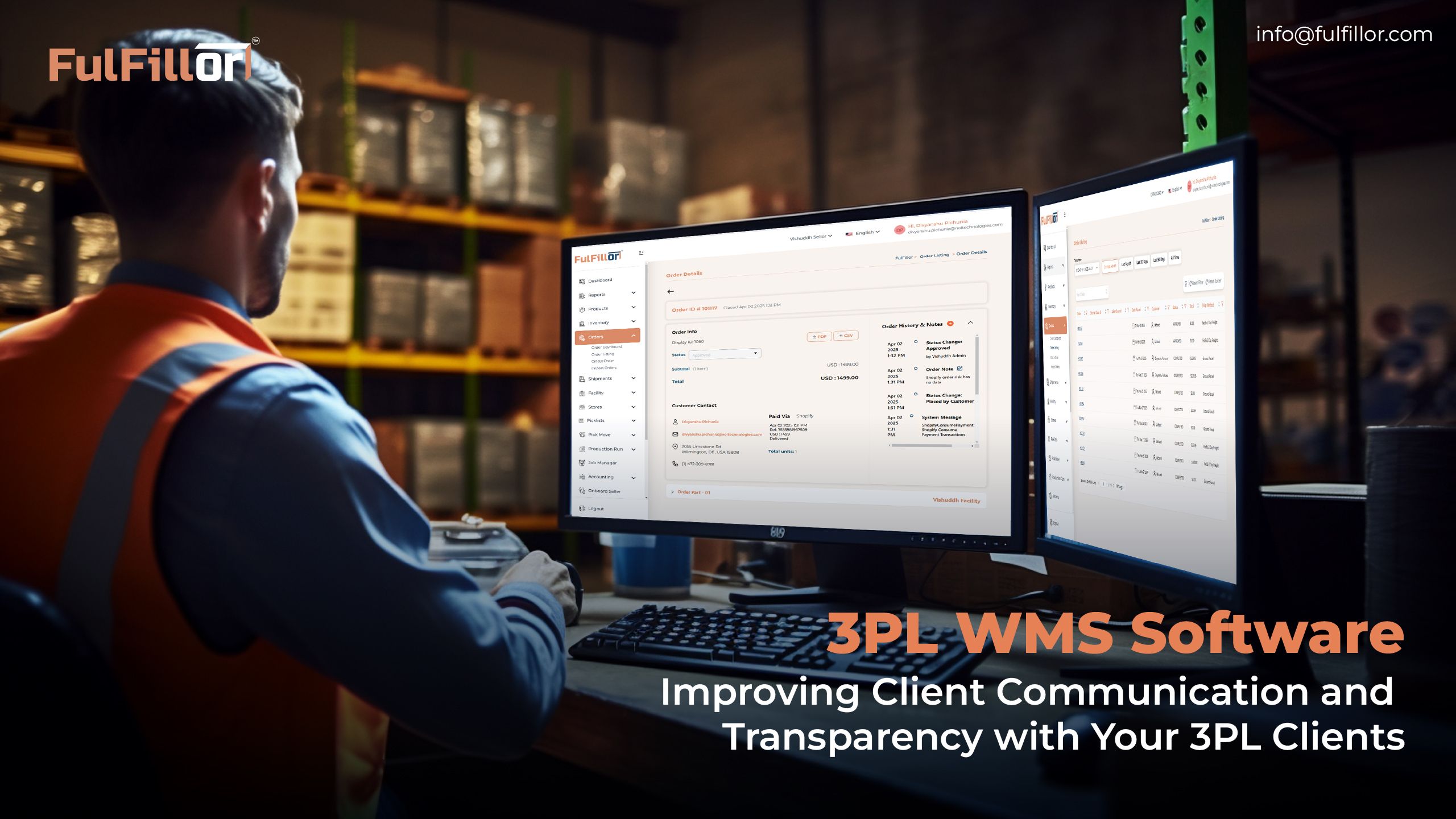
Fulfillor’s 3PL client portal is designed to help 3PL warehouses give clients clearer access to important fulfillment data. Instead of relying only on emails, spreadsheets, or manual reports, clients can view key updates through a centralized portal.
The client portal helps clients:
- Monitor inventory levels in real time.
- Track order and shipment status.
- Review fulfillment performance through customized reports.
- Access invoice and billing details.
- Connect fulfillment data with existing business systems through integrations.
By giving clients direct access to inventory, order, reporting, and billing information, Fulfillor helps 3PL providers improve communication, reduce manual follow-ups, and build more transparent client relationships.
Conclusion
Strong 3PL client communication depends on clear visibility, consistent updates, and easy access to accurate fulfillment data. A modern warehouse management system can help clients track inventory, orders, shipments, returns, reports, and billing details without relying on constant manual updates.
For 3PL providers, this creates a more transparent client experience, reduces communication gaps, and helps strengthen long-term partnerships.
Ready to improve 3PL client communication? Book a demo to see how Fulfillor can help.