
Inventory management rarely breaks all at once.
The warning signs usually appear gradually. Stock counts stop matching between systems. Replenishment decisions depend on reports that are already outdated. Teams spend more time investigating discrepancies, checking availability, and correcting inventory records.
As order volume, SKU count, sales channels, warehouse locations, or 3PL clients increase, those small gaps become harder to manage.
That is why many inventory management trends are better understood as operational responses rather than technology trends. Businesses move toward real-time inventory, predictive planning, multi-location visibility, and more automated controls because older processes no longer provide enough accuracy or speed.
Here are the inventory management changes that matter most as warehouse operations scale in 2026.
1. Real-Time Inventory Is Replacing Delayed Stock Updates
Inventory data loses value quickly when warehouse activity moves faster than the systems recording it.
A stock report generated in the morning may already be inaccurate by the afternoon if orders, receipts, returns, transfers, and adjustments are being processed continuously.
For ecommerce and 3PL operations, inventory increasingly needs to update as warehouse events happen. When an order allocates stock, a receipt becomes available, or inventory moves between locations, that change should be reflected across the systems relying on the same information.
This becomes especially important when inventory is shared across several sales channels or warehouse locations. Delayed synchronization can lead to overselling, unnecessary replenishment, or customer service teams promising stock that is no longer available.
Reliable real-time inventory synchronization is therefore becoming less of an optional feature and more of a basic requirement for growing fulfillment operations.
2. Inventory Planning Is Becoming More Predictive
Historical averages can work when demand is stable and the product range is small.
They become less useful when demand varies by SKU, sales channel, season, promotion, client, or warehouse.
Inventory teams are increasingly using forecasting models to understand likely future demand rather than making every replenishment decision from static reorder points or manual judgment.
For example, a fast-moving SKU may require different safety stock before a seasonal promotion than it does during a normal week. A 3PL may also need separate forecasts for clients whose demand patterns have little in common even though their inventory sits in the same building.
The goal is not to predict every order perfectly. It is to give teams enough warning to make better decisions about replenishment, inventory positioning, and capacity before a shortage or excess becomes visible on the warehouse floor.
This shift is part of the broader use of predictive analytics in warehouse management, where historical and current operational data is used to estimate future workload and inventory movement.
3. Multi-Warehouse Inventory Is Being Managed as One Network
Adding another warehouse creates more than additional storage capacity.
It also creates another inventory position that has to remain visible to the rest of the business.
Without connected inventory management, teams may know that 500 units are available across the company without knowing whether those units are in the right warehouse to serve current demand. One facility can sit on excess stock while another runs short.
Growing businesses are therefore moving away from treating warehouses as isolated inventory pools.
A shared inventory view makes it easier to compare availability across locations, plan transfers, allocate orders, and decide where additional inventory should be placed.
The challenge becomes more significant for 3PLs because inventory must remain separated not only by location but also by client.
Managing those relationships properly is the core of multi-warehouse inventory management, rather than simply showing a combined stock total.
4. Sales Channels Need to Share the Same Inventory Position
A business selling through one storefront can often manage inventory with relatively simple rules.
Add Shopify, Amazon, Walmart Marketplace, wholesale orders, and additional storefronts, and the same inventory may suddenly be promised through several channels.
That creates a synchronization problem.
If one channel continues showing stock after another has already sold it, overselling becomes difficult to avoid. Updating each platform manually may work at very low volume, but it becomes unreliable as order activity increases.
Modern inventory management is moving toward a central stock position that feeds connected channels while accounting for allocations, orders, cancellations, returns, and other changes.
For 3PLs, the challenge is even more specific because each client may connect a different combination of storefronts and marketplaces. Multichannel inventory management becomes necessary once those channels can no longer be managed as separate inventory records.
5. Inventory Teams Are Managing Exceptions Instead of Constantly Checking Everything
Traditional inventory control often involves a large amount of routine checking.
Teams review stock reports, investigate differences, verify transactions, and look for problems manually. As inventory volume increases, checking everything becomes impractical.
A more scalable approach is to focus attention on exceptions.
Examples include inventory dropping below an expected threshold, an adjustment that is unusually large, stock appearing in the wrong location, negative inventory, unexplained quantity differences, or inventory that has not moved for an unusual period.
This does not eliminate physical checks or investigation.
It changes where employees spend their time.
Instead of repeatedly reviewing normal transactions, the system can surface activity that does not match expected behavior and allow the warehouse team to investigate those cases first.
That distinction is particularly important in multi-client warehouses, where even a small discrepancy needs to be traced back to the correct account, SKU, location, and transaction history. The investigation process itself is covered more deeply in 3PL inventory discrepancy management.
6. Continuous Inventory Verification Is Reducing Dependence on Large Annual Counts
Full physical inventory counts still have their place, but shutting down or slowing warehouse operations to count everything at once is disruptive.
Many warehouses are moving toward more frequent verification throughout the year.
Cycle counting allows selected SKUs or locations to be counted on a regular schedule while normal warehouse activity continues. High-value items, fast-moving products, or SKUs with a history of discrepancies can be counted more frequently than stable inventory.
This approach helps identify errors earlier.
If a discrepancy develops in March, waiting until an annual count in December does little to explain when or why it happened.
Continuous verification also creates better feedback on the quality of receiving, picking, transfers, returns, and inventory adjustments.
The value is not simply producing a more accurate final count. It is finding the process that created the incorrect stock position in the first place.
7. 3PL Inventory Management Is Becoming More Granular
For a single-brand warehouse, knowing the SKU, quantity, and location may cover much of the inventory requirement.
A 3PL needs more context.
The system may also need to know which client owns the stock, whether units are available or allocated, whether inventory is damaged or quarantined, which warehouse holds it, and which orders or channels have committed it.
As a 3PL adds customers, those distinctions become increasingly important.
Two clients may store the same SKU identifier. Different accounts may use different replenishment rules. One client may allow backorders while another does not. Inventory reports must show each customer only the stock that belongs to that account.
This is why growing 3PLs often outgrow inventory software that was designed primarily for businesses managing their own products.
The issue is no longer simply inventory tracking. It is maintaining clear ownership and status across thousands of inventory movements without mixing accounts.
8. Connected Devices Are Improving Inventory Tracking in Specific Use Cases
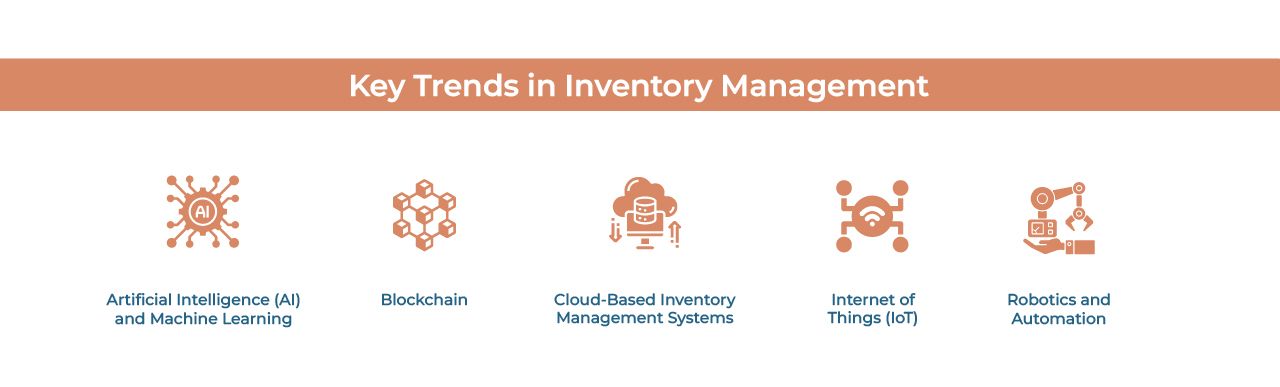
Internet of Things technology has a place in inventory management, but not every warehouse needs sensors attached to everything it stores.
The stronger use cases appear where physical conditions matter.
Temperature-sensitive goods may require continuous environmental monitoring. High-value inventory may benefit from more precise location tracking. Connected devices can also help monitor storage conditions or movement where manual checks would be too slow.
The important point is that IoT data does not replace the inventory record.
It provides additional physical information that can improve the record or alert the warehouse when something falls outside an acceptable range.
For most standard ecommerce inventory, barcode-supported warehouse workflows may still provide sufficient control. More advanced tracking becomes worthwhile when the value, sensitivity, or compliance requirements of the inventory justify it.
Where AI Fits Into Inventory Management
AI deserves a place in the inventory conversation, but it is not a separate solution for every inventory problem.
Its most useful role is often in analyzing data that already exists.
Demand patterns can be used to improve forecasting. Changes in SKU velocity can signal that replenishment or storage decisions should be reviewed. Unusual inventory activity can be identified for investigation.
Those capabilities become more valuable as the amount of inventory data grows beyond what teams can reasonably evaluate manually.
At the same time, AI cannot compensate for poor inventory records.
A sophisticated forecasting model using incorrect stock balances, inconsistent SKU data, or incomplete order history will still produce unreliable results.
For that reason, AI-driven inventory management works best when the underlying warehouse processes and data are already dependable.
Cloud Systems Are Becoming the Operational Foundation
Cloud software is no longer particularly novel, which is precisely why it should not be treated as some dazzling new inventory trend.
Its importance is more practical.
Warehouses increasingly need inventory data to be accessible across locations, teams, integrations, and devices. A local system tied to one facility becomes harder to maintain once the business operates several warehouses or connects more external platforms.
Cloud-based systems provide a shared operational environment where those inventory movements can be recorded and accessed without maintaining separate local systems for every facility.
For 3PLs, this also makes it easier to support multiple customer accounts and integrations within the same warehouse platform.
The broader difference between deployment models matters when selecting a WMS, but within inventory management the key change is simple: inventory information increasingly needs to follow the operation rather than remain tied to one physical warehouse.
What Is Driving These Inventory Management Trends?
Most of these changes come from the same source: operational complexity.
More SKUs create more replenishment decisions. More sales channels create more places where inventory can be committed. More warehouses create more stock positions to coordinate. More clients create additional ownership and reporting requirements.
Order speed matters as well.
A warehouse processing a few orders an hour has time to correct information manually. A fulfillment operation processing thousands of daily transactions needs inventory updates to happen as part of the workflow itself.
This is why inventory technology usually changes after operating complexity changes, not before.
The software is responding to the warehouse.
Which Inventory Management Changes Matter Most?
Not every warehouse needs every technology discussed above.
A business operating from one facility with a limited SKU range may not need sophisticated predictive models or connected sensors.
A growing ecommerce business selling across several marketplaces may care much more about real-time stock synchronization.
A multi-location operation may need better visibility and transfer planning.
A 3PL managing inventory for dozens of clients may place client ownership, inventory status, reporting, and account separation above almost everything else.
The useful question is therefore not which inventory trend is newest.
It is which part of the current inventory process is becoming unreliable as the operation grows.
Conclusion: Inventory Management Changes When Complexity Changes
Inventory management does not evolve because businesses need to follow every technology trend.
It evolves when existing processes stop providing enough control.
Manual updates become unreliable when transactions increase. Separate inventory records become difficult to manage when more channels and warehouses are added. Periodic reports become less useful when orders and inventory move continuously. Broad stock totals become insufficient when a 3PL needs to separate inventory by client, location, and status.
That is what sits behind most of the meaningful inventory management trends in 2026.
Real-time synchronization improves the freshness of stock data. Predictive planning helps teams prepare for future demand. Multi-warehouse and multichannel inventory systems create a more consistent view of availability. Exception management and continuous verification help teams find problems without manually checking every transaction.
The right change depends on where the existing process is starting to fail.
Fulfillor brings inventory, receiving, orders, warehouse locations, client operations, fulfillment, and shipping activity into one WMS environment for multi-client 3PL operations.
Schedule a call to discuss how Fulfillor can support inventory management across your fulfillment operation.
Frequently Asked Questions
What Are the Biggest Inventory Management Trends?
Important inventory management trends include real-time stock synchronization, predictive inventory planning, multi-warehouse visibility, multichannel inventory management, exception-based inventory control, regular cycle counting, and more granular inventory management for 3PL operations.
How Is AI Changing Inventory Management?
AI can help analyze historical orders, SKU movement, demand patterns, and inventory activity to support forecasting and identify unusual behavior. Its usefulness depends on having accurate inventory and operational data.
Why Is Real-Time Inventory Visibility Important?
Real-time inventory visibility helps businesses make decisions from current stock information rather than delayed reports. This becomes especially important when inventory is shared across multiple warehouses, ecommerce channels, or 3PL clients.
Which Inventory Management Trends Matter Most for 3PLs?
Multi-client inventory separation, real-time visibility, multichannel synchronization, inventory exception management, and multi-warehouse control are particularly important for 3PLs because inventory from several customers may move through the same warehouse network.