
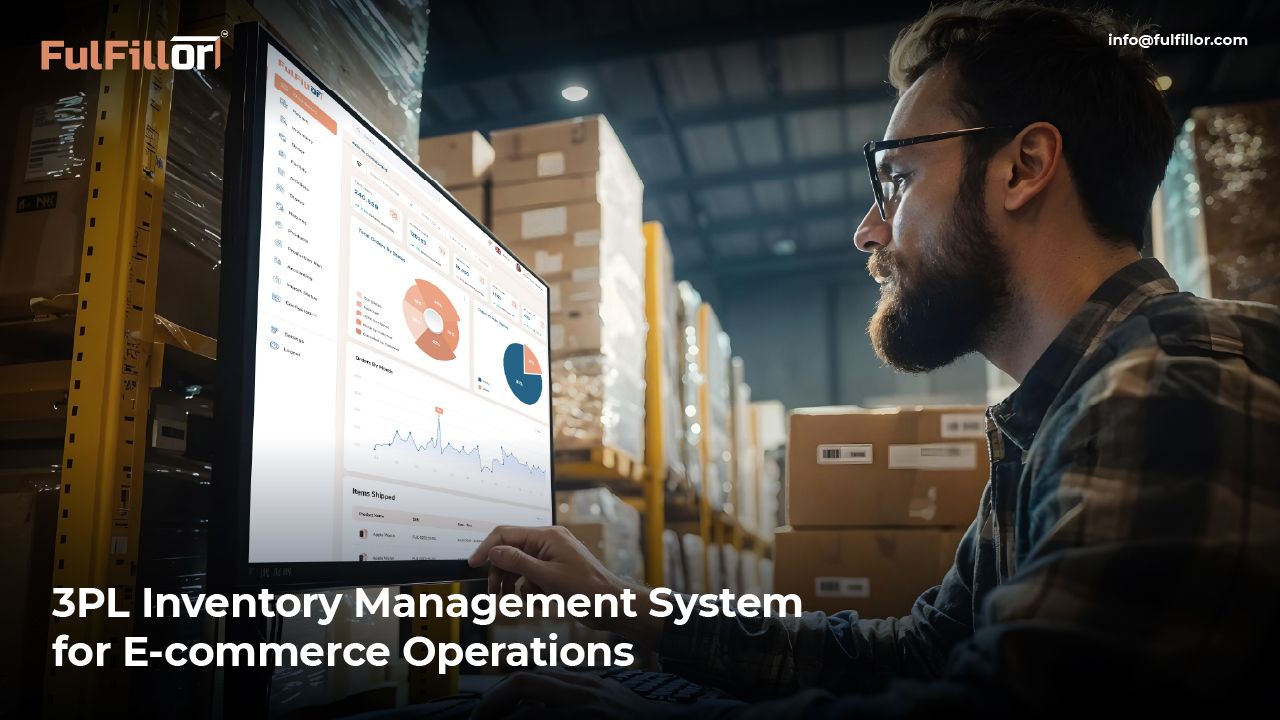
Managing inventory for an e-commerce business becomes harder as order volume, sales channels, SKUs, and customer expectations grow. A 3PL inventory management system helps third-party logistics providers track stock, manage warehouse operations, process orders, update sales channels, and handle returns from one centralized platform.
For e-commerce brands, this means better stock visibility, fewer fulfillment errors, faster shipping, and less time spent managing inventory manually.
What Is a 3PL Inventory Management System?
A 3PL inventory management system is software used by third-party logistics providers to manage inventory, orders, warehouse workflows, shipping, and returns for multiple e-commerce clients.
Instead of tracking stock manually or switching between spreadsheets, store dashboards, carrier portals, and warehouse tools, a 3PL inventory system keeps inventory data connected across the fulfillment process. It helps warehouse teams know what arrived, where each SKU is stored, which orders need to be picked, and when stock should be updated across connected sales channels.
Key features of a 3PL inventory management system include:
- Real-time inventory tracking
- Barcode scanning and SKU-level visibility
- Multi-channel order synchronization
- Automated picking, packing, and shipping workflows
- Returns management
- Inventory reporting and demand planning
- Client-level inventory dashboards
- Low-stock alerts and stock reconciliation
Common E-commerce Inventory Problems a 3PL System Can Solve
These are the most common inventory problems a 3PL system can help address:
1. Incorrect Stock Levels Lead to Lost Sales
When inventory is managed manually or through disconnected systems, stock levels can quickly become inaccurate. This can lead to overselling, stockouts, delayed orders, and unhappy customers.
Solution: A 3PL inventory management system updates inventory in real time using barcode scanning, warehouse activity, and order data. This gives both the 3PL and the e-commerce brand a clearer view of available stock, reserved stock, damaged items, and returned inventory.
2. Fulfillment Costs Increase as Order Volume Grows
Warehouse space, labor, packaging materials, shipping supplies, and technology costs can become expensive for growing e-commerce businesses.
Solution: A 3PL allows brands to use shared warehouse space, labor, and fulfillment resources instead of building everything in-house. With the right inventory management system, 3PLs can also reduce manual work, improve picking accuracy, and process more orders with fewer operational delays.
3. Scaling Becomes Difficult During Demand Spikes
Seasonal sales, product launches, marketplace promotions, and Black Friday demand can put pressure on inventory and fulfillment operations.
Solution: A 3PL inventory management system helps warehouses scale by organizing inventory, assigning picking tasks, tracking order status, and keeping stock data updated across sales channels. This makes it easier to handle demand spikes without losing control of fulfillment accuracy.
Benefits of 3PL Inventory Management for E-commerce Businesses

1. Lower Fulfillment and Storage Costs
Using a 3PL can reduce the need for dedicated warehouse space, full-time fulfillment staff, and separate shipping systems. E-commerce brands can pay for the storage, labor, and fulfillment services they actually use, while the 3PL manages warehouse operations through one inventory platform.
2. Easier Scalability
A 3PL inventory management system helps businesses manage higher order volumes without rebuilding their entire fulfillment process. Whether a brand ships 100 orders a month or 10,000, the system helps keep inventory, orders, warehouse tasks, and shipping updates organized.
3. Real-Time Inventory Visibility
Real-time inventory visibility helps brands understand how much stock is available, where it is stored, and when it needs to be replenished. This reduces manual checking and helps prevent overselling, stockouts, and delayed fulfillment.
4. Better Customer Experience
Customers expect accurate stock availability, fast delivery, and clear tracking updates. A inventory management system supports this by reducing fulfillment errors, syncing order updates, and helping warehouse teams ship the right products on time.
5. Stronger Logistics Expertise and Compliance
3PL providers understand warehouse operations, carrier requirements, returns handling, and fulfillment workflows. With the right system, they can manage inventory more accurately while helping e-commerce brands maintain smoother logistics operations.
6. Improved Warehouse Efficiency
A 3PL inventory system reduces manual work by automating order routing, inventory updates, picking workflows, and fulfillment status updates. This helps warehouse teams spend less time correcting errors and more time processing orders accurately.
How a 3PL Inventory Management System Works
A 3PL inventory management system connects different parts of the fulfillment process into one workflow:
- Inventory Receiving: Products arrive at the warehouse and are checked against purchase orders or inbound shipment details.
- Barcode Scanning: Each SKU is scanned and recorded to reduce manual entry errors.
- Storage and Bin Allocation: Products are assigned to warehouse locations, shelves, bins, pallets, or zones.
- Order Syncing: Orders from e-commerce platforms and marketplaces are pulled into the system.
- Picking and Packing: Warehouse teams receive picking instructions and pack orders based on shipping rules.
- Shipping Updates: Tracking details are shared with the connected store or marketplace.
- Returns Processing: Returned items are inspected, restocked, damaged, or marked for further action.
This workflow gives both the 3PL and the e-commerce business better control over inventory accuracy and order fulfillment.
Real-World Example
A US-based 3PL client was facing shipping delays, inventory discrepancies, overselling issues, and slow returns processing. After switching to Fulfillor’s cloud-based 3PL inventory management system, the team improved inventory visibility, reduced manual tracking, and processed returns faster within three months.
The result was a 25% reduction in order processing errors, faster returns handling, and better visibility across inventory and fulfillment workflows.
Conclusion
A 3PL inventory management system helps e-commerce businesses reduce inventory errors, control fulfillment costs, improve warehouse efficiency, and scale operations more confidently.
For growing brands, working with a 3PL that uses a connected inventory management platform can make fulfillment easier to manage across orders, stock updates, shipping, and returns management.
Fulfillor helps 3PL warehouses manage inventory, clients, orders, billing, and fulfillment from one centralized WMS platform. To learn more, schedule a free demo with our team.