
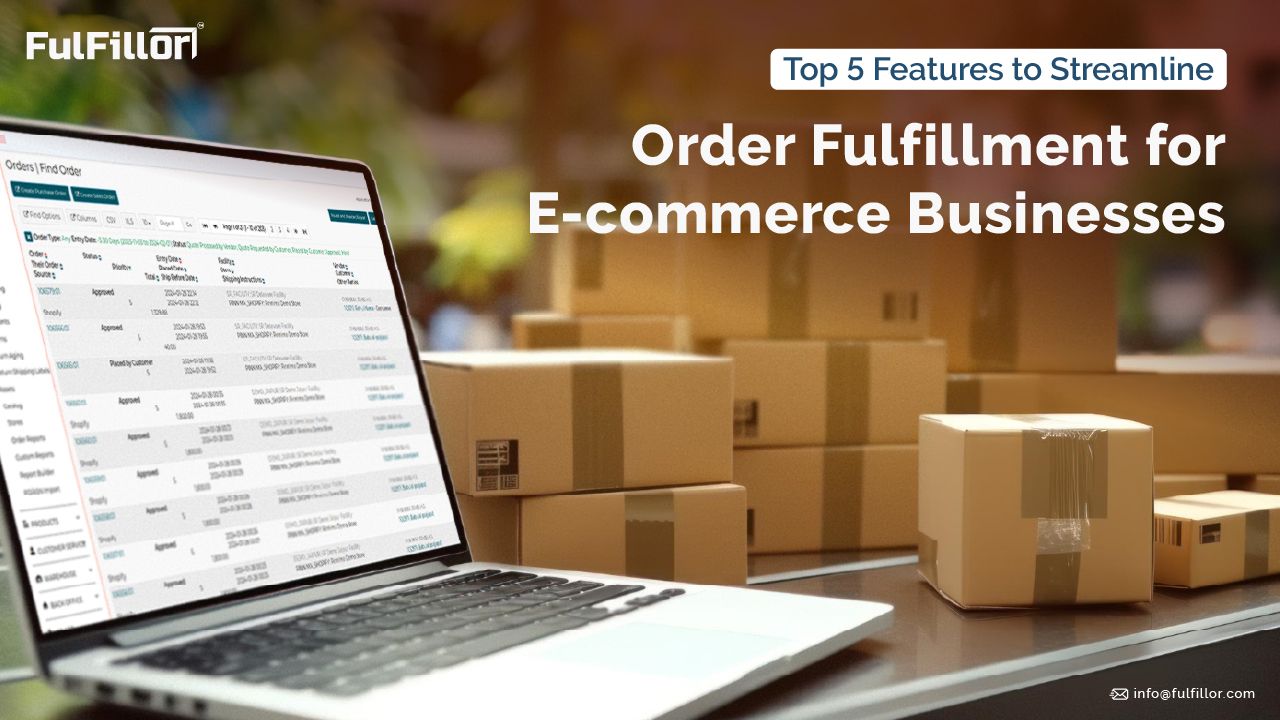
Ecommerce order fulfillment becomes harder to manage as order volume grows across multiple sales channels. Inventory availability, picking accuracy, packing, shipping, and order status updates all need to stay connected if businesses want to fulfill orders accurately and on time.
A 3PL warehouse management system can help ecommerce fulfillment teams manage these workflows from one platform. Fulfillor is a cloud-based 3PL WMS that supports inventory management, order processing, warehouse operations, and shipping workflows for ecommerce and multi-client warehouses.
For businesses looking to improve ecommerce order fulfillment, the right WMS can reduce manual work, improve inventory visibility, and give warehouse teams better control over picking, packing, and shipping. This article covers five Fulfillor WMS features that support faster and more accurate ecommerce fulfillment.
How Fulfillor Supports Ecommerce Order Fulfillment
Fulfillor connects inventory, orders, warehouse workflows, and shipping activities within one warehouse management system. Orders can move from connected sales channels into fulfillment workflows, while warehouse teams manage receiving, inventory allocation, picking, packing, shipping, and returns from the same platform.
Teams can use Fulfillor for inventory management, warehouse operations, order management, and shipping management.
Fulfillor also integrates with ecommerce platforms, marketplaces, carriers, and accounting systems. These connections reduce repeated data entry and help keep order, inventory, fulfillment, and shipment information synchronized across systems.
5 Fulfillor WMS Features for Ecommerce Order Fulfillment
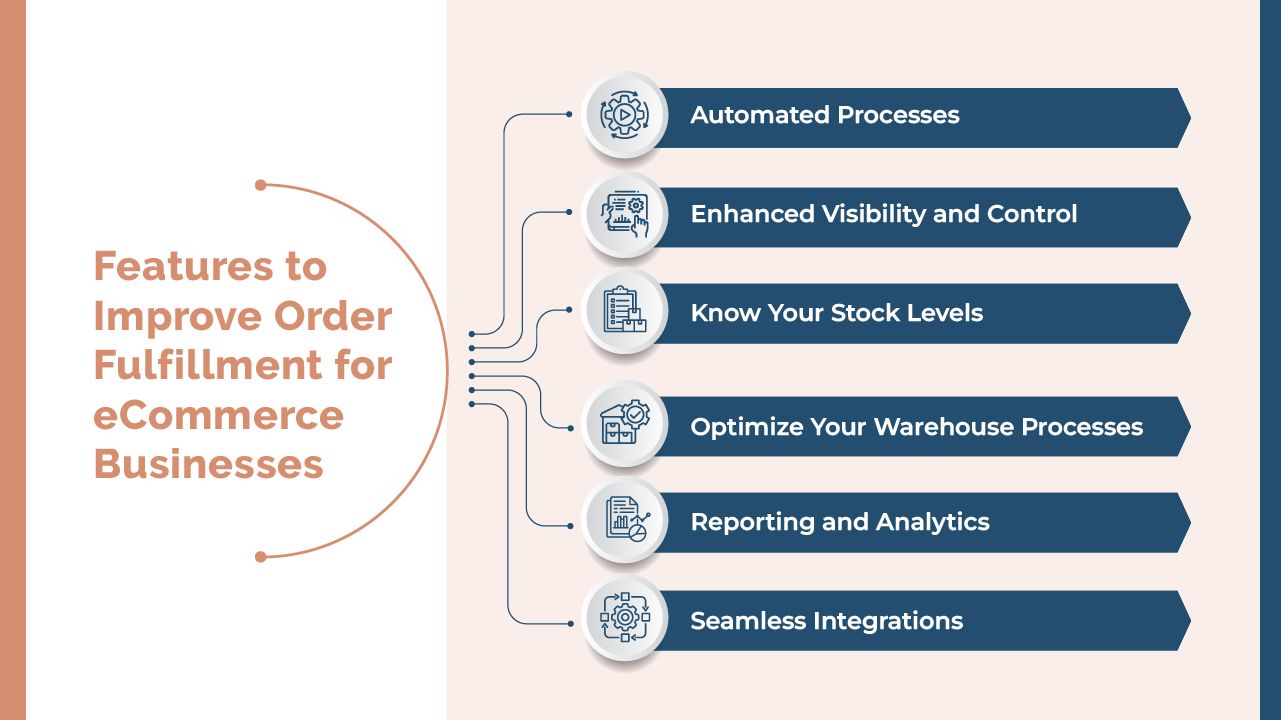
The following capabilities address common problems that appear as ecommerce fulfillment operations grow.
1. Automated Order Processing
Manually transferring ecommerce orders into warehouse workflows becomes difficult as order volume increases.
Fulfillor can bring orders from connected sales channels into the WMS and move them through warehouse fulfillment processes with less manual entry. Warehouse teams can then work from current order information while handling allocation, picking, packing, and shipping.
Automation is particularly useful when a warehouse processes orders from multiple stores or marketplaces because staff spend less time entering the same information into different systems.
It also reduces opportunities for errors caused by repeated manual data entry.
2. Real-Time Inventory Visibility
Accurate fulfillment depends on knowing what inventory is available and where it is stored.
Fulfillor provides warehouse teams with visibility into inventory quantities, locations, allocations, and stock movements as warehouse activity takes place. This makes it easier to identify inventory discrepancies before they affect picking or order fulfillment.
For ecommerce operations managing a large number of SKUs or multiple clients, current inventory data also helps teams make better fulfillment and replenishment decisions.
3. Inventory and Stock Level Management
Fulfillor's inventory management capabilities help warehouses track stock as products are received, stored, moved, allocated, picked, shipped, or returned.
Inventory can be managed at the warehouse and location level, giving teams a clearer view of where products are stored and what quantities are available for fulfillment.
FIFO inventory workflows can also help businesses that need older stock to move before newer inventory, particularly when products have shelf-life considerations.
Better stock control does not remove every inventory problem, but it gives warehouse teams the information needed to identify shortages, discrepancies, and slow-moving stock earlier.
4. Picking, Packing, and Warehouse Operations
Once an order reaches the warehouse, fulfillment accuracy depends heavily on how efficiently staff can find, pick, verify, pack, and ship the correct products.
Fulfillor's warehouse management system supports barcode-based warehouse workflows and handheld operations that help staff complete warehouse tasks closer to where the work takes place.
Picking workflows can guide warehouse teams through order fulfillment while barcode scanning provides an additional verification step before products move to packing and shipping.
Fulfillor also supports warehouse processes such as receiving, putaway, inventory movements, replenishment, and returns, keeping more of the fulfillment cycle within the same operational system.
5. Reporting, Analytics, and Integrations
Fulfillment teams need more than order counts to understand warehouse performance.
Fulfillor provides reporting and operational data that teams can use to review areas such as order activity, inventory movements, picking performance, and fulfillment progress. These insights can help identify recurring bottlenecks or processes that need attention.
Integrations also play an important role in ecommerce order fulfillment. Fulfillor connects with ecommerce platforms and marketplaces such as Shopify, WooCommerce, Magento, Amazon, eBay, Etsy, and Walmart, along with supported carrier and accounting systems.
Connected systems allow order information to enter warehouse workflows without repeatedly entering the same data. Shipment and fulfillment information can then move through the systems involved in completing the order.
Warehouses can also use features such as pallets and cartons management and the product catalog to manage products and physical inventory structures as fulfillment operations become more complex.
When Ecommerce Fulfillment Operations Need Better WMS Control
Not every ecommerce business needs advanced warehouse software from its first order. The need usually becomes clearer when the fulfillment operation starts dealing with more channels, SKUs, warehouse activity, or exceptions.
Common signs include:
- Orders arriving from several ecommerce stores or marketplaces
- Inventory differences regularly delaying fulfillment
- Picking mistakes becoming harder to control
- Warehouse staff relying on spreadsheets or disconnected systems
- Shipping information requiring repeated manual updates
- Returns taking too long to inspect and process
- Multiple warehouses or clients needing separate inventory visibility
At this stage, connecting order, inventory, and warehouse workflows becomes more important than simply processing more orders.
Fulfillor for Ecommerce Order Fulfillment
Ecommerce fulfillment depends on a series of connected warehouse activities. Inventory needs to be available, orders need to enter the warehouse correctly, staff need to pick and pack the right products, and shipment information needs to move back to the systems customers and operations teams rely on.
Fulfillor brings these workflows together in a cloud-based 3PL WMS, giving ecommerce fulfillment and multi-client warehouse teams greater control over inventory, order processing, picking, packing, shipping, and related warehouse operations.
Businesses evaluating a WMS for growing ecommerce fulfillment operations can schedule a Fulfillor demo to see how these workflows can be managed within the platform.