
Common Order Fulfillment Issues and How Fulfillor (A Fulfillment Platform) Resolves Them!
An order fulfillment system encompasses diverse key processes such as warehousing, packaging, shipping, inventory management, order processing, and returns management. These may seem easy to manage, but it’s not, as the entire process can be overwhelming and stressful. These issues are common, and they tend to happen especially for business owners.
Whether you’re fulfilling orders in-house or managing them internally, you must be informed of common order fulfillment mistakes you might experience and their feasible solutions.
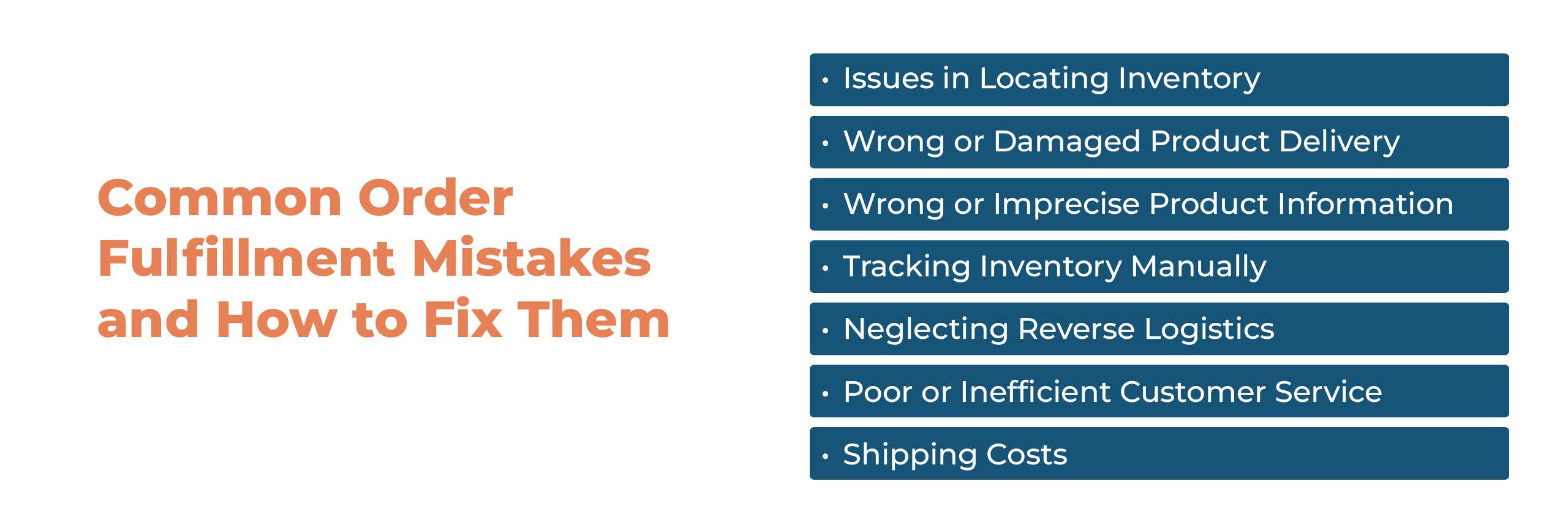
Common Order Fulfillment Mistakes and How to Fix Them
Issues in Locating Inventory
With customers today expecting fast and accurate deliveries, issues in locating inventory can be a major issue in achieving flawless order fulfillment. Locating the right inventory at the right time is difficult without proper or organized warehouse management and poor communication with suppliers. This can result in inaccuracies, delayed shipments, and customers generally get annoyed with it, particularly when they pay extra for faster deliveries. Moreover, it often leads to product cancellations, reducing brand trust and reputation.
The Solution: You can avoid shipment delays and improve customer trust and experience by implementing an end-to-end order fulfillment system like Fulfillor. Leveraging real-time inventory insights, inventory management capabilities, you can automate and optimize warehouse operations, inventory management, streamline shipment, and enhance overall customer satisfaction.
Wrong or Damaged Product Delivery
This issue can indeed enrage your valuable customers. Imagine when your customer waits for days or even weeks for an item, but receives a damaged or the wrong item. What will happen? This can significantly impact your brand reputation and even cost you customers as they will think twice before buying from you.
The Solution: FulFillor, a complete, next-gen order fulfillment solution that simplifies order processing, inventory management, shipping, and order fulfillment. Integrated technologies within our tool, such as computer systems, barcode scanners, RFID technologies, AI, machine learning, automation, and other advancements, provide real-time data insights, automatic stock updates, accurate inventory tracking, ensuring correct and precise stock availability, and efficient order fulfillment.
Wrong or Imprecise Product Information
Another common fulfillment issue is posting wrong or faulty information on their e-commerce websites. It can be incorrect price details, outdated delivery estimates, or missing stock updates; these errors or even minute faults can lead to customer dissatisfaction or frustration. Providing correct, accurate information is crucial not just to improve customer expectations but to boost brand trust and revenues.
- Product details, specs, and pricing
- Package weight and size
- Shipping and handling costs
- Estimated delivery dates and times
The Solution: Our modern, intelligent, AI-enabled order fulfillment platform ensures accurate product information through real-time visibility, automatic, accurate stock updates, monitors stock levels, and keeps you and your customers informed about everything, from the moment the order is placed to the final delivery of products.
Its integrated order management functionalities let business owners determine the accurate delivery dates, and it even sends alerts for restocking inventory, so your customers will always be informed about exactly what to expect.
Tracking Inventory Manually
Depending on manual tracking for inventory tracking or customer orders is outdated. Using the ideal WMS (warehouse management system) tool combined with RFID tags, automation, AI, machine learning capabilities, and mobile-powered chats, the complete process can be optimized and streamlined.
The Solution: When you leverage our innovative, dynamic order fulfillment platform, you’ll achieve real-time inventory insights and be informed about when inventory arrives, current stock levels, order packing and shipping details, and provide customers with order tracking information all through an automated tracking system.
Neglecting Reverse Logistics
Customer returns are one of the common parts of the e-commerce business, even the best stores experience this issue. There could be multiple reasons for this: wrong or incorrect sizes, colors, models, or faulty or damaged products are among a few. How you manage reverse logistics is important, as it can essentially impact your customer experience. However, many businesses ignore this aspect, considering it a low priority. Managing reverse logistics effectively can essentially improve customer trust and experience.
The Solution: The right WMS can help you strategically manage reverse logistics by automating and streamlining the returns process, reducing unnecessary costs, enhancing customer loyalty, and maximizing sales and revenues.
Poor or Inefficient Customer Service
Poor customer service can be one of the prime fulfillment mistakes any company would make. Customers often contact customer service either when their orders are missing, arrive late, or are received in faulty or damaged condition. Responding to customer queries proactively is vital, ensuring a valuable customer experience.
The Solution: A Order fulfillment platform like FulFillor can streamline and automate complicated and time-consuming tasks. Our solution is well-equipped to handle fulfillment issues wisely, ensuring premier customer support. This means fewer angry customers and improved overall experience.
Shipping Costs
Retailers often face two significant shipping challenges: one is how much to charge, and the other is how to keep these costs manageable. The easiest and effective solution is to determine shipping costs by weight. If you don’t want to consider this option, or it seems unfeasible, then set shipping fees by considering the total order’s price. Customers expect to pay more for larger purchase orders; however, they are less likely to express a concern about a modest rise in shipping costs.
The Solution: FulFillor’s order fulfillment platform helps you optimize shipping routes, and by utilizing its advanced algorithms, you can reduce fuel costs and other operational costs, ultimately minimizing shipping costs. The real-time tracking and monitoring of shipments is an impressive feature that encourages visibility and transparency, ultimately reducing delays and other issues.
FulFillor- An End-to-End Order Fulfillment Solution, Resolving Issues
No business can neglect order fulfillment issues completely; it’s a natural part of running an e-commerce business. Being aware of order fulfillment issues lets you stay ahead of the game by preparing you with feasible solutions. Fortunately, this article shares the most common issues and their effective solutions, reducing overall costs and delivering a seamless customer experience.
FulFillor is a full-fledged order fulfillment platform that simplifies and streamlines order fulfillment for your e-commerce business in the USA and beyond. For further queries or discussion, schedule a call with our team!