
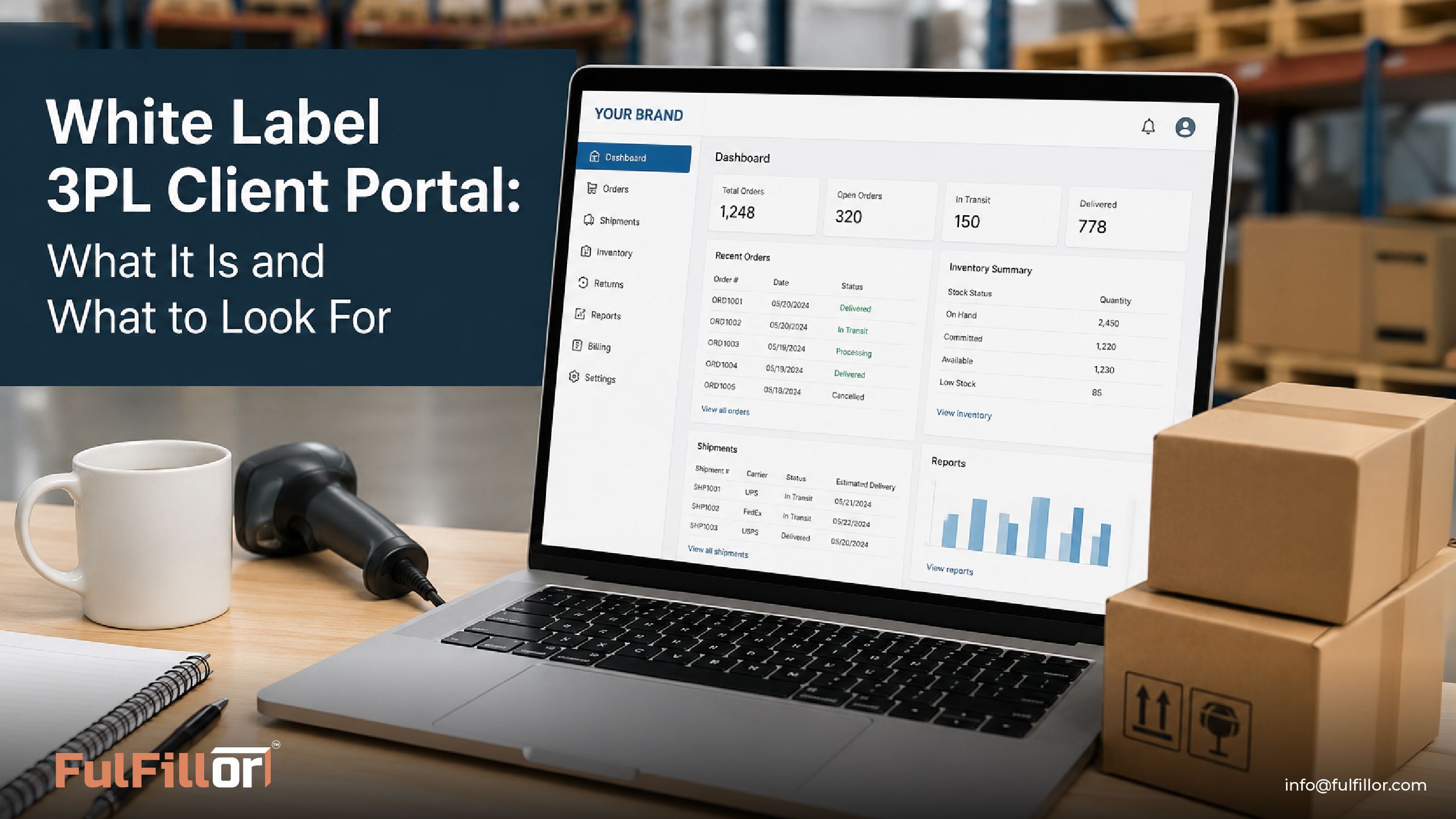
As a 3PL grows, keeping clients informed becomes more difficult.
A warehouse team might manage inventory accurately, ship orders on time, and maintain strong operational performance, but clients still need visibility into what is happening. They want to check inventory levels, track orders, review shipments, monitor returns, and access invoices without waiting for an email response.
This is where a white-label 3PL client portal becomes useful.
Instead of requesting updates from the warehouse team, clients can log into a branded portal and access the information they need on their own. For the 3PL, this reduces routine questions and makes client communication easier to manage.
What Is a White-Label 3PL Client Portal?
A white-label 3PL client portal is a customer-facing portal that gives clients access to information about their fulfillment operations.
The portal is branded as part of the 3PL's service. It can use the company's logo, colors, domain, and login experience rather than displaying another software vendor's branding.
Clients typically use the portal to check inventory, track orders, view shipment updates, review returns, download invoices, and access reports.
Many providers also refer to these systems as a branded 3PL portal because the experience is customized to match the logistics company's own brand rather than the software vendor's.
Why Do 3PLs Use Client Portals?
Most warehouse teams spend a surprising amount of time answering the same questions.
-
How much inventory is available?
-
Has an order shipped?
-
Where is the shipment?
-
What was included in this month's invoice?
None of these questions is unusual. The problem is that they are repeated every day across multiple clients.
A self-service portal lets clients check these updates without contacting the warehouse team each time.
This saves time for both the client and the warehouse team.
What Information Should Clients Be Able to Access?
The most useful portals focus on the information clients need during daily operations, starting with inventory visibility.
Clients should be able to see current stock levels, reserved inventory, and SKU information without requesting a report.
In many cases, the portal also functions as a 3PL order tracking portal, allowing clients to follow orders from creation through fulfillment, shipment, and delivery. Customers need to know whether orders are pending, picked, packed, shipped, or delayed.
Shipment tracking helps clients follow orders after they leave the warehouse. Access to tracking numbers, carrier information, and delivery updates reduces the need for follow-up requests.
Many 3PLs also provide visibility into returns, inbound shipments, and invoices. This allows clients to review activity across the entire fulfillment process from a single location.
Reporting can also be valuable, especially when clients need insight into order volume, inventory movement, storage usage, fulfillment performance, or SLA reporting.
White-Label vs Standard Client Portals
Not every client portal is white-labeled.
Some systems display the software provider's branding and direct clients to a third-party login page. While this still provides access to information, it creates a different experience for the customer.
A white-label portal allows the 3PL to present the portal as part of its own service. Clients remain within the provider's branded environment instead of interacting directly with the software vendor.
For many 3PLs, this creates a more consistent experience across onboarding, support, reporting, and daily operations.
What to Look for in a Client Portal
A client portal does not need dozens of features to be useful. It needs to provide accurate information and make that information easy to find.
Data accuracy should be the first priority. If the portal is not connected to a reliable 3PL WMS, inventory, orders, or shipment information can become outdated, and clients may return to email.
Security is equally important. Since 3PLs manage data for multiple clients, each account should only have access to its own information.
The portal should also support different user roles. Operations teams, finance teams, and managers often need access to different information.
Finally, the portal should fit the workflows of the businesses using it. An ecommerce brand may focus heavily on orders, shipments, and returns, while a B2B distributor may care more about inbound inventory, storage, and reporting.
How Fulfillor Supports Client Visibility

Fulfillor includes a white-label client portal designed for multi-client 3PL operations. Each client can access its own fulfillment, billing details, and reporting data through a branded portal connected to warehouse operations.
The portal also supports inbound shipment and ASN visibility, helping clients stay informed before inventory is received into the warehouse. Because the portal is connected to operational data, clients can get updates without relying on manual reports or repeated status emails.
Final Thoughts
A white-label 3PL client portal does not replace communication between a warehouse and its clients. It makes routine information easier to access, reducing repetitive requests as client counts, order volumes, and reporting requirements grow.
Want to See How It Works?
See how Fulfillor gives 3PL clients secure, branded access to live fulfillment and billing information.