
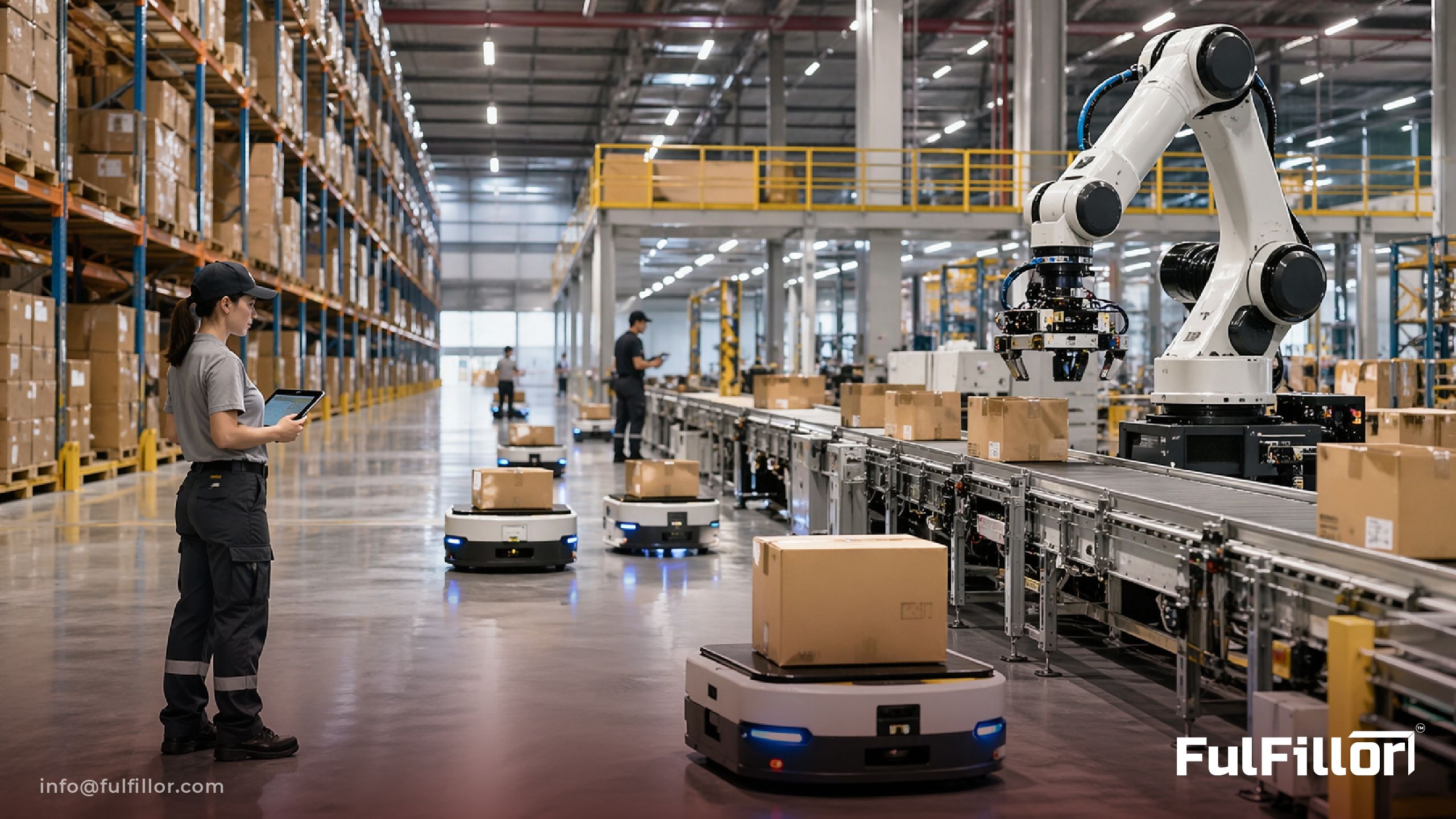
As a 3PL adds clients, it must manage different service-level agreements, order profiles, product requirements, carrier rules, and reporting expectations. Manual processes that worked for a smaller operation may become inconsistent when employees must coordinate these requirements across higher order volumes.
Warehouse automation is becoming a priority for logistics operations as order volumes and fulfillment complexity increase.
AI can support this shift by prioritizing orders, forecasting demand, detecting inventory anomalies, and flagging operational issues early. It does not replace warehouse teams. It helps them make faster decisions and manage higher order volumes more consistently.
This guide explains how 3PL providers use AI in warehouse operations, where it can improve performance, and what to consider before adopting it.
Why 3PL Operations Struggle to Scale
As order volumes grow and client requirements become more complex, manual warehouse processes become harder to manage. Picking slows, inventory errors increase, and teams spend more time coordinating tasks and correcting mistakes.
Warehouse automation helps reduce this pressure by tracking inventory in real time, directing picking tasks, and standardizing routine workflows. These systems allow 3PL providers to process more orders without relying on additional manual coordination at every stage.
Physical automation, such as cobots and automated storage and retrieval systems, can handle repetitive movement and picking tasks. Warehouse teams can then focus on exceptions, quality checks, and client communication.
AI supports these workflows by helping prioritize orders, forecast demand, detect inventory anomalies, and identify maintenance risks. Its value comes from improving decisions and reducing preventable delays, not replacing warehouse workers.
Automation becomes most effective when it addresses a clear operational problem and works alongside experienced warehouse teams.
Where AI Improves 3PL Warehouse Operations
AI can support several warehouse processes where teams regularly deal with changing priorities, large data volumes, and recurring exceptions.
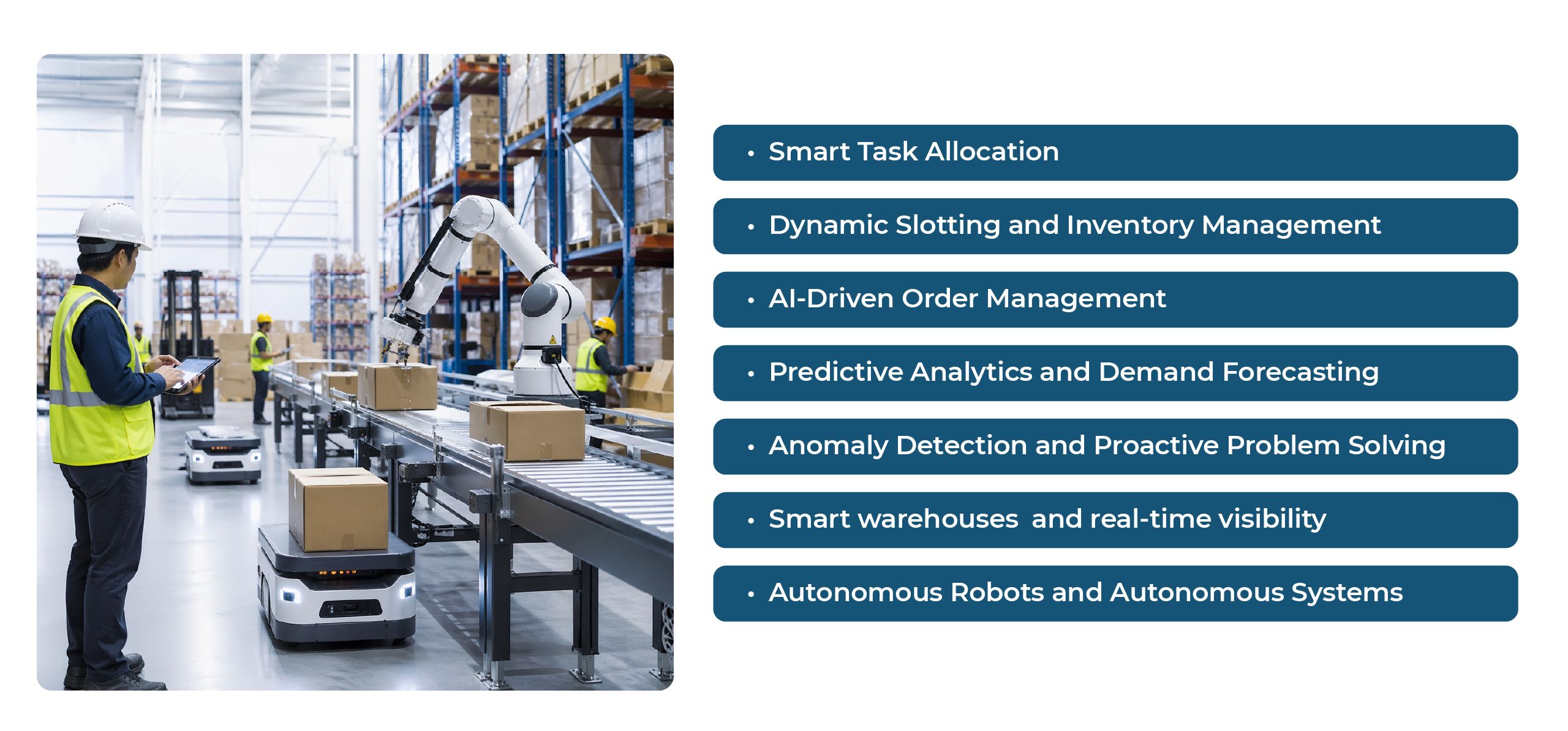
Smart Task Allocation
AI can help assign receiving, picking, packing, and replenishment tasks based on order priority, worker availability, location, and current workload. This reduces idle time and helps teams respond faster when urgent orders or operational delays arise.
Dynamic Slotting
AI-assisted slotting analyzes product movement, order frequency, dimensions, and storage requirements to recommend suitable warehouse locations. Fast-moving inventory can be placed closer to picking and packing areas, reducing travel time and congestion.
Order Prioritization
Modern order management systems can use order deadlines, shipping methods, inventory availability, and service-level requirements to determine which orders should be processed first. This helps warehouse teams manage urgent shipments without manually reviewing every order.
Demand Forecasting
AI can analyze historical order data, seasonal patterns, and recent demand changes to estimate future inventory requirements. These forecasts can support replenishment planning, labor scheduling, and warehouse capacity decisions.
Forecasts are not guarantees, however. Their accuracy depends on the quality and consistency of the data available.
Anomaly Detection
AI can identify unusual patterns such as repeated scan errors, inventory mismatches, unexpected changes in picking speed, or shipment discrepancies. Flagging these issues early allows warehouse teams to investigate them before they affect more orders or clients.
How AI Changes Daily Work in 3PL Warehouses
AI changes how warehouse teams spend their time. Instead of handling every repetitive task manually, workers can monitor automated workflows, manage exceptions, verify inventory accuracy, and resolve operational issues.
Cobots and other warehouse automation systems can assist with repetitive movement, picking, and material handling. This can reduce physical strain and allow workers to focus on quality checks, problem-solving, and client-specific requirements.
Human oversight remains essential. Warehouse teams still review unusual orders, investigate inventory discrepancies, manage customer communication, and make decisions that automated systems cannot handle reliably.
The most effective approach is not to replace warehouse workers, but to use automation for predictable tasks while people manage exceptions, quality, and operational judgment.
What to Consider Before Adopting AI in Your Warehouse
AI can improve warehouse performance, but only when it addresses a clear operational problem and is supported by reliable data, suitable systems, and trained employees.
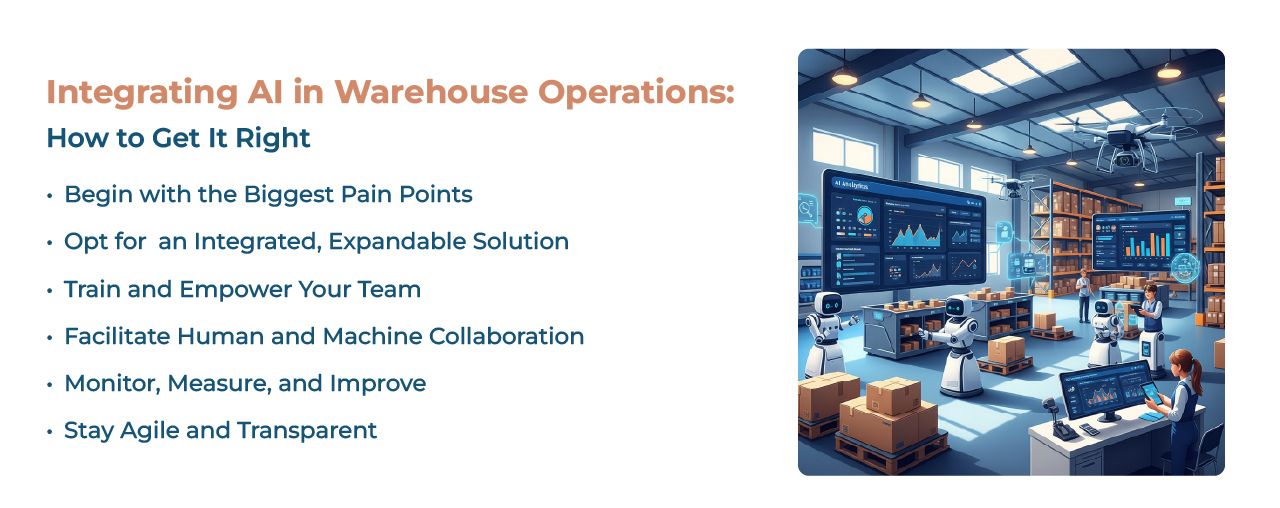
1. Start With a Specific Problem
Identify the issue causing the most disruption, such as inventory discrepancies, shipping delays, slow picking, or rising labor costs. Begin with one measurable use case instead of trying to automate the entire warehouse at once.
2. Check System Compatibility
AI tools need access to accurate order, inventory, location, and workflow data. Choose technology that can integrate with your existing ecommerce platforms, carrier systems, and warehouse processes.
For many 3PL providers, this starts with a 3PL warehouse management system that centralizes inventory, orders, and operational data.
3. Involve Warehouse Teams Early
Employees should understand how the new system will affect their daily work. Include warehouse teams during testing, provide role-specific training, and establish a clear process for reporting errors or unexpected results.
4. Keep Human Oversight
AI can support task prioritization, forecasting, and anomaly detection, but warehouse teams should continue reviewing exceptions and high-impact decisions. Automated recommendations should be easy to understand, verify, and override when necessary.
5. Measure Operational Results
Define the metrics you expect the system to improve. These may include picking accuracy, order cycle time, inventory variance, labor hours per order, and on-time shipment rates.
Review performance regularly and adjust the system when the expected improvements do not appear.
6. Assess Data Quality and Security
AI depends on consistent and accurate data. Missing scans, incorrect product records, and unreliable inventory counts can lead to poor recommendations.
3PL providers should also confirm how client data is stored, separated, accessed, and protected before connecting it to an AI system.
Where 3PL Warehouse Automation Is Heading
3PL operations will continue to rely on a combination of warehouse systems, automation, and human decision-making.
AI can help prioritize work, identify unusual activity, and support forecasting. Physical automation can reduce repetitive movement and manual handling. Warehouse teams still need to manage exceptions, verify accuracy, and make decisions when conditions change.
For growing 3PL providers, the main question is not whether every process should be automated. It is which recurring problems should be addressed first and whether the warehouse has the data, processes, and systems needed to support automation.
A warehouse management system provides the operational foundation by connecting inventory, orders, locations, and warehouse workflows in one system.