
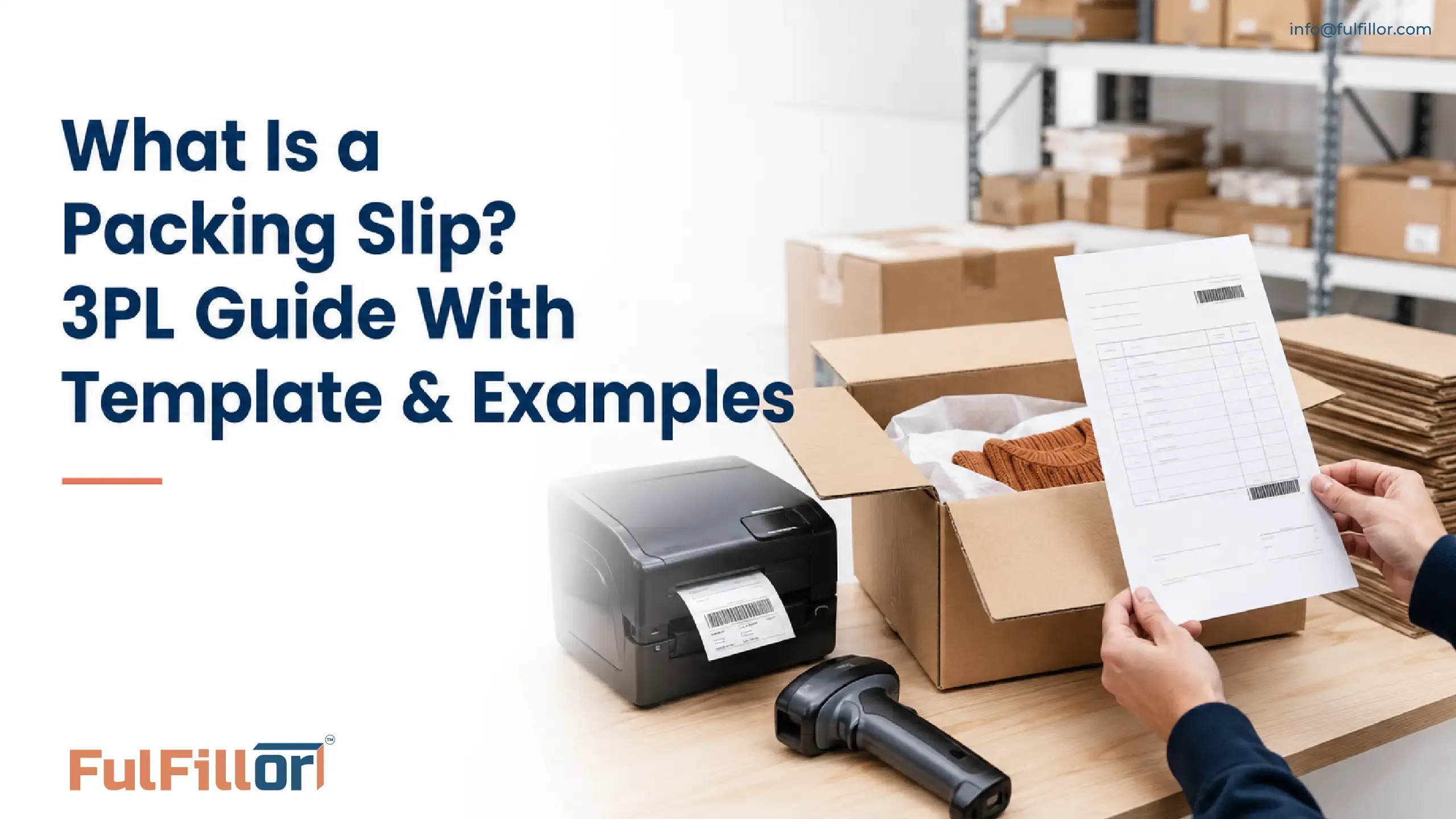
It is easy to overlook a packing slip until an order does not match what the customer received. Maybe an item was shipped separately. Maybe the wrong variation of a product was selected.
Maybe the customer has already opened the box and cannot tell whether an item is missing or shipping separately. That is where a packing slip helps the customer, warehouse team, and support team understand what was packed and what still needs attention. From ensuring order accuracy and facilitating returns to clarifying partial shipments, a good packing slip for your e-commerce store, retailer, or 3PL warehouse serves many purposes.
Key Takeaways
- A packing slip lists the products included in a shipment.
- It helps customers verify received items.
- Packing slips differ from invoices and shipping labels.
- 3PL warehouses use packing slips to support client branding and fulfillment accuracy.
- Most ecommerce orders benefit from including one.
What Is a Packing Slip?
A packing slip is a document sent out with a shipment or order that specifies the exact contents and quantities of each package shipped out. It often includes the order number, customer name, shipping address, shipment date, product names, SKU numbers, and item quantities.
The main point of a packing slip is pretty simple. They help you - or your customer - ensure everything that was ordered is in the package. In a small ecommerce business, printing a packing slip might be done after an order has been packed and put into the shipped box.
In a 3PL (third-party logistics) business, a packing slip supports much more complex processes. Packers use it to confirm the right items were placed in the package, clients use it to maintain brand consistency, and support teams use it to resolve customer complaints faster.
For instance, if someone ordered 3 shirts and you sent 2 shirts in a package, that packing slip shows whether the third shirt was left out by mistake or shipped in a different box or separately.
In place of that record, your support agents would need to dig into order notes, tracking information, and activity within your warehouse to find out the status of that missing product before replying to the customer.
Many ecommerce platforms also support printable packing slips, such as packing slips in Shopify, but 3PL warehouses usually need more client-specific control.
Businesses sometimes use “packing slip” and “packing list” interchangeably. A packing slip commonly helps customers verify the items in an order, while a packing list may provide more detailed shipment information, such as carton contents, weights, and dimensions. The required format depends on the shipment and the recipient’s documentation requirements.
What Should Be Included on a Packing Slip?
A packing slip is created during fulfillment and should be useful for both the warehouse team and the customer receiving the order. Ideally, it's easy for shipping personnel, third-party logistics (3PL) warehouses, or direct shipping suppliers to use. It does not need every internal warehouse detail, but it should include enough information to identify and verify the shipment.
A typical packing slip may include:
- Order number
- Customer name and shipping address
- Brand or seller name
- Product names
- SKU numbers
- Quantity ordered
- Quantity shipped
- Item variants such as size, color, or model
- Shipping date
- Return or support instructions
Packing Slip vs Shipping Label
Shipping labels usually go on the outside of the parcel. Carriers use them to move packages through their network and deliver them to the right address. A shipping label usually includes the recipient address, return address, tracking barcode, service level, and routing information.
The packing slip usually goes inside the package. It helps the customer confirm what was included in the box.
The shipping label tells the carrier how to deliver the box. The packing slip helps the customer understand what is inside the box.
An incorrect shipping label can delay delivery or send the package to the wrong address. An incorrect packing slip can create confusion even when the box arrives on time.
Packing Slip vs Invoice
A packing slip shows what was actually shipped. An invoice shows what was billed.
An invoice usually has pricing, payment terms, taxes, discounts, and billing info. The packing slip may omit pricing for gifts, wholesale shipments, marketplace orders, or blind shipping.
This is important in real-world operation. The customer receiving a gift may not need the price on the packaged item. The receiving team at a warehouse may need only to validate quantity, not billing details. A 3PL may need to follow the documents for each client based on sales channel, customer type, or other factors.
For many companies, invoices stay with accounting. Packing slips stay with fulfillment.
Does a Packing Slip Go Inside the Package?
Yes, for most ecommerce shipments. Typically, a packing slip is placed within the shipment itself, easily accessible by your customers once they open their order. A packing slip can be placed on top of the product, tucked beneath the packaging, or included inside a pouch. How you package that doesn’t matter as much as ensuring your customers can easily locate it within the box. There are, of course, instances when outside documentation is necessary, such as when certain freight, wholesale, or international shipments are processed that may require a “packing list” or “commercial document” to be kept outside the box in a pouch.
Whether that is needed will depend on factors like the type of product, shipping, and product class - some are shipped with that document attached externally. For standard ecommerce and 3PL shipments, placing the packing slip inside the package is the normal approach.
Free Packing Slip Template for Ecommerce and 3PL Orders
A basic packing slip does not need to be complicated. It should give the customer and warehouse team enough information to confirm what was shipped.
A simple packing slip template may look like this:
Brand or Seller Name:
Order Number:
Shipment Date:
Customer Name:
Shipping Address:
Items Shipped:
| Product Name | SKU | Variant | Quantity Ordered | Quantity Shipped |
|---|---|---|---|---|
| Product name here | SKU here | Size, color, or model | 1 | 1 |
Notes:
Add partial shipment details, return instructions, or support contact information if needed.
Are Packing Slips Required?
Packing slips are generally not legally required for standard U.S. domestic ecommerce shipments. However, marketplaces, wholesale agreements, freight shipments, international destinations, or certain product categories may require specific shipping documentation.
Businesses should confirm the requirements of their carriers, sales channels, destinations, and shipment types. Even when optional, a packing slip remains useful for confirming shipment contents and documenting partial orders.
How 3PL Warehouses Use Packing Slips

A 3PL warehouse does not manage packing slips for just one store. It may handle fulfillment for dozens of clients, each with different products, branding, return policies, marketplaces, and customer expectations. That makes document control more important than it looks at first.
The packing slip helps connect the order record with the physical shipment. In a pick, pack, and ship software workflow, the system should pull the correct order details, client rules, SKU data, and shipping information before the box is sealed.
At the packing station, the slip can help the packer confirm that the picked items match the order. If the order has multiple packages, the slip can show what is included in that specific box. If an item is backordered or shipping separately, the customer can see that clearly instead of assuming the warehouse made a mistake.
Client-specific packing slips are especially important for 3PLs. A beauty brand may want branded slips with return instructions. A wholesale client may need PO numbers and carton references. A marketplace seller may need order IDs that match Amazon, Shopify, Walmart, eBay, or another sales channel.
When these rules are managed inside the warehouse management system, the team does not have to manually edit documents for every client. That reduces errors and keeps the fulfillment process moving.
Why Packing Slips Matter for Customer Experience
Customers may not think much about packing slips when everything goes right. But when something feels wrong, the packing slip becomes one of the first things they check.
A clear packing slip can answer simple questions before they become support tickets:
- Did all items ship?
- Is another item coming separately?
- Did I receive the correct size or color?
- What order number should I reference for a return?
- Who do I contact if something is missing?
That matters because fulfillment is part of the customer experience. A brand can have a polished website, strong product pages, and fast shipping, but if the package contents are unclear, the experience still feels unfinished.
For 3PLs, packing slips also protect client relationships. If customers keep contacting the brand about unclear shipments, the brand will eventually ask the warehouse what went wrong. A clean document process helps prevent that conversation from becoming more painful than necessary.
Common Packing Slip Mistakes
One common mistake is including too little detail. A packing slip with vague product names and no SKU or variant information may not help the customer or support team confirm anything.
Another mistake is showing information that should not be included. Prices, billing details, or internal warehouse notes may create problems on gift orders, blind shipments, or client-branded packages.
Outdated information is also a problem. If the slip includes an old return address, wrong support email, or outdated brand name, customers may follow the wrong process. That creates extra work for both the brand and the warehouse.
For 3PL warehouses, the biggest issue is using one generic packing slip format for every client. That may work at low volume, but it becomes risky as client requirements grow. A warehouse serving multiple brands needs flexible document rules, not one template forced onto every account.
What a Good Packing Slip Template Should Look Like
A useful packing slip template should be clean, easy to understand, and centered on what the customer really needs to know first. Use the header to communicate the brand name, order number, date of shipping, and customer information. The primary component should be a clear summary of the shipment items: product name, SKU number, variant, and quantity shipped.
If the order is divided among more than one pack, be sure that this fact is evident. Return policies, customer service contact information, and even a brief, branded “thank you” may be used to fill in the bottom portion of a packing slip, but avoid large, brand history texts in favor of informative, action-oriented material. The customer is usually opening the box, checking the items, and trying to confirm whether the order is complete.
It's worth making this portion of the template a functional, rather than informational, entity. For 3PL providers, the template should ideally be versatile enough to accommodate the different client requirements. Certain customers might require their logo be on the slip, or their marketplace order number might also be essential, or they may request that all price data be removed.
A flexible warehouse management system should handle these variations without requiring manual edits at the packing station.
Packing Slip Best Practices for 3PL Warehouses
A 3PL should generate packing slips directly from order and inventory data. Manual copying increases the risk of wrong quantities, outdated item descriptions, missing SKU numbers, or incorrect customer details.
Packing slips should also be reviewed from the packer’s point of view. In a pick and pack fulfillment process, if the document is hard to scan at the packing bench, it can slow down fulfillment and increase mistakes. Important fields such as SKU, item description, quantity, variant, and shipment notes should be easy to find.
It also helps to review support cases related to missing items, wrong variants, or confusing shipments. If customers keep asking the same questions, the packing slip may need clearer wording or a better layout.
The goal is not to create the best-looking document. The goal is to create a packing slip that helps the warehouse pack correctly and helps the customer understand what arrived.
Make Packing Slips Easier to Manage Across Every Client
When each client has different branding, return instructions, marketplace rules, or packing requirements, packing slips become harder to manage by hand. Fulfillor helps 3PL warehouses generate client-specific packing slips from real order and inventory data, so teams can reduce manual document work and keep shipments easier to verify.
Final Thoughts
A packing slip gives customers and warehouse teams a reliable record of what was included in each shipment. For 3PL warehouses, the process becomes more complex because document formats may vary by client, channel, and order type. Generating packing slips directly from accurate order data helps reduce packing errors, clarify partial shipments, and maintain consistent client branding.
For growing ecommerce brands and 3PL warehouses, packing slips need more flexibility. They should support client-specific rules, branded documents, partial shipments, returns, and accurate SKU-level details. Ultimately, a packing slip is more than just a piece of paper. It creates a clearer final step in the customer’s order journey.