
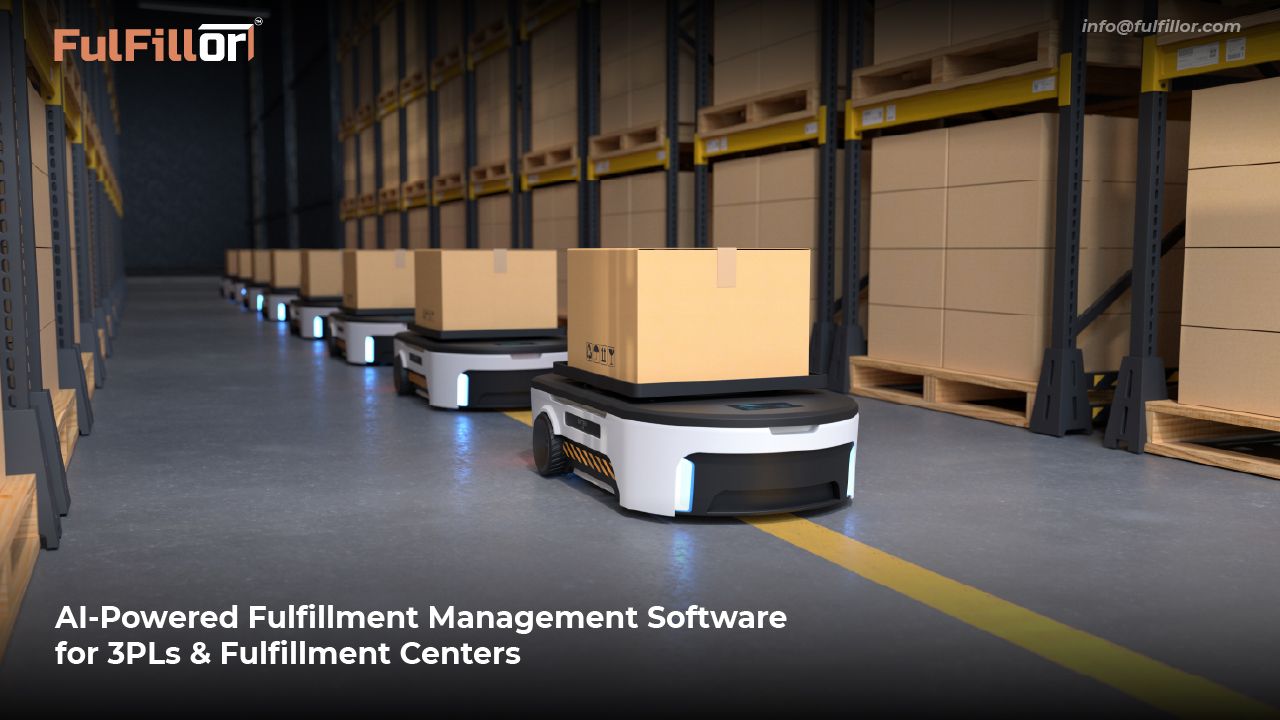
3PL providers and fulfillment centers manage multiple clients, order channels, SKUs, warehouse teams, billing rules, and delivery expectations at the same time. Without the right fulfillment management software, these moving parts can lead to picking errors, delayed shipments, inventory mismatches, slow client onboarding, and poor operational visibility.
As fulfillment operations grow, teams need a connected way to manage orders, inventory, warehouse workflows, shipping, returns, billing, and reporting without relying on disconnected tools or repeated manual updates.
This guide explains how AI-powered fulfillment management software helps 3PL providers, fulfillment centers, and warehouse teams improve speed, reduce errors, manage client-specific workflows, and scale warehouse operations.
What Is Fulfillment Management Software?
Fulfillment management software is a system that helps businesses manage the complete order fulfillment process, from receiving inventory and storing products to picking, packing, shipping, returns, billing, and reporting.
For 3PL providers and fulfillment centers, fulfillment software is especially important because it helps manage multiple clients, SKUs, order channels, warehouse teams, and service-level agreements from one connected platform. Instead of relying on spreadsheets or disconnected tools, fulfillment teams can use fulfillment management software to improve order accuracy, increase inventory visibility, automate warehouse workflows, and process orders faster.
Fulfillment Management Software vs Traditional WMS
A traditional warehouse management system focuses mainly on warehouse activities such as receiving, storage, inventory control, picking, packing, and shipping. Fulfillment management software takes a broader approach by connecting orders, inventory, warehouse workflows, shipping, returns, billing, reporting, and client visibility in one system.
For 3PL providers and fulfillment centers, this broader approach is important because fulfillment is no longer limited to storing and moving inventory. Teams also need to manage ecommerce orders, marketplace connections, service-level agreements, client-specific workflows, usage-based billing, and real-time reporting.
In short, WMS helps manage warehouse activity. Fulfillment management software helps manage the full fulfillment operation.
Why 3PL Providers and Fulfillment Centers Need AI-Powered Fulfillment Software

3PL providers and fulfillment centers manage complex warehouse operations across multiple clients, order channels, SKUs, service-level agreements, and billing rules. As order volumes increase, manual processes can slow down fulfillment, create picking errors, reduce inventory accuracy, and make it harder to meet client expectations.
AI-powered fulfillment management software helps fulfillment teams improve warehouse speed, accuracy, and visibility by automating key workflows such as order processing, inventory updates, picking, packing, shipping, and reporting. With better control over daily operations, warehouse teams can reduce manual work, improve productivity, and respond faster to changing customer demands.
A scalable warehouse management system also helps logistics providers support value-added services such as e-commerce fulfillment, returns management, kitting, labeling, light assembly, and client-specific reporting. These capabilities help 3PL providers and fulfillment centers improve client service, create new revenue opportunities, and scale operations with better visibility.
Core Features of Fulfillment Management Software
Whether a business runs a 3PL warehouse, ecommerce fulfillment center, or multi-client distribution operation, the software should support the complete fulfillment lifecycle.
Key features include:
- Multi-client warehouse management
- Real-time inventory tracking
- Order automation
- Barcode scanning
- Receiving and putaway workflows
- Picking, packing, and shipping workflows
- Returns management
- 3PL billing and fulfillment charge tracking
- Client portal access
- Warehouse reporting and analytics
- Carrier, marketplace, ERP, and TMS integrations
These features help 3PL providers and fulfillment centers reduce manual work, improve fulfillment accuracy, manage client-specific workflows, and scale warehouse operations with better visibility.
Key Benefits of AI-Powered Fulfillment Management Software
For 3PL providers and fulfillment centers, fulfillment management software connects orders, inventory, warehouse teams, client workflows, shipping, billing, and reporting in one system. This gives teams a clearer way to manage daily fulfillment work, reduce disconnected processes, and improve operational performance across multiple clients and order channels.
- Improve Warehouse Productivity
AI-powered fulfillment software helps warehouse teams automate daily tasks such as order processing, inventory updates, picking, packing, shipping, and reporting. By reducing manual work, teams can process more orders with fewer delays and fewer errors. Barcode scanning, batch picking, and structured picking and packing workflows help warehouse teams verify the right item, quantity, and order before shipping.
- Support Value-Added Fulfillment Services
A scalable 3PL fulfillment management system helps providers offer more value-added services, including e-commerce fulfillment, returns management, kitting, labeling, light assembly, and client-specific reporting.
- Support E-Commerce Fulfillment and Returns
Fulfillment centers often manage high order volumes, small parcel shipments, marketplace orders, and customer returns. Fulfillor helps simplify e-commerce fulfillment by improving visibility across orders, inventory, returns, and warehouse workflows. This is especially useful for fulfillment teams managing marketplace orders, shopping cart integrations, small parcel shipping, and returns processing for multiple ecommerce clients.
- Handle High-Volume Fulfillment More Efficiently
When order volumes increase, manual processes can slow down the warehouse. A connected WMS helps warehouse teams manage high-throughput operations by streamlining picking, packing, shipping, and order tracking from one platform.
- Speed Up Client Onboarding and Integrations
Fulfillment management software helps connect new clients, order channels, carriers, and external systems more efficiently, so teams can launch new customer operations faster. Carrier integrations, ERP integrations, TMS integrations, and marketplace connections help logistics providers onboard clients with fewer setup delays.
- Improve 3PL Billing Accuracy
3PL providers and fulfillment businesses often need flexible billing for storage, receiving, picking, packing, kitting, returns, shipping, and special handling.
- Give Clients Better Reporting and Visibility
Built-in reporting helps fulfillment teams share useful insights with clients, including inventory levels, order status, fulfillment performance, shipping activity, and return trends.
- Reduce Labor and Administrative Costs
Automation and real-time visibility help reduce repetitive manual tasks, improve team productivity, and simplify warehouse management. A user-friendly WMS can also help new employees learn workflows faster and work more accurately.
- Improve Customer Satisfaction
Accurate inventory, faster fulfillment, and fewer order mistakes help fulfillment teams deliver better service to clients. With stronger warehouse visibility, teams can improve delivery accuracy, reduce waste, and lower the risk of fulfillment issues.
Manual Fulfillment vs AI-Powered Fulfillment Management
Manual fulfillment often depends on spreadsheets, repeated data entry, disconnected systems, and constant team follow-ups. For 3PL providers and fulfillment centers, this can lead to inventory errors, delayed shipments, billing mistakes, poor client visibility, and slower warehouse performance.
AI-powered fulfillment management software connects warehouse workflows in one platform. It helps 3PLs automate order processing, improve picking and packing accuracy, manage inventory in real time, track billable activities, and give clients better visibility into fulfillment performance.
Scale Fulfillment Operations with Fulfillor
Fulfillor helps 3PL providers, fulfillment centers, and warehouse teams automate fulfillment workflows, improve order accuracy, manage multiple clients, and gain real-time visibility across inventory, orders, shipping, returns, billing, and reporting.
With AI-powered fulfillment management software, your team can reduce manual work, process orders faster, improve client visibility, and scale warehouse operations. Fulfillor also supports billing workflows by helping providers track storage, receiving, picking, packing, kitting, returns, and special handling charges more accurately.
Book a Fulfillor demo to see how your fulfillment operation can improve speed, accuracy, and operational performance.