
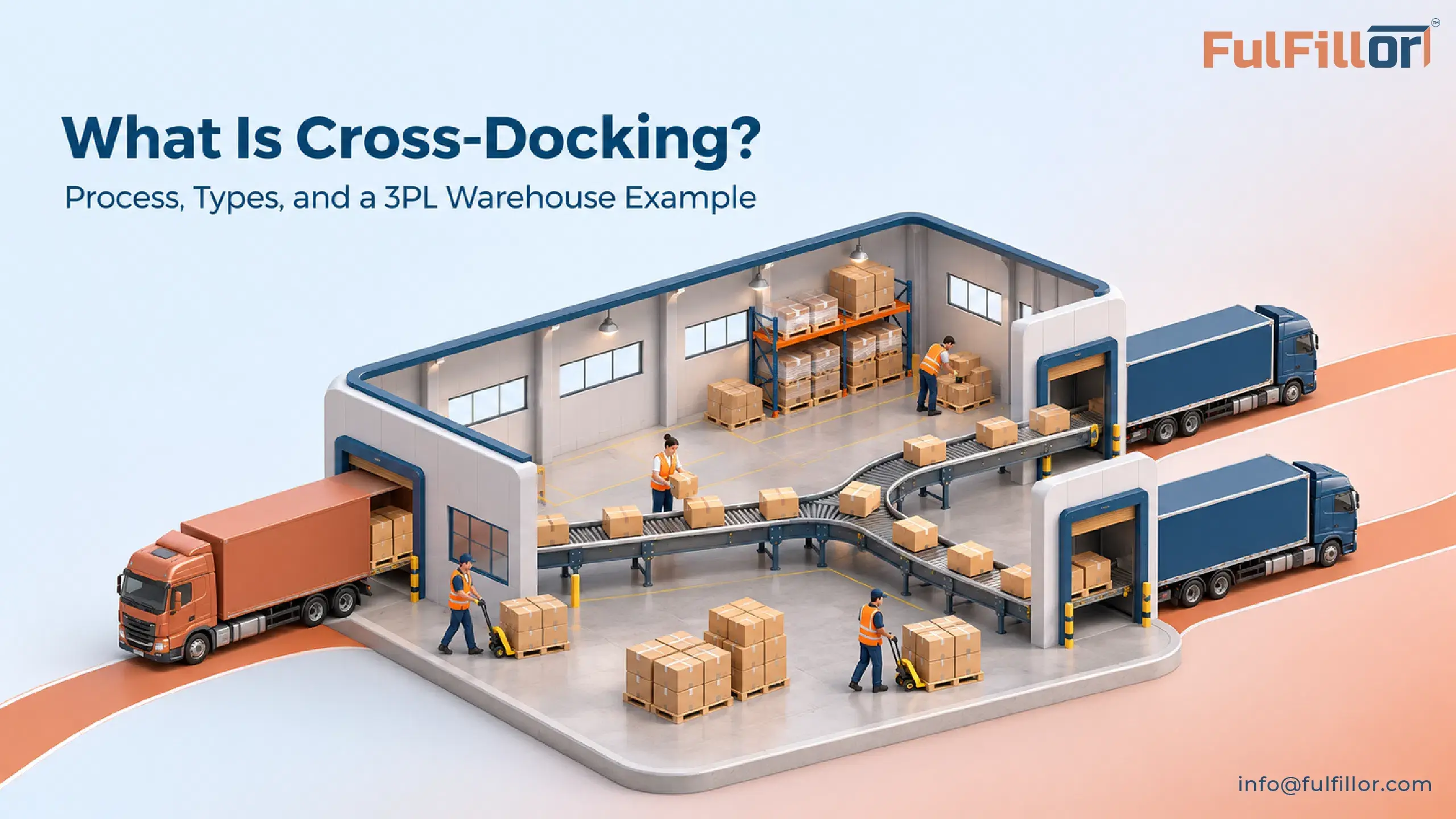
Cross-docking is a warehouse process in which goods move from an inbound delivery to an outbound shipment with little or no time in storage. The warehouse either loads the freight straight onto the next trailer or stages it near the shipping dock until the carrier arrives.
Say a supplier delivers 10 pallets to a 3PL warehouse outside Dallas. Six are booked on a 2 p.m. truck replenishing stores in North Texas. One of the six store-bound pallets will arrive with crushed cartons. Shipping will need the client’s decision before the 2 p.m. pickup.
How Does Cross-Docking Work in a 3PL Warehouse?
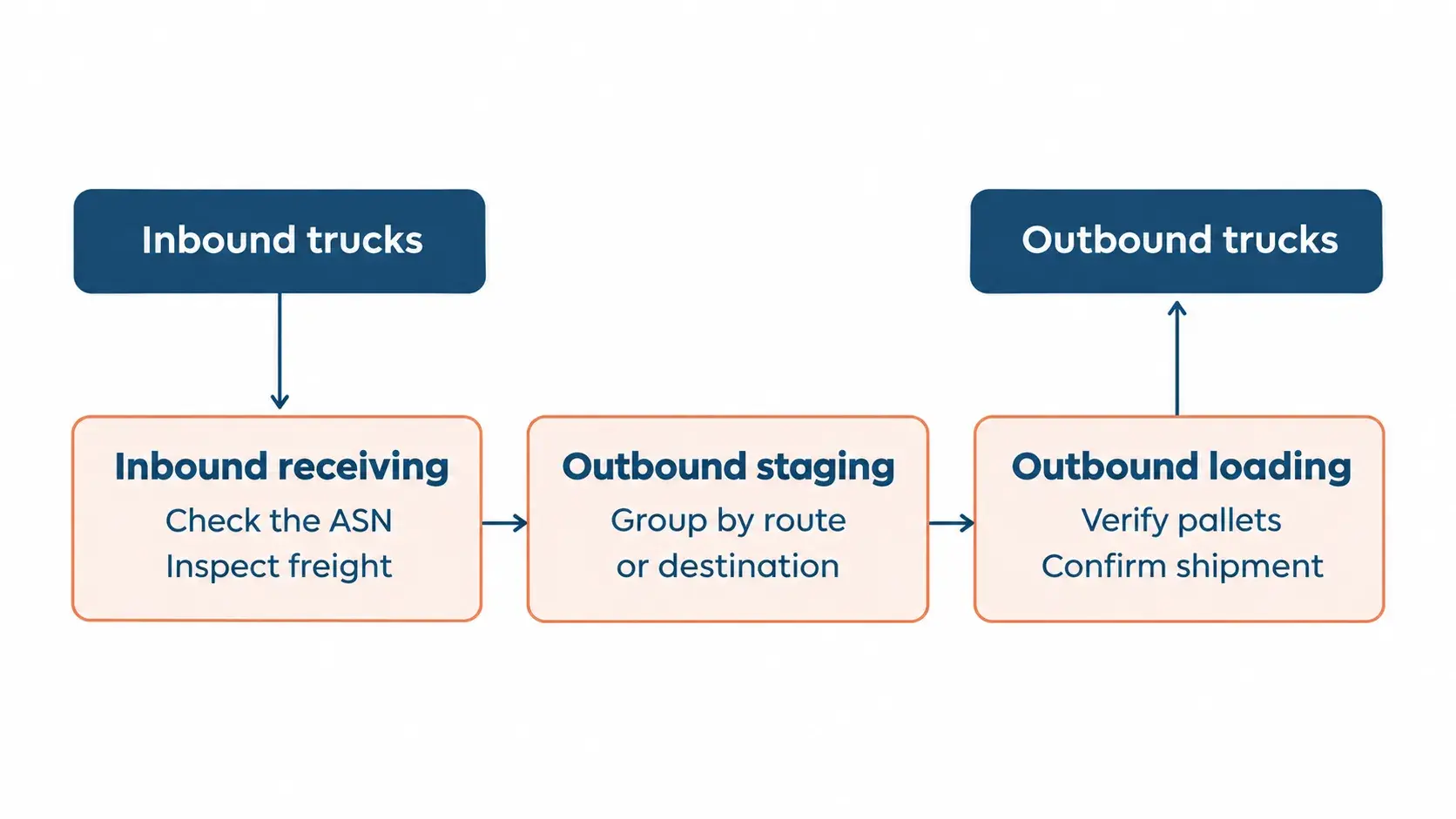
- Receive and verify the freight. Check what arrives against the advance shipping notice (ASN) or other receiving documents.
- Sort and stage by destination. Move cleared pallets or cartons to the lane or dock door assigned to the outbound load.
- Load and confirm the shipment. Verify what went onto the trailer and reconcile the actual count with the shipping paperwork.
Give receiving the pallet IDs before the truck arrives
The day before the delivery, the receiving lead checks the advance shipping notice (ASN) against the outbound orders. The dock team gets the six pallet IDs, their store destinations, and the staging lane for the afternoon pickup.
“Six pallets for the afternoon truck” sounds clear until there are 10 pallets on the trailer and several look alike. At a shared warehouse, the crew also needs the client account. Two clients can sell the same product under the same retail barcode.
Hold the damaged pallet and tell shipping what’s ready
Five store-bound pallets pass the receiving check and go to staging. The sixth goes to the designated OS&D (over, short, and damaged) hold area. The receiving clerk records the damage and follows the client’s instructions for documenting it. The four pallets for future orders follow the regular warehouse receiving process into storage.
By 11 a.m., the client has approved sending five pallets and asked receiving to keep the sixth for review. That pallet stays. Shipping updates the load to five.
Reconcile the load at the outbound dock door
At pickup, the loader scans the pallet IDs against the outbound shipment and checks the actual pallet count against the bill of lading (BOL). If the paperwork still shows six, shipping corrects it before release. By the end of the shift, all 10 pallets are accounted for: five shipped, four put away, and one on hold.
If the carrier misses the 2 p.m. pickup and another load needs the lane at 4 p.m., move the five pallets to the assigned holding location and record the move. The next shift should be able to find them without calling the person who unloaded the truck.
What Are the Types of Cross-Docking?
One way to describe cross-docking is by when the destination is assigned.
- Pre-distribution cross-docking. The supplier sends freight that already has an assigned destination. The Dallas example fits here because the six pallets are assigned to stores before they arrive.
- Post-distribution cross-docking. The 3PL assigns the final destinations at the cross-dock. For example, receiving gets a load of the same product, and the dock team divides it among store orders based on the allocations available that morning.
You can also describe the job by how the freight is grouped. Consolidation combines smaller shipments into a larger outbound load. Deconsolidation splits one inbound load across several outbound shipments. Retail 3PLs often split supplier loads for store delivery. Less-than-truckload (LTL) carriers consolidate shipments headed toward the same regional hub and split them again closer to delivery.
Cross-Docking vs. Traditional Warehousing
| Factor | Cross-docking | Traditional warehousing |
|---|---|---|
| Where goods go after receiving | To outbound staging or directly onto a trailer | To an assigned storage location |
| When goods move out | Once they’re cleared and the outbound load is ready | When an order is released and the goods are picked |
| Where it fits | Store replenishment, scheduled transfers, and LTL freight | Reserve inventory and stock for future orders |
The Dallas warehouse uses both processes on the same delivery. The store-bound pallets have a truck to catch. The four reserve pallets need a location where pickers can find them when orders come in.
Benefits of Cross-Docking and When It Makes Sense
Skipping putaway and picking can cut handling, free up rack space, and help freight make an earlier departure. The gains are easiest to see when pallets arrive labeled for their destinations and the outbound carrier is already booked. Mixed pallets can still work, but someone has to count the cartons, split them by order, and rebuild the loads. If the labels are wrong or the outbound truck is late, that job can tie up a dock door or staging lane. Before routing a load through the cross-dock, check that you have room to sort it and a place to move it if the pickup slips.
What Should a 3PL Confirm Before Quoting Cross-Docking?
Ask the client for a recent shipment and the retailer’s routing guide. Ten pallets labeled for three stores may only need to be received, staged, and loaded. Ten mixed pallets for the same stores may need to be broken down, rebuilt, and relabeled with GS1-128 logistics labels if the retailer calls for them. That’s a different labor estimate.
Find out who books the delivery appointment, who handles any retailer chargebacks for late or mislabeled freight, and how long freight can occupy a staging lane. List any fees for sorting, relabeling, or holding freight after a missed pickup in the quote.
Tracking Cross-Dock Freight in Fulfillor
Fulfillor’s handheld warehouse tools let receiving teams scan inbound goods and check them against a purchase order or ASN. Clients can view inbound shipment information and ASN updates for their account through the 3PL client portal.
If you’re evaluating a WMS for cross-docking, bring an inbound notice, the outbound order it needs to feed, and an exception your team handles today. Schedule a call with Fulfillor to review how your receiving, staging, and shipping requirements would fit.
Cross-Docking FAQs
What are the main types of cross-docking?
Pre-distribution cross-docking assigns destinations before freight arrives. Post-distribution cross-docking assigns them at the facility. Consolidation and deconsolidation describe how freight is handled: combining smaller shipments into one load or splitting one load into several.
What is the difference between cross-docking and warehousing?
Cross-docking sends received goods toward a scheduled outbound shipment with little or no storage. Traditional warehousing puts goods into inventory until an order is ready to pick.
How long does freight stay at a cross-dock?
Freight often leaves the same day or within 24 hours. The actual staging window depends on the outbound schedule, the client agreement, and available dock space.
What are the benefits of cross-docking?
Cross-docking can reduce handling and storage needs by skipping putaway and picking. When inbound and outbound schedules line up, it can also get freight on the road sooner.
Is cross-docking the same as transloading?
The services can overlap. Cross-docking focuses on moving goods through a facility with minimal storage. Transloading focuses on transferring freight between vehicles or transportation modes, such as moving cargo from a railcar to a truck.
Is cross-docking the same as LTL shipping?
LTL shipping lets multiple shipments share trailer space. Cross-docking is one way LTL carriers sort that freight and regroup it onto trailers headed toward the next destination.