
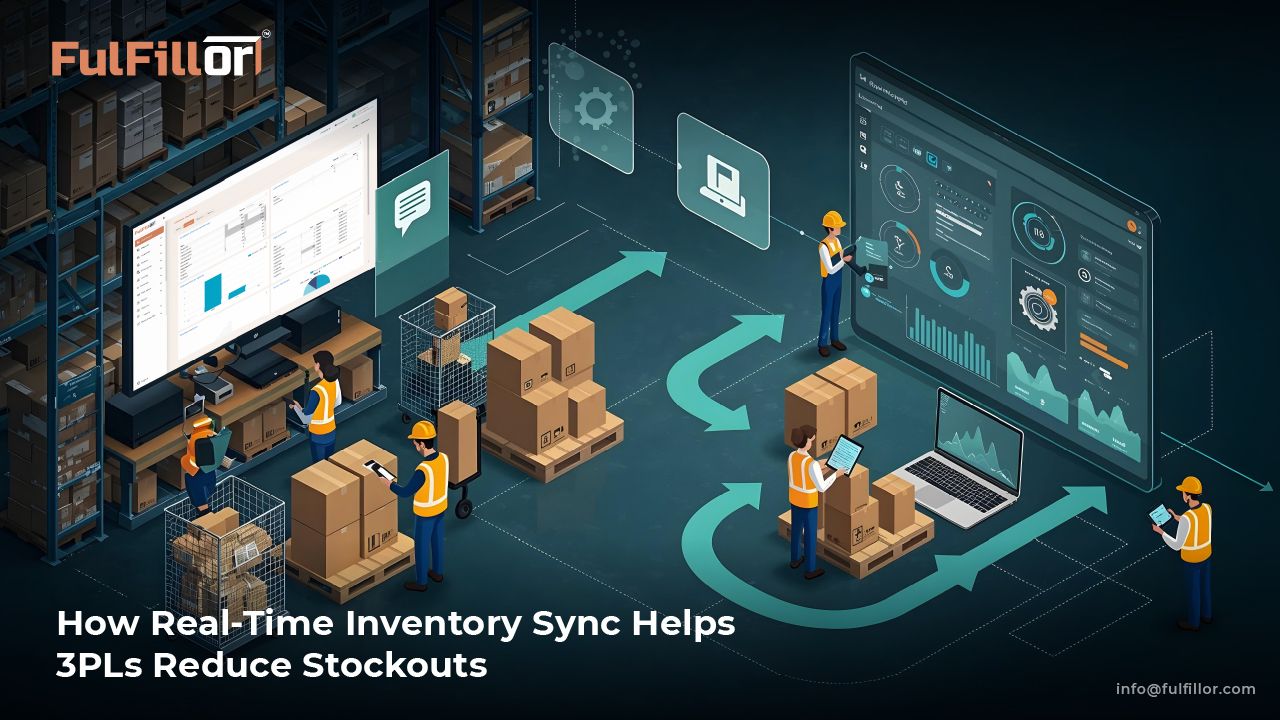
Inventory mismatch can cause a sales channel to promise stock that the warehouse cannot fulfill. A Shopify store may show 12 units available, the WMS may show nine, and the physical shelf may contain only six. These differences can lead to overselling, backorders, delayed fulfillment, and frustrated clients.
Real-time inventory sync helps keep channel availability aligned with the WMS. Accurate inventory management records remain essential because synchronization alone cannot correct a difference between recorded and physical stock.
For retailers and fulfillment teams, stockouts can lead to missed sales, backorders, and a weaker customer experience.
How Inventory Mismatch Leads to Overselling
Inventory mismatch happens when stock data does not match across the warehouse, WMS, and sales channels.
For 3PL providers, this can lead to overselling, backorders, delayed fulfillment, and unhappy customers. Real-time inventory sync helps reduce this risk by updating stock levels whenever inventory is received, picked, shipped, returned, or adjusted.
How Real-Time Inventory Sync Works for 3PLs
Inventory synchronization connects the warehouse management system with sales channels and shares changes in available stock.
Allocation can reduce availability before shipment. Receiving, cancellations, transfers, and adjustments can also affect availability according to the configured workflow. Returned items should become sellable only after inspection and approval.
Picking, packing, and shipping should not each deduct the same units again. The system must distinguish physical stock movements from changes in availability.
Update timing depends on the integration and connected platform. Teams should confirm update frequency, monitor failures, and define retry procedures.
If the WMS shows nine units but the shelf contains six, the discrepancy still requires investigation. Otherwise, connected channels may receive the same incorrect quantity.
Key Benefits of Real-Time Inventory Sync for 3PLs
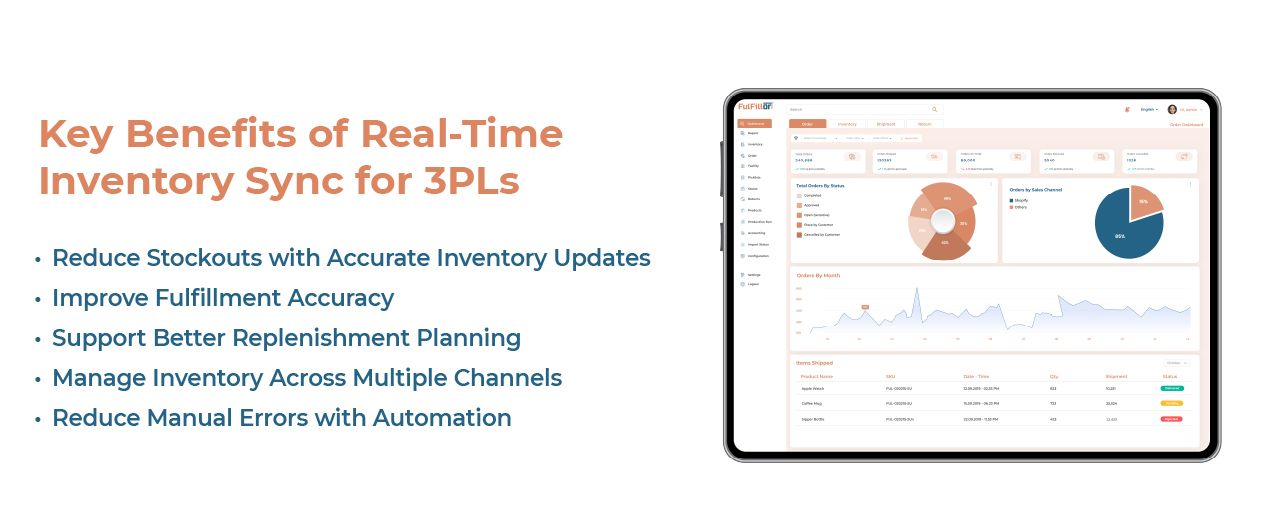
1. Reduce Overselling Caused by Outdated Availability
Outdated availability can allow several channels to accept orders for the same remaining units. Synchronizing available quantities across connected channels, including Shopify and WooCommerce, helps reduce this risk.
2. Improve Fulfillment Accuracy
Accurate inventory data helps 3PLs fulfill orders faster and with fewer errors. When stock levels stay aligned across the warehouse and sales channels, teams can reduce backorders, avoid last-minute cancellations, and keep customers informed.
3. Support Better Replenishment Planning
Real-time inventory data helps teams understand which SKUs are moving quickly and which items may need replenishment. Instead of relying on delayed reports or manual checks, 3PLs can use current stock data to plan purchasing, transfers, and restocking more confidently.
4. Manage Inventory Across Multiple Channels
For 3PLs, inventory often moves across several platforms, marketplaces, and client systems. Without proper sync, one channel may show stock as available while another system has already reserved or sold it.
5. Reduce Manual Errors with Automation
Automation reduces repeated manual entry by sharing supported inventory changes through configured integrations. Teams still need to investigate incorrect records and failed updates.
How Fulfillor 3PL WMS Helps Reduce Inventory Mismatch
Fulfillor 3PL WMS keeps inventory updates connected between warehouse operations and eCommerce channels. When inventory is received, picked, shipped, returned, transferred, or adjusted, stock levels update across the WMS and connected sales channels.
Key features include:
- Multi-channel inventory sync
- eCommerce and marketplace integrations
- Real-time inventory dashboards
- Barcode-based stock tracking
- Cloud-based inventory visibility
This gives 3PL providers a centralized way to manage inventory instead of relying on delayed updates or manual corrections. Warehouse teams can keep stock data aligned, fulfill orders more accurately, and respond faster when inventory levels change.
Example: How Faster Updates Reduce Overselling Risk
A 3PL provider using delayed batch updates may not notice inventory changes until hours later. During that gap, an eCommerce store can continue selling products that are already picked, reserved, damaged, or out of stock.
For example, allocating the last six available units should trigger an availability update to connected channels. Faster updates reduce the window in which another channel may accept orders for those units, although integration delays or simultaneous orders can still create exceptions.
Final Thoughts: Keep Channel Availability Aligned
Real-time inventory sync helps 3PL teams reduce overselling caused by outdated channel availability. It works alongside accurate physical inventory records, allocation rules, and visible exception handling. For teams still relying on delayed updates or manual corrections, improving inventory visibility is one of the clearest ways to reduce mismatch before it affects fulfillment.
Schedule a demo to see how real-time inventory visibility works in practice.