

Best 3PL Cloud WMS Software in the USA for 2026
Choosing the right 3PL cloud software can affect inventory accuracy, order speed, shipping workflows, client visibility, billing control, and warehouse scalability. For US-based 3PL providers, the best system should support multi-client operations, real-time inventory tracking, carrier integrations, automation, reporting, and flexible warehouse workflows from one cloud-based platform.
This guide compares five 3PL WMS platforms used by logistics providers in the USA: Fulfillor, ShipHero, Extensiv, InfoPlus, and Fishbowl. Each platform serves a different type of warehouse operation, so the right choice depends on your client structure, order volume, integration needs, billing complexity, and long-term growth plans.
How to Choose the Best 3PL WMS in the USA
The best 3PL WMS in the USA should be a cloud-based system that supports multi-client warehouse operations, real-time inventory tracking, order automation, carrier integrations, reporting, billing workflows, and multi-warehouse visibility.
For US-based 3PL providers, the right platform should also support major shipping carriers, ecommerce and marketplace integrations, client-level inventory visibility, role-based access, and scalable warehouse workflows. These capabilities help logistics providers manage growing order volume, reduce manual coordination, and give clients better operational visibility.
What 3PL Cloud Software Does in Real Operations
3PL cloud software helps logistics providers manage warehouse operations, client inventory, orders, picking, packing, shipping, returns, billing, and reporting from one online system. Unlike basic inventory tools, a 3PL-focused cloud WMS is built to support multiple clients, warehouses, users, carriers, sales channels, and billing rules.
In daily operations, this type of software helps teams reduce manual coordination, improve inventory visibility, automate fulfillment tasks, track shipments, and give clients clearer access to order and stock information.
Key Capabilities of 3PL Cloud Software
- Supports business growth without requiring heavy on-premise hardware.
- Gives warehouse teams remote access to inventory, order, and shipment data.
- Improves visibility across clients, warehouses, orders, and carriers.
- Provides real-time shipment and order status updates.
- Helps reduce manual work, fulfillment errors, and disconnected workflows.
Where 3PL Cloud Software Improves Operations
3PL cloud software is most useful when warehouse teams are managing multiple clients, high order volumes, different shipping rules, and complex billing requirements. A cloud-based WMS can help improve daily operations in several key areas.
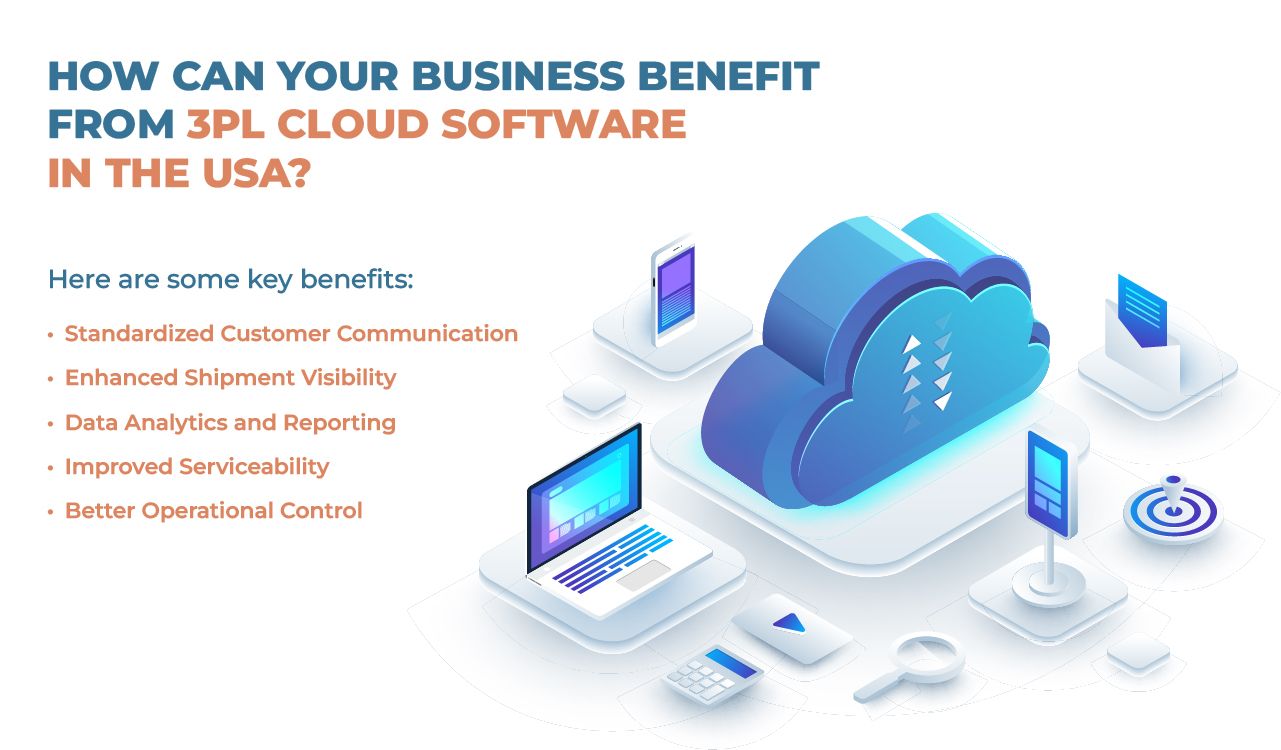
1. Standardized Client Communication
A 3PL cloud platform helps teams share consistent order, inventory, and shipment updates with clients. This reduces back-and-forth communication and gives clients clearer visibility into their fulfillment operations.
2. Better Shipment Visibility
Cloud-based 3PL software allows teams to track shipment status across carriers and orders from one system. This makes it easier to monitor dispatch activity, identify delays, and share tracking updates with clients.
3. Reporting and Analytics
Built-in reports help 3PL providers review order volume, inventory movement, fulfillment performance, shipping activity, and operational costs. These insights make it easier to identify bottlenecks and improve warehouse decisions.
4. Flexible Fulfillment Options
A 3PL cloud WMS can support different fulfillment workflows, shipping services, delivery speeds, client rules, and carrier preferences. This helps warehouses manage different customer requirements without relying on manual processes.
5. Better Operational Control
Centralized dashboards, automation rules, barcode workflows, and reporting tools help warehouse teams reduce errors, manage work more consistently, and maintain better control across clients, orders, and inventory.
Where 3PL Cloud Software Can Still Be Challenging
Even with the right platform, implementation can take planning. Complex warehouses may face challenges with data migration, legacy system integrations, staff training, workflow setup, and client-specific billing rules.
That is why 3PL providers should evaluate software based on onboarding support, integration flexibility, automation depth, reporting, and long-term scalability.
Top 5 Cloud-based 3PL WMS Software in the USA (Detailed Comparison)
How We Evaluated the Best 3PL WMS Software in the USA
- Cloud readiness
- Multi-client 3PL support
- Integrations
- Scalability
- Reporting & automation
1. Fulfillor – Best for Multi-Client 3PL Operations in the US
Fulfillor is a SaaS-based Third-Party Logistics (3PL) & end-to-end Warehouse Management System solution ideal for small to large enterprises. It manages inventory, orders, warehouses, and last-mile delivery. Fulfillor is designed for US 3PL providers that need cloud-based warehouse management, multi-client inventory visibility, order automation, carrier integrations, and flexible billing workflows.
Key Features:
- Near real-time inventory tracking to maintain accurate stock levels and avoid overstocking or stockouts.
- Order management, picking, packing, and dispatching supported by automation workflows.
- The platform supports integrations with shopping carts, marketplaces, shipping carriers, and many other platforms.
- Advanced analytics and reports for improving warehouse performance.
- Scalable and flexible for ecommerce, retail, logistics, manufacturing, and multi-client fulfillment operations.
Fulfillor is purpose-built as a WMS for US 3PL providers, with native support for major US carriers, marketplaces, and multi-client billing workflows.
Why Choose Fulfillor's 3PL Software?
The platform is designed for growing 3PL providers that need multi-client visibility, automation, and flexible billing workflows. It is commonly used by teams looking to reduce manual coordination across inventory, orders, and shipping operations.
2. ShipHero – Best for Ecommerce Fulfillment and DTC Operations
ShipHero is a well-known cloud-based 3PL software solution for ecommerce businesses. It offers solid warehouse management features that help small and mid-sized businesses optimize fulfillment operations.
Key Features:
- 50+ integrations with major online marketplaces and ecommerce platforms
- Inventory tracking and warehouse management tools to prevent stockouts and overstocking
- An intuitive interface for faster onboarding
- Multi-warehouse support and automated order allocation
Why Choose ShipHero?
ShipHero helps 3PLs manage warehouse operations from a single platform, reducing manual errors through automation and streamlined workflows.
For a detailed comparison, see how ShipHero compares with Fulfillor.
3. Extensiv – Best for Large-Scale 3PL Operations & Network-Based Fulfillment
Extensiv is built for 3PL providers managing large-scale logistics operations. Its cloud-based platform offers tools to streamline order management and improve inventory visibility. It also connects 3PLs and brands through a broader fulfillment network.
Key Features:
- Customer portal for clients to track orders
- Smart mobile scanning enables seamless and paperless order processing
- Automated small parcel shipping to simplify fulfillment
- Access to a network of over 1,500 3PLs provides flexibility and reliability
- Real-time access to advanced reporting and analytics
Why Choose Extensiv?
Extensiv is designed for established 3PL providers handling complex logistics workflows at scale. Its large 3PL network and operational tools make it suitable for businesses that need flexibility across multiple partners and locations.
For a deeper comparison, explore Extensiv vs Fulfillor.
4. InfoPlus – Best for Customizable 3PL Workflows & Mid-to-Large Warehouses
InfoPlus is a cloud-based 3PL warehouse and logistics management platform designed for distribution centers and third-party logistics providers.
Key Features:
- Customizable dashboards for data visualization.
- Automation tools for order processing, inventory updates, and shipping workflows.
- Advanced reporting tools to track KPIs and optimize performance.
- Support for bundling and kit-based order processing (Kit On Demand).
- Print-on-demand workflow support for custom product fulfillment.
Why Choose InfoPlus?
InfoPlus is built for operations that require flexible workflows and customization across clients. It is well-suited for large warehouses and distribution centers handling complex order volumes.
5. Fishbowl – Best for Inventory Control & QuickBooks-Based Operations
Fishbowl is a cloud-based inventory and warehouse management tool used in manufacturing and warehousing operations to improve efficiency and reduce costs. It is designed for small to mid-sized businesses. It includes strong inventory control features with real-time stock tracking.
Key Features:
- Integration with QuickBooks for simplified accounting and inventory management.
- Tools to manage manufacturing and distribution workflows.
- Support for barcode scanning to improve inventory accuracy.
- Automated workflows to reduce manual errors.
- Real-time stock updates to prevent overstocking and stockouts.
Why Choose Fishbowl?
Fishbowl offers strong inventory control and integrates well with accounting systems like QuickBooks, helping reduce manual reconciliation and operational gaps.
3PL Cloud Software Pricing: What to Compare
3PL cloud software pricing can vary based on platform features, number of users, order volume, warehouse locations, integrations, onboarding needs, and support requirements.
For US 3PL providers, the cheapest option is not always the best fit if it lacks billing automation, client visibility, carrier integrations, or multi-client warehouse workflows.
When comparing pricing, review these factors:
- Monthly subscription or platform fee
- Number of users or warehouse seats
- Order, shipment, or transaction volume
- Implementation and onboarding costs
- Marketplace and carrier integration fees
- Billing automation and reporting features
- Multi-client or multi-warehouse limits
- Support, training, and customization needs
The right pricing model should match your warehouse size, client structure, order volume, and long-term growth plans.
Which 3PL WMS Should You Choose in the USA?
Cloud-based 3PL WMS platforms help logistics providers manage inventory, orders, and fulfillment more efficiently while reducing manual coordination and operational errors.
The right system depends on your operational complexity, client structure, warehouse workflows, and growth plans.
You can also review direct comparisons between platforms to understand differences in pricing, features, and scalability.
- Fulfillor is well-suited for growing 3PL providers that need multi-client management, automation, and flexible billing workflows.
- ShipHero works best for ecommerce-focused operations and DTC fulfillment with simpler workflows.
- Extensiv is designed for large-scale 3PL providers managing complex logistics networks and high order volumes.
Each platform serves a different stage of growth, so the best choice depends on whether you are optimizing for simplicity, flexibility, or scale.
If you are evaluating 3PL WMS options for a growing warehouse operation, explore how Fulfillor compares with other platforms and see which system fits your workflows, billing needs, and scalability goals.
Frequently Asked Questions About 3PL Cloud Software
What should you compare when choosing cloud 3PL software?
Compare multi-client capabilities, warehouse workflows, integrations, billing tools, reporting, implementation requirements, support, and scalability. The right cloud 3PL software should fit both your current operation and the complexity you expect as client volume grows.
What is the best 3PL cloud software in the USA?
The best 3PL cloud software in the USA depends on the size and complexity of your warehouse operations. Growing 3PL providers usually need a platform that supports multi-client inventory, order automation, shipping integrations, billing workflows, client portals, and scalable reporting. Fulfillor, ShipHero, Extensiv, InfoPlus, and Fishbowl are common options, but each platform fits a different type of 3PL operation.
What is the difference between 3PL software and a 3PL WMS?
3PL software can cover broader logistics functions such as order management, shipping, billing, client communication, and reporting. A 3PL WMS focuses more specifically on warehouse operations, including receiving, putaway, inventory tracking, picking, packing, shipping, returns, and warehouse visibility. Many modern platforms combine both into one cloud-based 3PL warehouse management system.
Why do 3PL providers need a cloud-based WMS?
3PL providers need a cloud-based WMS because warehouse teams often manage multiple clients, sales channels, carriers, warehouses, and billing rules at the same time. A cloud-based system gives teams real-time access to inventory, orders, shipments, and reporting without relying on on-premise servers or disconnected spreadsheets.
How do I choose the right WMS for 3PL operations?
To choose the right WMS for 3PL operations, evaluate multi-client support, inventory accuracy, order automation, barcode workflows, shipping carrier integrations, billing rules, client portals, reporting, onboarding support, and scalability. The right system should match your current warehouse workflows while also supporting future growth.
Is a 3PL warehouse management system different from standard WMS software?
Yes. A 3PL warehouse management system is designed for businesses that manage inventory and fulfillment for multiple clients. It usually includes client-level inventory visibility, customer portals, billing rules, service-level workflows, multi-warehouse support, and flexible reporting. Standard WMS software is often built for a single company managing its own inventory.
Why is 3PL billing software important in a cloud WMS?
3PL billing software is important because logistics providers often charge clients for storage, receiving, picking, packing, shipping, kitting, returns, special handling, and other warehouse services. Without automated billing workflows, teams may miss charges, underbill clients, or spend too much time reconciling services manually.
Can small and mid-sized 3PLs use cloud-based WMS software?
Yes. Many small and mid-sized 3PLs use cloud-based WMS software because it can reduce the need for heavy infrastructure, improve visibility, and support growth across clients, orders, warehouses, and integrations. The key is choosing a platform that fits current needs without adding unnecessary enterprise complexity.
What features should the best 3PL WMS include?
The best 3PL WMS should include multi-client inventory management, receiving, putaway, picking, packing, shipping, returns, barcode scanning, carrier integrations, billing automation, client portals, reporting dashboards, user permissions, and multi-warehouse visibility. These features help 3PL providers manage daily operations with better accuracy and control.
How much does 3PL cloud software cost?
3PL cloud software pricing depends on the platform, number of users, order volume, warehouse locations, integrations, onboarding needs, and feature requirements. Some systems charge monthly subscription fees, while others may include implementation costs, usage-based pricing, or extra fees for integrations, support, and advanced automation.