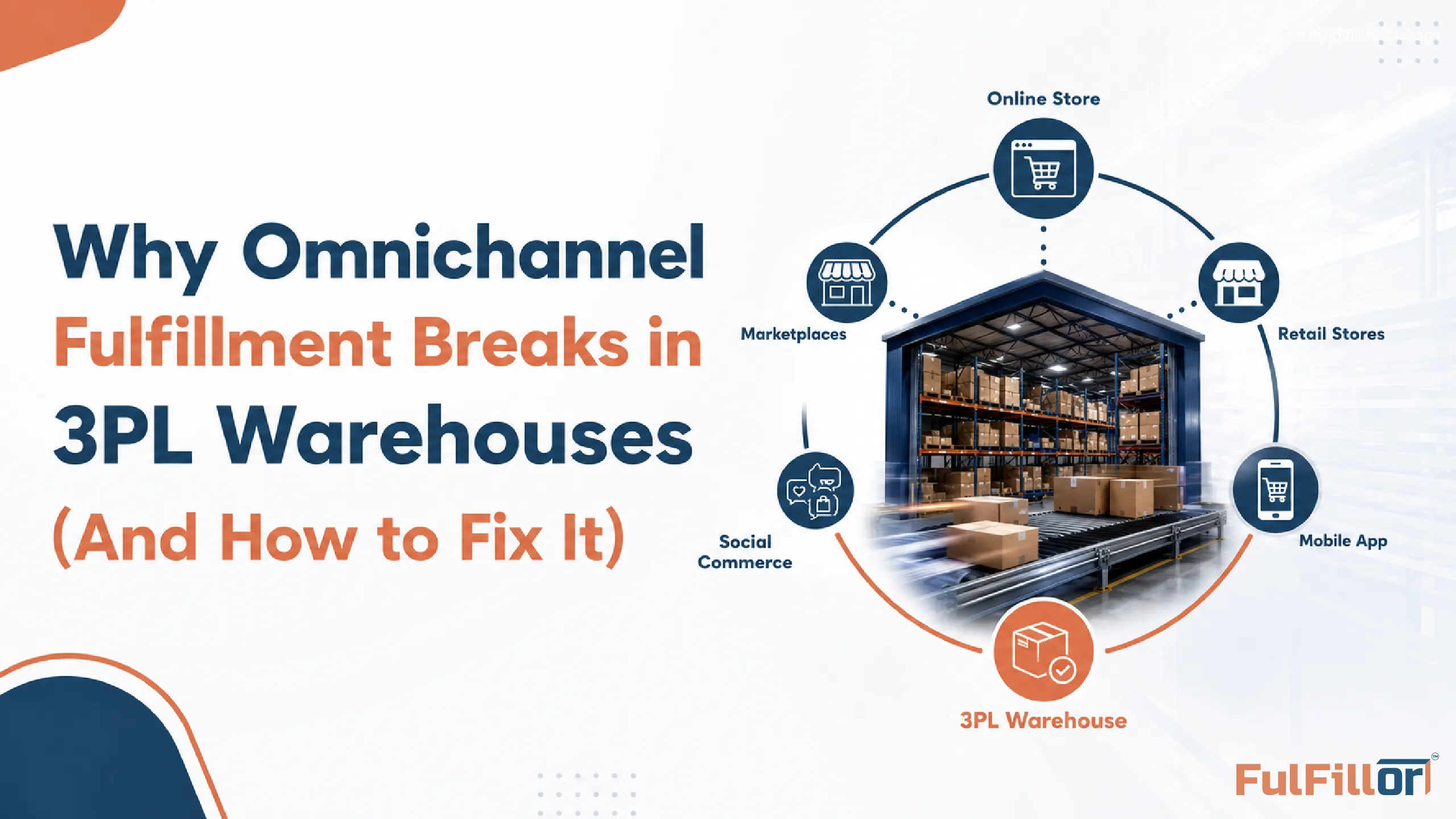
Omnichannel fulfillment sounds simple on paper: connect sales channels, sync inventory, and ship orders accurately.
In reality, many 3PL warehouses struggle to make it work at scale. Inventory does not always match across channels, orders are routed incorrectly, and returns create tracking gaps. As client count grows, these issues do not just increase, they multiply.
The problem is not demand for omnichannel fulfillment. It is that many tools are not built for the complexity of multi-client 3PL operations.
This guide explains where 3PL omnichannel fulfillment breaks down inside multi-client warehouse operations and what needs to change before it can scale.
Why Omnichannel Fulfillment Is Different for 3PLs
For a single brand, omnichannel fulfillment usually means managing inventory and orders across its own sales channels. For a 3PL, the challenge is larger because the warehouse manages multiple clients, each with different sales channels, inventory rules, order priorities, return policies, billing rates, and reporting needs.
That is why 3PLs need fulfillment software built for multi-client operations, not just tools that pull orders into one place.
| Area | Basic Order Sync Tool | 3PL Omnichannel Fulfillment Software |
|---|---|---|
| Inventory | Syncs stock between connected sales channels. | Tracks inventory by client, warehouse, location, lot, and channel. |
| Orders | Pulls orders into one central view. | Routes orders based on client rules, channel, SLA, warehouse, and carrier logic. |
| Returns | Provides limited return updates. | Connects returns with stock updates, billing, reporting, and client visibility. |
| Billing | Usually requires manual billing adjustments. | Automates client-specific 3PL billing rules for storage, handling, shipping, and returns. |
| Visibility | Shows basic order and inventory status. | Gives clients access to inventory, order status, reports, and account-level activity. |
| Scalability | Works for simple fulfillment workflows. | Supports multi-client, multi-channel, and multi-warehouse fulfillment operations. |
Example: Allocating Inventory Across Two Sales Channels
A client sells the same SKU through an online store and a marketplace. When an order arrives from either channel, the fulfillment system reserves the required quantity against that client's available inventory and sends updated availability to connected channels.
If an update fails, the integration should flag the exception for review. If the order is canceled, the reservation should be released according to the client's rules. Returned units should become available for sale only after inspection and approval.
These controls help prevent competing orders, cancellations, and returns from creating inventory mismatches.
Essential Features of 3PL Omnichannel Fulfillment Software
The right 3PL software should support the operations that make omnichannel fulfillment difficult: inventory sync, order routing, warehouse execution, shipping, returns, billing, and client access.
Key features include:
- Real-time inventory sync across ecommerce, marketplace, retail, wholesale, and warehouse systems
- Rule-based order routing across sales channels, warehouses, and shipping methods
- Mobile handheld operations for picking, packing, barcode scanning, and shipment verification
- Wholesale order management for bulk orders, carton-level handling, and B2B fulfillment
- Integrations with ecommerce platforms, marketplaces, ERPs, and carriers such as Shopify, Amazon, Walmart, UPS, FedEx, USPS, and DHL
- Client portals for inventory access, order tracking, reporting, and account-level control
- Automated 3PL billing for storage, pick and pack, receiving, shipping, returns, and client-specific rate rules
Technologies Supporting Omnichannel Warehouse Fulfillment
For 3PLs, omnichannel fulfillment only works when inventory, orders, shipments, returns, and billing stay updated across every client and channel.
BOPIS and Store Fulfillment
Buy Online, Pick Up In Store workflows matter when 3PLs support retail clients with store-based fulfillment. In those cases, warehouse and store inventory must stay aligned so pickup orders can be prepared without overselling, stock confusion, or manual checks.
Delta Sync
Delta sync updates only the data that has changed instead of refreshing full datasets every time. This helps reduce system load while keeping inventory, order, and shipment data accurate across POS, ERP, WMS, and ecommerce platforms.
AI and Automation
AI and automation can help 3PLs spot stock risks, prioritize urgent orders, flag fulfillment delays, and reduce repetitive manual checks. When these tools are tied to warehouse operations, teams can act earlier on issues that affect speed, accuracy, and service levels.
Flexible and Composable Systems
Flexible systems allow 3PLs to add new integrations, workflows, or capabilities without rebuilding the entire technology stack. This is useful when clients use different ecommerce platforms, marketplaces, ERPs, or shipping carriers.
End-to-End Integration
Omnichannel fulfillment works best when order management, inventory, warehouse execution, shipping, returns, billing, and reporting are managed together. Without integration, teams often rely on manual fixes that slow fulfillment and increase errors.
Conclusion: Making Omnichannel Fulfillment Work for 3PLs
A 3PL WMS brings inventory, orders, shipping, returns, billing, and client visibility into one operational layer. Fulfillor supports omnichannel fulfillment across ecommerce, retail, wholesale, and marketplace channels with inventory management, order management, shipping, returns, billing, handheld operations, and client portal access.
Contact Fulfillor to see how your 3PL warehouse can manage omnichannel fulfillment with fewer manual gaps.