
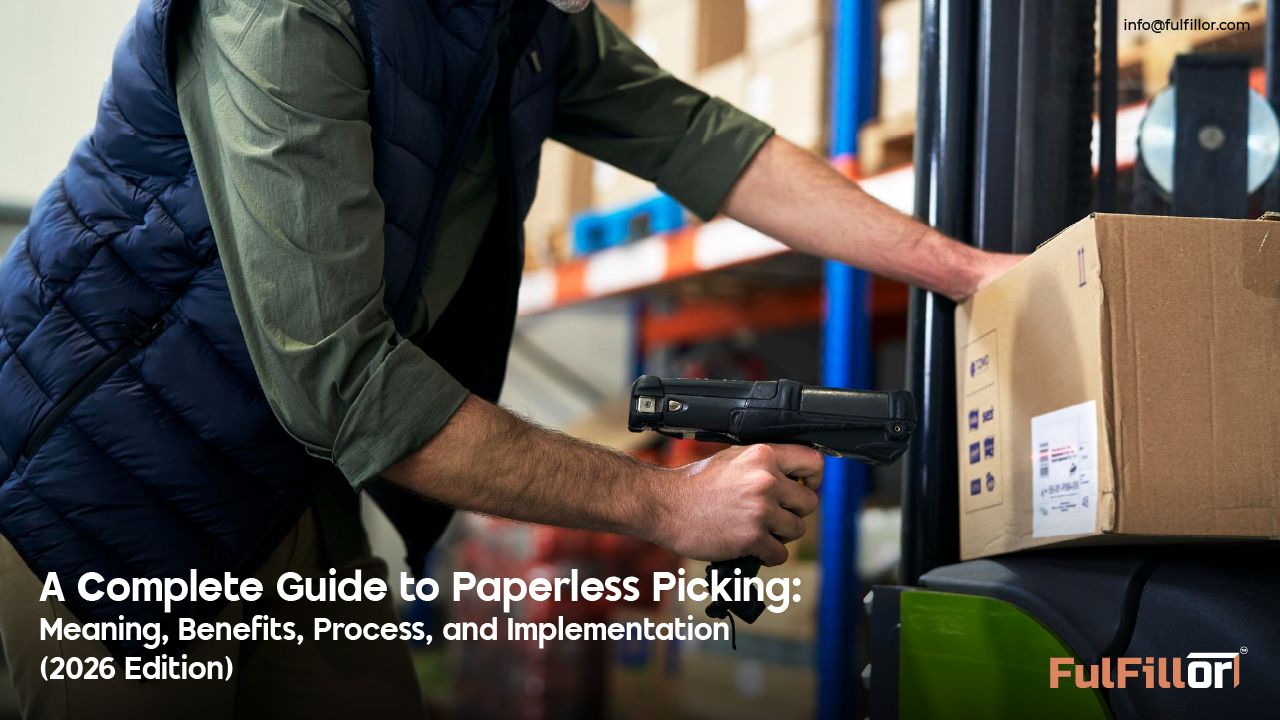
Fast and accurate order fulfillment has become a baseline requirement for modern warehouses. As order volumes increase and operations become more complex, paper-based picking methods struggle to keep up. Missed items, delayed shipments, and manual errors start to slow down workflows, making it harder to scale without introducing a more reliable, system-driven picking process.
Paperless picking replaces printed pick lists with a warehouse management system (WMS)–driven picking process, helping warehouses automate order picking, reduce errors, and scale operations efficiently.
This guide explains how paperless picking works in practice, where it improves operations, and how to implement it effectively within your warehouse environment.
What Is Paperless Picking?
Paperless picking is a digital picking system that replaces traditional paper-based workflows with automated, system-guided processes. Instead of relying on printed pick lists or manual instructions, warehouse teams use connected devices to receive, verify, and complete picking tasks in real time.
Pickers are guided step by step through mobile devices, barcode scanners, or wearable tools that sync directly with a warehouse management system (WMS). Each item is scanned and validated during the process, ensuring higher accuracy while automatically updating inventory levels.
This approach reduces manual errors, improves picking speed, and gives warehouse teams better visibility into operations. As order volumes grow, it also provides a more structured and scalable way to manage fulfillment without increasing complexity on the floor. For 3PL warehouses managing multiple clients, paperless picking helps prevent inventory overlap and improves billing accuracy.
As warehouse operations scale, manual processes become harder to manage, Order picking can account for 50–70% of total order preparation time, making it one of the most resource-intensive activities in warehouse operations.
Paperless Picking Workflow Using a Warehouse Management System

While the exact setup depends on the system in use, most paperless picking workflows follow a similar sequence designed to improve accuracy and reduce unnecessary movement inside the warehouse.
-
Order Creation: When a customer places an order, the details are sent directly to the warehouse management system (WMS), where the picking process is triggered automatically.
-
Digital Pick Instructions: The system generates a digital pick list based on order priority, batching logic, or warehouse zones. It includes item locations, quantities, and handling instructions, allowing pickers to start work without relying on printed documents.
-
Optimized Picking Route: The WMS generates the most efficient picking workflow based on order priority and warehouse layout, reducing travel time and unnecessary movement.
-
Real-Time Validation and Updates: Each item is scanned during picking to confirm accuracy. Inventory levels are updated instantly, helping prevent stock mismatches and keeping records accurate.
-
Packing and Dispatch: Once picking is complete, items move to packing. After verification and packaging, the order is dispatched, completing the process.
Paperless Picking vs Traditional Picking: A Clear Comparison
Paperless picking replaces manual, paper-based processes with system-driven workflows that guide pickers in real time. Instead of relying on printed lists and manual checks, warehouses use connected devices to improve accuracy, reduce errors, and keep inventory updated as work happens. Compared to traditional methods, this approach offers better control, faster execution, and a more scalable way to manage growing order volumes.
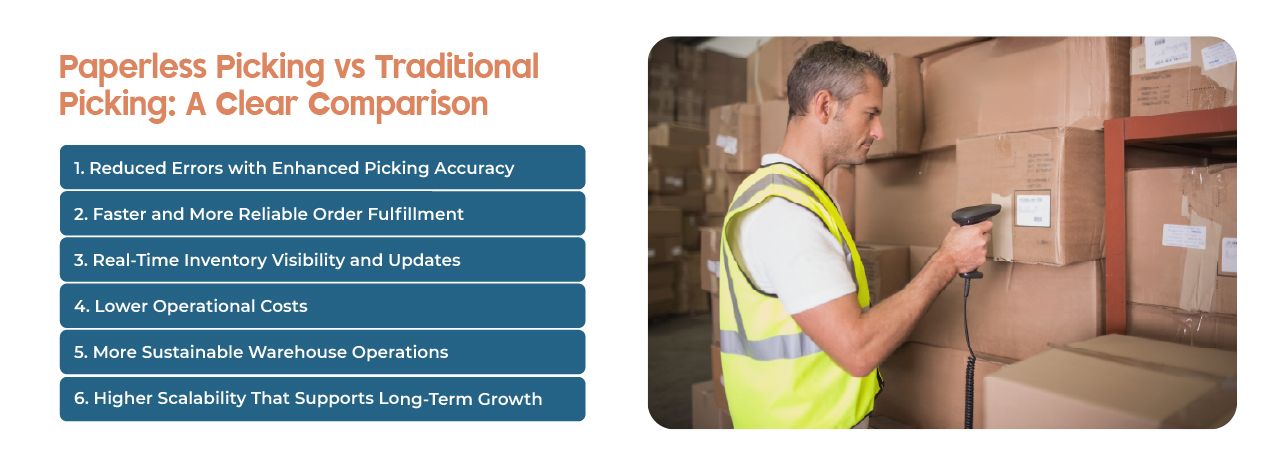
1. Reduced Errors with Enhanced Picking Accuracy
Barcode scanning and system validation remove most of the guesswork from picking. Instead of relying on printed lists and manual checks, each item is scanned and verified in real time. This reduces common issues like wrong item picks, missed SKUs, and data entry mistakes, leading to more consistent and accurate order fulfillment.
2. Faster and More Reliable Order Fulfillment
Without the need to print, sort, and interpret paper pick lists, pickers can move directly to execution. System-guided routes reduce unnecessary travel, while batching and zoning improve throughput. This results in faster order processing and more predictable fulfillment timelines, especially during high-volume periods.
3. Real-Time Inventory Visibility and Updates
Inventory is updated instantly as items are picked and confirmed. This reduces stock mismatches, helps reduce overselling risk, and gives teams a clear view of what’s actually available. With accurate data, warehouses can make better decisions around replenishment, slotting, and demand planning.
4. Lower Operational Costs
Reducing manual work and picking errors directly impacts costs. Less time spent on corrections, returns, and re-picks means lower labor overhead. Over time, these efficiencies contribute to a measurable return on investment, especially in high-volume operations.
5. Reduced Paper Usage and Waste
Removing printed pick lists cuts down on paper consumption and associated handling. While not always the primary driver, it supports sustainability goals and reduces operational clutter on the warehouse floor.
6. Scalable for Growing Operations
As order volumes increase, manual processes become harder to manage. Paperless systems handle higher throughput without adding complexity, making it easier to scale across multiple zones or warehouses while maintaining consistency.
What Software Is Used for Paperless Picking?
Paperless picking relies on a combination of warehouse management systems, mobile picking applications, and barcode scanning tools. A WMS acts as the core system, generating pick instructions, validating items in real time, and updating inventory automatically.
Additional technologies such as handheld scanners, wearable devices, and pick-by-light systems help improve picking speed and accuracy while keeping operations synchronized across the warehouse.
How to Implement Paperless Picking: A Step-by-Step Implementation Plan
Switching to paperless picking isn’t just about introducing new tools. It requires reworking how picking is managed on the warehouse floor, from how tasks are assigned to how inventory is tracked and validated.
-
Assess Your Current Picking Process: Start by identifying where delays and errors actually happen. Look at missed picks, re-picks, and time spent handling paper lists. Track metrics like pick accuracy, average pick time, and error rates. These numbers will give you a baseline to measure improvement.
-
Choose a System That Fits Your Operations: Not every solution works for every warehouse. Focus on ease of use, how well it integrates with your existing systems, and whether it supports your picking methods (batch, zone, wave). A system that looks good on paper but slows down pickers won’t last.
-
Prepare Infrastructure Before Rollout: Make sure your warehouse can support real-time operations. Weak WiFi, device downtime, or poor scanner performance will break the process quickly. Plan for device management, charging stations, and consistent connectivity across all picking zones.
-
Train Your Team for Real Usage, Not Just Features: Training shouldn’t be theoretical. Let pickers use the system in real scenarios so they understand how it affects their daily work. Expect resistance at first, especially from teams used to paper processes, and assign floor supervisors to support the transition.
-
Roll Out in Phases and Adjust Quickly: Start with a small section of the warehouse or a limited set of SKUs. Use this phase to identify issues like incorrect item mapping, inefficient routes, or user errors. Fix these before expanding. A full rollout without testing usually creates more problems than it solves.
In a typical mid-sized warehouse handling 800–1,500 orders per day, paper-based picking often creates bottlenecks during peak hours. Pickers spend extra time cross-checking items, and small errors lead to re-picks and delays downstream. With paperless picking, items are scanned and validated instantly, reducing correction work and helping teams maintain steady throughput even as order volumes increase.
Why Paper-Based Picking Fails at Scale
Paper-based picking doesn’t break immediately. It fails when order volume increases and small errors start compounding into delays, re-picks, and inaccurate inventory records.
As operations grow, manual checks slow down workflows, and teams spend more time correcting mistakes than processing orders. This makes it difficult to scale efficiently without introducing system-driven picking processes.
Why Fulfillor Is a Strong Fit for Paperless Picking
Paperless picking only works when the system behind it is reliable on the warehouse floor. Fulfillor is designed to support real-time picking operations with features like barcode validation, optimized pick paths, and instant inventory updates.
Instead of relying on manual coordination, teams can use Fulfillor WMS to guide pickers through each step of the process, reduce errors during execution, and maintain accurate stock levels across orders. The system is built to handle high-volume operations, making it suitable for 3PLs managing multiple clients or warehouses.
Fulfillor also integrates with e-commerce platforms, ERPs, and shipping tools, allowing data to flow consistently across the entire fulfillment process without manual intervention.
If you’re planning to move away from paper-based picking, the goal isn’t just to digitize tasks but to make the process more predictable and easier to manage at scale. That’s where a system like Fulfillor becomes useful.