
AI chatbots in logistics are assistants connected to warehouse, order, inventory, and delivery systems. They help warehouse and 3PL teams find operational information faster, reduce manual status checks, and respond to routine questions with system-backed answers.
For logistics teams, the main value is not generic conversation. It is faster access to information that already exists inside the WMS, such as stock availability, order status, shipment updates, delivery exceptions, and workflow steps.
A native AI-powered chatbot was introduced in the December 2025 release, bringing AI assistance directly into the Warehouse Management System.
This guide explains where AI chatbots fit in warehouse and 3PL operations, what they can realistically help with, and where human review is still important.
What Problems Do AI Chatbots Solve in Warehouse and 3PL Logistics?
In warehouse and 3PL operations, many delays start with simple questions that take too long to answer. Teams may need to check order records, inventory levels, shipment status, picking progress, carrier updates, or client-specific rules before they can respond.
A WMS-connected AI chatbot helps reduce that lookup time by making operational information easier to find. Instead of moving between different screens or asking another team member, users can ask questions related to orders, inventory, shipments, exceptions, or warehouse workflows.
This is especially useful for multi-client 3PL operations, where teams must keep inventory, orders, and service rules separated by client. When the chatbot works inside a Warehouse Management System, it can support faster answers based on warehouse and order data already available in the system.
What Are AI Chatbots for 3PLs and Warehouse Management Systems?
AI chatbots for 3PLs and Warehouse Management Systems are assistants that help users ask questions about orders, inventory, shipments, and warehouse workflows using connected operational data. Instead of searching through multiple screens or systems, users can ask a question and receive a relevant, system-backed answer.
In a modern 3PL Warehouse Management System, an AI chatbot can support warehouse, operations, and customer service teams by connecting with order data, inventory records, shipment tracking, and workflow information.
For customer-facing teams, this can reduce repeated follow-up emails about shipment status, delivery updates, estimated delivery times, address changes, and delivery exceptions. For internal teams, it can help users find information related to stock availability, order progress, picking status, carrier updates, and warehouse task guidance.
Using connected logistics data, AI chatbots can help teams:
- Understand the user’s question.
- Find relevant information from connected systems.
- Provide system-backed answers based on available operational data.
- Escalate complex or high-risk issues to human team members when needed.
When chatbot interactions are reviewed over time, logistics teams can identify recurring questions, workflow gaps, and areas where order management workflows or internal processes need improvement.
Essential Features of AI Chatbots for Warehouses and 3PLs
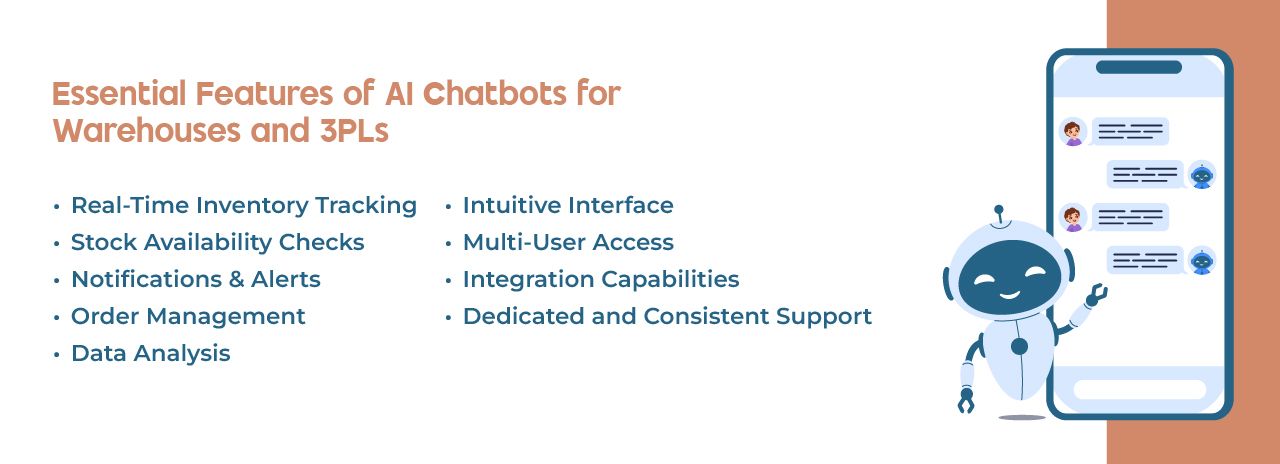
The most useful AI chatbot features in warehouse and 3PL operations are the ones connected to real operational data. A WMS-connected chatbot should help users find inventory, order, shipment, and workflow information faster without replacing the controls already built into the Warehouse Management System.
Key features usually include:
-
Inventory Visibility and Availability: Helps authorized users check stock quantities, availability, item details, and recorded movements using connected warehouse data.
-
Order Status Support: Helps users check order progress, fulfillment status, packing updates, and shipment readiness.
-
Shipment and Delivery Updates: Gives teams quicker access to shipment status, carrier updates, and delivery exception information when connected to tracking data.
-
Alerts and Exception Visibility: Helps surface low stock, delayed orders, pending tasks, or other issues that may need team attention.
-
Workflow Guidance: Supports users with process-related questions, such as how to complete a warehouse task or where to find specific information inside the WMS.
-
Role-Based Access: Ensures users only receive information they are permitted to view, which is important for multi-client 3PL operations.
-
Human Escalation: Routes complex, sensitive, or high-risk issues to the right team member instead of trying to resolve everything automatically.
Practical Use Cases of AI Chatbots in Logistics
Logistics providers and 3PLs use AI chatbots to handle routine questions about orders, inventory, shipments, returns, and exceptions that would otherwise require manual effort. The most practical use cases focus on improving response speed, reducing repetitive work, and supporting warehouse and fulfillment workflows with real-time data access.
Customer-Facing Use Cases
Order Tracking and Delivery Updates:
AI chatbots answer common shipment tracking queries such as “Where is my shipment?” by retrieving real-time data from connected tracking systems. They can also share updates on dispatches, delays, and delivery confirmations, reducing inbound shipment status requests and support workload.
Returns, Refunds, and Damage Reporting:
Chatbots guide customers through return or refund processes and help log damaged-item reports by capturing required information accurately. Automating these steps saves time for support teams while maintaining consistent customer communication.
Address Changes and Delivery Rescheduling:
Last-minute delivery changes are common in logistics operations. AI chatbots can securely capture and validate change requests and route them through the appropriate operational workflows for faster handling.
FAQs and Policy Information:
Chatbots handle repetitive questions related to shipping policies, customs documentation, delivery timelines, and service terms.
The following examples describe potential uses across logistics systems. Availability depends on integrations, permissions, and the chatbot’s supported functions. They should not be read as a list of features available in Fulfillor’s current chatbot.
Operations and Internal Use Cases
Driver and Fleet Coordination Support:
AI agents assist operations teams by surfacing delivery-related updates, schedule changes, and instructions within internal workflows, reducing reliance on manual calls and follow-ups.
Warehouse and Inventory Coordination:
Chatbots help monitor inventory levels, flag potential shortages, and surface alerts when items are ready for dispatch, improving warehouse inventory visibility and coordination across fulfillment teams.
B2B and Freight Support:
For business customers, chatbots can help collect details for freight documentation, invoice questions, and shipment updates, while routing complex or exception-based cases to human agents when needed.
Exception Management and Escalation:
When disruptions occur, AI chatbots help notify stakeholders, log issues, and create support tickets, enabling quicker resolution and better operational transparency.
These use cases are especially valuable for 3PLs managing multi-region or cross-border fulfillment operations across distributed warehouses. The value is strongest when the chatbot is connected to live WMS data instead of working as a standalone support tool.
Benefits of Using AI Chatbots in Logistics Operations
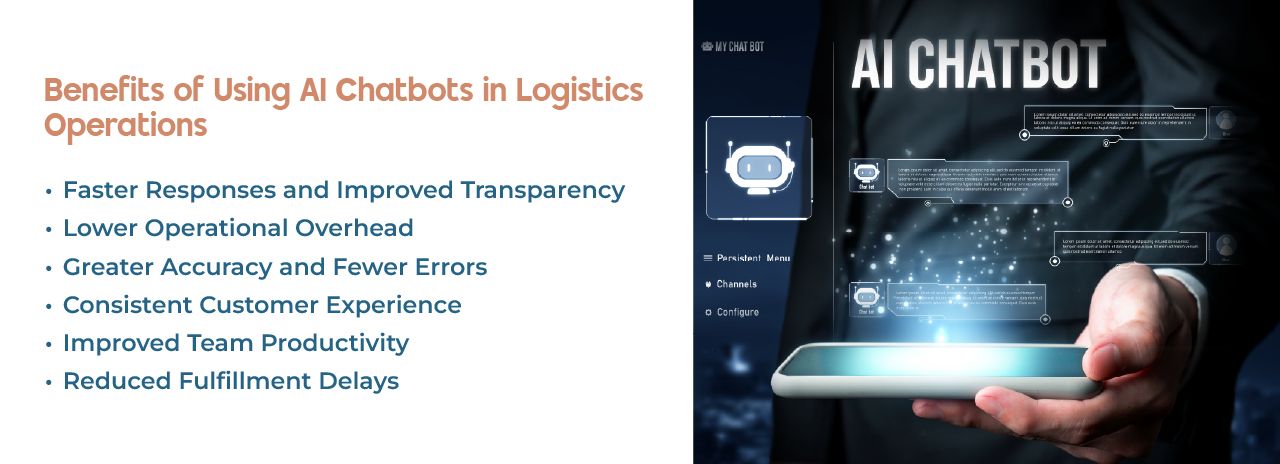
AI chatbots create the most value in logistics when they reduce the time between a question and the right operational answer. For warehouses and 3PLs, this means less time spent checking order screens, inventory records, shipment updates, and internal messages.
Key benefits include:
-
Faster response times: Teams can answer common questions about order status, shipment progress, inventory availability, and delivery exceptions more quickly.
-
Less manual lookup work: Support and operations teams spend less time switching between systems or asking other departments for basic updates.
-
Better inventory visibility: Users can access stock-related information faster when the chatbot is connected to live warehouse data and real-time inventory visibility.
-
Improved exception handling: Delayed orders, missing stock, damaged items, or carrier issues can be surfaced faster and routed to the right team.
-
More consistent answers: System-backed responses reduce guesswork, copy-paste errors, and inconsistent updates across teams.
-
Higher team productivity: Warehouse, support, and operations users can focus more on resolving issues instead of searching for routine information.
For 3PLs, these benefits matter most when order volume grows, client questions increase, and warehouse teams need faster access to accurate operational data.
How Fulfillor’s AI Chatbot Supports Warehouse Workflows
The AI Chatbot is built directly into the cloud-based Warehouse Management System, so warehouse, support, and 3PL operations teams can access operational information without leaving their current workflow.
The current version focuses on operational questions, workflow understanding, and system-backed answers from warehouse and order data. This helps users check information faster instead of manually searching across different screens or asking another team for updates.
Because the chatbot works inside the WMS, its value comes from being close to the operational data warehouse teams already use.
Conclusion
AI chatbots are most useful in logistics when they are connected to real warehouse, inventory, order, and shipment data. For 3PLs, the goal is not to replace warehouse teams, but to reduce repeated lookups, speed up client responses, and help users find accurate operational information inside the WMS.
Standalone chatbots can answer basic support questions. WMS-connected AI agents are more useful for warehouse operations because they work closer to live operational data.
Explore AI-Powered Warehouse Management
For 3PLs, AI works best when it supports real warehouse workflows instead of sitting outside the operation. Fulfillor helps teams connect warehouse data, order visibility, and AI assistance inside one WMS.